
Game over for 20% of Xbox staff as Microsoft hits reset: We ‘didn’t focus on the core business,’ CEO says. ‘We simply spread ourselves too thin.’
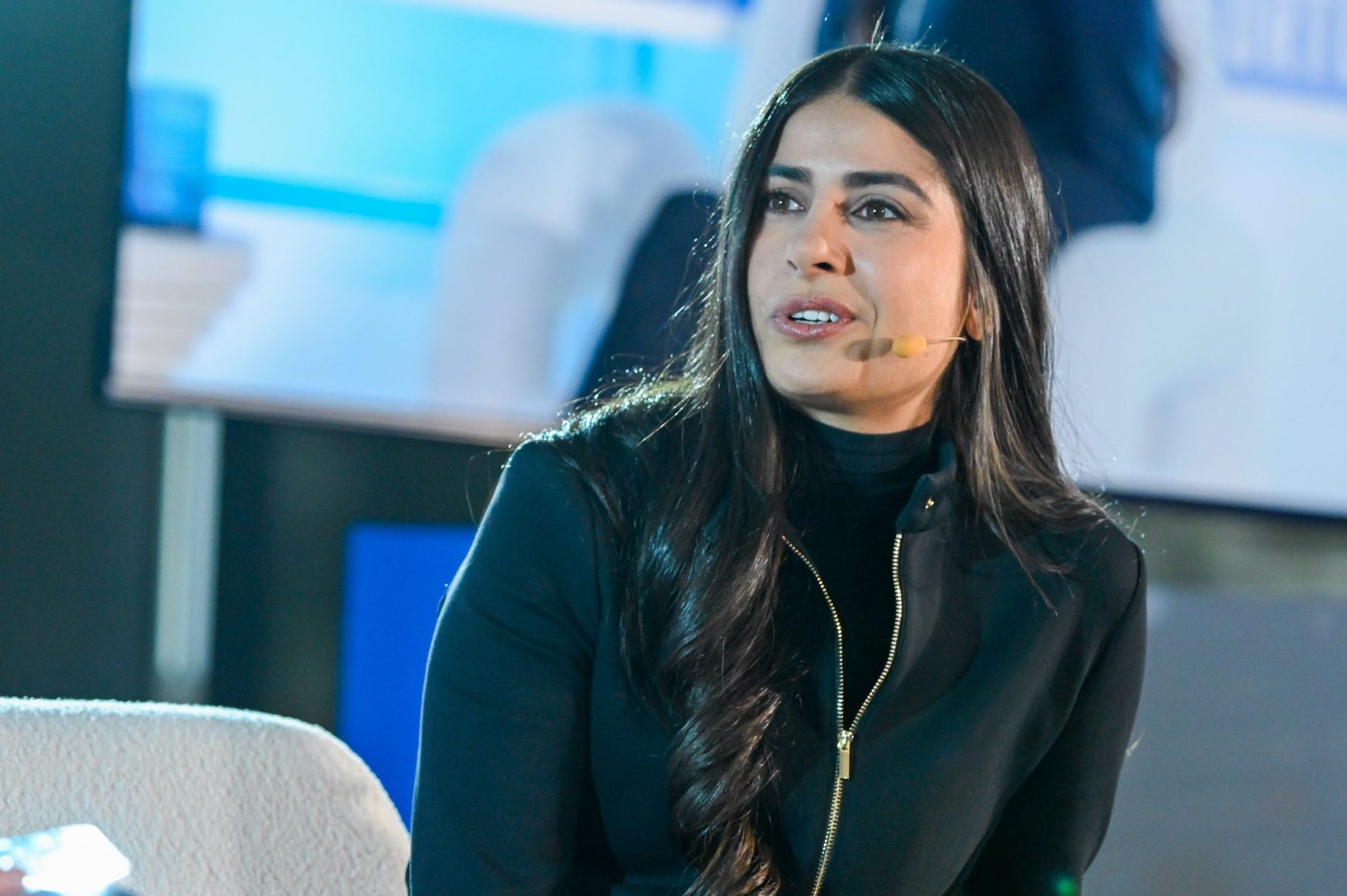
Asha Sharma, CEO of Xbox, unveiled the largest restructuring in its history in what she described as a fundamental reset of how Xbox operates and invests, Fortune’s Sebastian Herrera reports.
It primarily includes layoffs that will affect roughly 3,200 people, or 20% of staff. The cuts are part of a broader workforce reduction at Microsoft, announced Monday, that is expected to impact about 2% of its 228,000 employees. Xbox is also spinning off four of its studios. “In order to grow, we made a bunch of bets … and as we did that, we inherently didn’t focus on the core business,” Sharma told Fortune. “The number one measure of your strategy is what you put your resources behind, and we simply spread ourselves too thin.”
The unit’s new plan centers on returning focus to its flagship Xbox console, which represents 80% of its business.
At Samsung, no good deed goes unpunished: The company released earnings guidance today, forecasting a 19-fold increase in profits in the most recent quarter. Naturally, traders sold on the news—and the stock was down 5.57% today.
Bitcoin took a sharp dip yesterday before regaining ground this morning, after Michael Saylor’s Strategy disclosed it had sold $216 million worth of Bitcoin to shore up its cash position. Strategy holds roughly 4% of all Bitcoin, and Saylor had previously said he would never sell. Yet, the OG crypto is down 28% year-to-date.
Chris Beauchamp, chief market analyst at investing and trading platform IG, said Strategy was “caught in a doom loop of its own making.”
“While the sales are small for now, there is growing concern that the selling will accelerate. Tied at the hip, both in performance terms and in the mind of investors, both Bitcoin and Strategy face more grim times ahead,” he said in an email to Fortune.
One of the central ironies of the AI business right now is that companies are furiously trying to find ways to replace human workers with bots, even though humans are cheaper to employ. This might have the unintended effect of slowing down AI adoption, as companies realize that the expense of using AI eats into their profits. An early sign that this is happening is the phenomenon of companies putting caps and limits on how much their employees can spend on AI tokens, the basic cost-unit of AI.
“The current focus on token optimization is an early warning that AI implementation could be a bumpier, slower road than expected,” Apollo Global Management’s Torsten Sløk told Fortune. Sløk believes that AI will eventually create more jobs, not less, in much the same way that the dotcom boom and the smartphone did. But in the meantime, AI evangelists should remember that most companies are not tech companies. You don’t need a large language model to run a hotel or a restaurant. “Companies will slow their AI spending if they don’t see ROI quickly,” he said.
That has not held back investment into AI, however. As this chart from Jim Reid and his colleagues at Deutsche Bank shows, “The five large U.S. hyperscalers are now spending more on Capex than their combined operating cash flow,” they say.
‘The risks are growing and the resources are shrinking’: Experts blame DOGE cuts for intensifying the Ebola outbreak, which has killed more than 500 - Sasha Rogelberg
The man who ran Bernie’s campaign says Democrats are still making the same mistakes with Democratic Socialists, and they should laud Mamdani’s win - Catherina Gioino
SpaceX’s supervoting shares put a decades-old governance debate back in play - Jeffrey Sonnenfeld and Steven Tian
The yen is quietly crashing as Japan’s debt crisis bleeds into currency markets, and efforts to halt the slide are ‘doomed to fail,’ economist says - Jason Ma
“If you maintain control and really care about the quality of your product, you wind up with the money anyway. It just takes a little longer.”—Founders host David Senra
Dow CEO Karen Carter has a new pay package with a total value of about $22.4 million, my Fortune colleague Amanda Gerut noticed. Carter’s base is $1.5 million, with a target annual bonus of $2.46 million; a one-time incentive of $4.35 million; and a long-term incentive of $14.03 million, according to this disclosure. The actual amounts will move with Dow's stock price and with her performance against the targets.
Just how rich are The Rich? Bank of America economist Aditya Bhave has an answer. If you look only at discretionary purchases (i.e. not housing, utilities, and health care) then it turns out that spending by the richest 10% of households is equivalent to the total spending of the bottom 70% of U.S. households. There’s an obvious level of risk in this: If the rich decided, for some reason, to tighten their belts for a while, it would immediately threaten about 40% of all discretionary spending.
The increase in construction labor costs in Pittsburgh, Baltimore, and Dallas caused by the rush to build AI data centers, according to Mario Iacobacci of Oxford Economics. The national average is just 3.9%. “Data centers will account for approximately 2.5% of total U.S. construction put-in-place value in 2026, rising to 4.5% by 2030,” he said in a recent research note. As this chart shows, the U.S. is now building more data centers than offices:
Fans attending the World Cup are gorging themselves on the American foods they can’t get at home—and that means fast-food chains and condiments that lack European footprints. “It’s greasy, it’s disgusting, but it’s absolutely glorious,” Jack Goodwin, a soccer fan from London, said about the American food he has tried in Dallas, Boston, New York and Atlanta.
“Have you had Chick-fil-A? It was fantastic and so cheap. The sauces are free! It was remarkable,” said Harrison Murphy, also from London. “I said, ‘This is my first time, what should I try?’ The woman said, ‘You’ve got to try the Chick-fil-A sauce.’ My God, was it fantastic.” (It’s worth pointing out that sauce is free in the U.K., too.)
So many World Cup visitors expressed love for ranch dressing, for example, that the TSA issued a light-hearted reminder that tourists should pack bottles of dressing in their checked bags, the AP reports.
One U.S. culinary tradition endures, however: The absolute refusal of the U.S. to learn how to make a cup of tea properly. The BBC did a TikTok reel on the subject.