
German politician faces calls to resign over child born with US surrogate
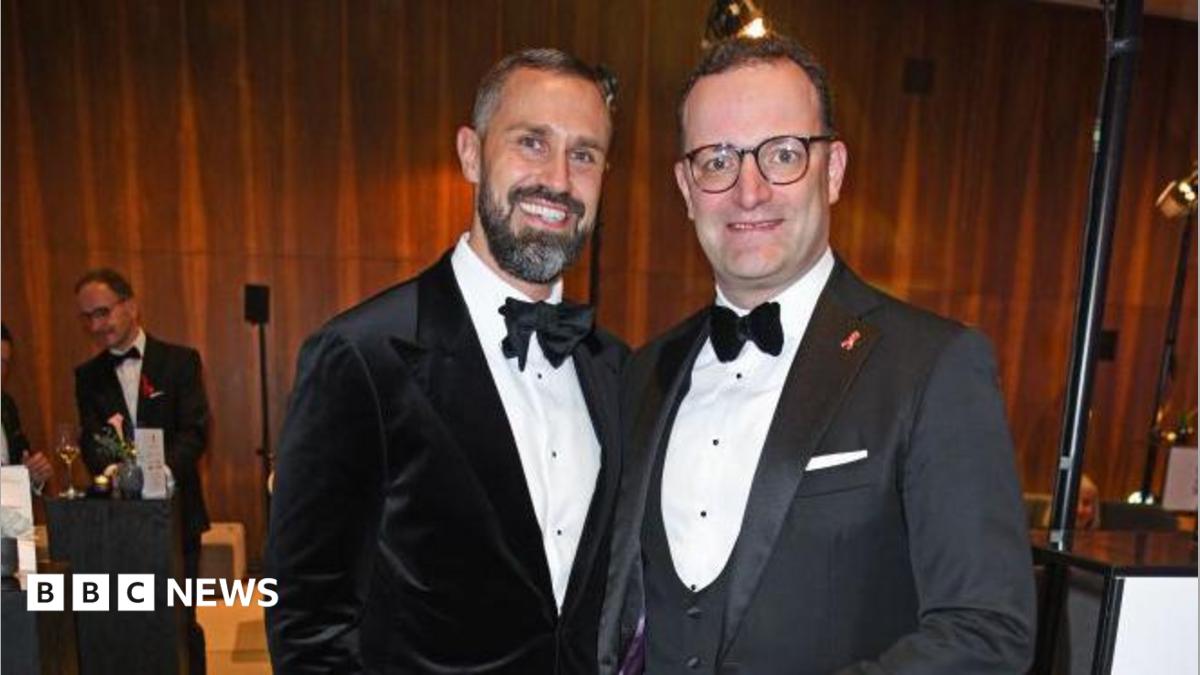
German centre-right politician Jens Spahn has been accused of double standards, after he revealed he and his husband had become parents using a surrogate mother in the US.
Surrogacy is banned in Germany - a policy firmly backed by his Christian Democrat party, and several years ago by Spahn himself.
Although there is no German ban on bringing up a child born to a surrogate mother abroad, Spahn, 46, has been criticised by politicians from several parties, including his own.
"Politicians who set standards for others must be measured by them too," said Marion Rosin, a Christian Democrat in Thuringia and part of the Women's Union. "If that credibility is gone, resignation is a matter of consequence."
Spahn, the parliamentary group leader of the Christian Democrats and Christian Social Union, announced on Wednesday that he and his husband Daniel Funke had become parents.
"Georg is our greatest joy. This feeling is almost impossible to put into words," he told tabloid newspaper Bild. Then his husband posted a picture on Instagram of the couple with Spahn pushing a pram along with the words "We Are Family".
Under the 1990 Embryo Protection Act, surrogacy in Germany is punishable with three years imprisonment or a fine, so Spahn and his partner looked to the US for a surrogate mother.
For many German couples, single-sex or heterosexual, surrogacy abroad has become an important option.
Other EU countries including France, Spain and Italy also ban surrogacy, which involves a woman carrying a baby and giving birth on behalf of parents unable to have children themselves.
France's top court, the Court of Cassation, ruled this month that babies born to a surrogate mother abroad should be legally recognised as their intended parents' children.
Meanwhile, Italy made it illegal in 2024 for Italians to have a baby abroad through surrogacy, in a policy driven by Giorgia Meloni's right-wing government.
In February, Spahn's CDU party conference reaffirmed its support for a ban on the practice within Germany itself, to stop the emergence of "commercial or neutral models that turn surrogacy into a business model".
Critics have pointed out that while he was health minister in 2020, Spahn turned down a call by the liberal FDP for a relaxation on the ban on surrogacy in Germany.
They also point out that in 2015 he wrote that "as a gay man and a Christian I find it personally very hard to warm to the idea of a rented womb".
Spahn is not alone. Earlier this year it emerged that party colleague Hendrik Streeck also became become a father with the help of a surrogate woman in the US.
Greens leader Felix Banaszak said he personally wished Spahn and his husband all the best, but he should come forward and explain himself, as the ethical issues surrounding surrogacy were "not trivial".
Party colleague and health spokesman Janosch Dahmen has gone further than that, saying the issue is not about the birth of a child but about political credibility and double standards: "Anyone who advocates for rules politically should be able to explain clearly why those rules apparently do not apply to them personally."
Some German commentators argued that Spahn's choices were hypocritical and Henning Höne from the liberal FDP said he could not respect politicians who enacted laws in their own country, only to "evade them internationally with money and contacts".
But most damaging to Spahn was the reaction from conservative colleagues.
Daniel Peters, a leading CDU politician in the northern state of Mecklenburg-Western Pomerania, told Bild that Spahn's position was "no longer tenable and he must resign".
It was completely wrong that he had disregarded German law, and that Spahn had considered it right to act one way as a private individual and vote another for his party, said Peters.
Klaus Holetschek, a key figure in the Christian Democrats' sister party in Bavaria, the CSU, told press agency DPA that he and his colleagues stood by the ban on surrogacy in Germany.
While he respected the couple's private decision and congratulated them, "politically out stance remains clear - what is banned in Germany remains banned - and we won't waver on that".