
Google AI CEO Demis Hassabis on why DeepMind sold to Google: The Atari work alerted the Silicon Valley, and they came after my people
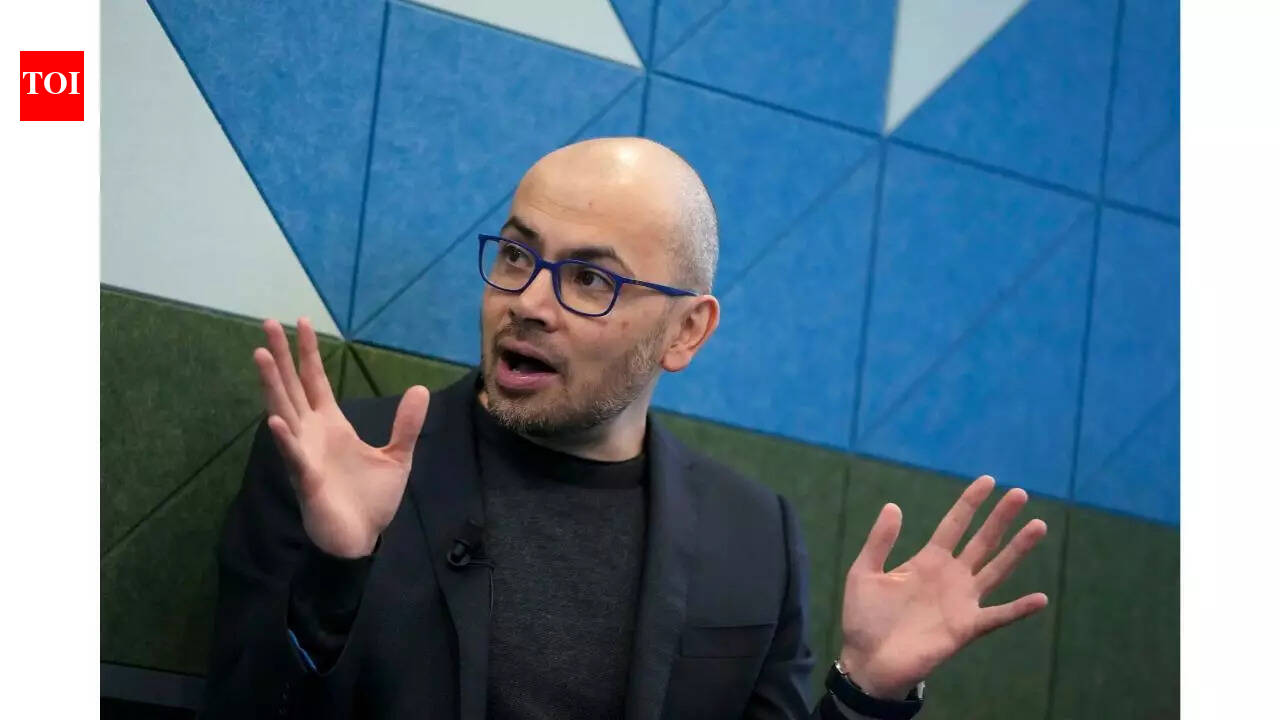
Demis Hassabis has given the plainest account yet of why he sold DeepMind to Google in 2014, and it has nothing to do with grand strategy. It was arithmetic. He reckoned that staying in the fight against the biggest technology companies in the world would take roughly $7 billion. At the time, he says, he was struggling to close rounds a fraction of that size.
"The reason I sold was I knew it would require 7 billion dollars of investment," he said, adding that he "was barely able to scrape together 10 million dollar rounds at that point."The trigger, by his telling, was Atari. DeepMind's agents had learned to play classic arcade games from raw pixels alone, with nobody explaining the rules.
It was a research result, not a product. But it was enough to turn a small London lab into a name that people in Mountain View and Menlo Park started saying out loud. "We'd done enough, the Atari thing, we had alerted enough of the Silicon Valley titans," Hassabis said. "They were coming after my people."Demis Hassabis had no product and no revenue when Google, Facebook and Musk started circling DeepMindDeepMind had nothing to defend itself with.
No revenue, no shipping product, no distribution. "We had no business, we didn't even have a product," Hassabis said, because the work was on core technology rather than anything sellable.The salary gap did the rest. Hassabis says he was taking nothing while his researchers earned around $100,000 a year and were being offered a hundred times that.
"They were getting offers of 10 million a year," he said. If a researcher turned that down, the same companies could return with $50 million. "So at some point, that was going to go wrong."Google's $650 million DeepMind deal, Facebook's rival bid and what Mark Zuckerberg said about the priceGoogle announced the deal in January 2014.
The BBC reported a price of about £400 million, making DeepMind Google's largest European acquisition to that point. The figure now generally cited is roughly $650 million. Larry Page's pitch was that Google was already an AI company with the compute and the patience that venture funds could not offer.Facebook had been in talks the year before, and those talks collapsed without a public explanation.
Mark Zuckerberg supplied one later. Speaking to South Park Commons, he said Hassabis "totally did a very good job of playing me off of Google to get a good price, which I respect."The sale did not end the argument over control. Sebastian Mallaby's new book on Hassabis details three years of failed negotiations, codenamed Project Mario, in which Hassabis and co-founder Mustafa Suleyman pushed for a semi-independent DeepMind with a nine-seat oversight board.
Reid Hoffman offered $1 billion to back a walkout. Sundar Pichai refused to let AI leave Google's core. Hassabis eventually stopped pushing.Twelve years on, the compute question has answered itself. Hassabis runs Google DeepMind, Gemini processes more than 10 billion tokens a minute, and Alphabet has earmarked $175-185 billion in capital expenditure for AI infrastructure in 2026.
That is roughly 25 times the sum he once could not raise.Get the latest technology news and updates. Download the TOI App.