
Google DeepMind CEO Demis Hassabis to everyone fearing AI replacing them: Look at what we humans have built around us, it is ...
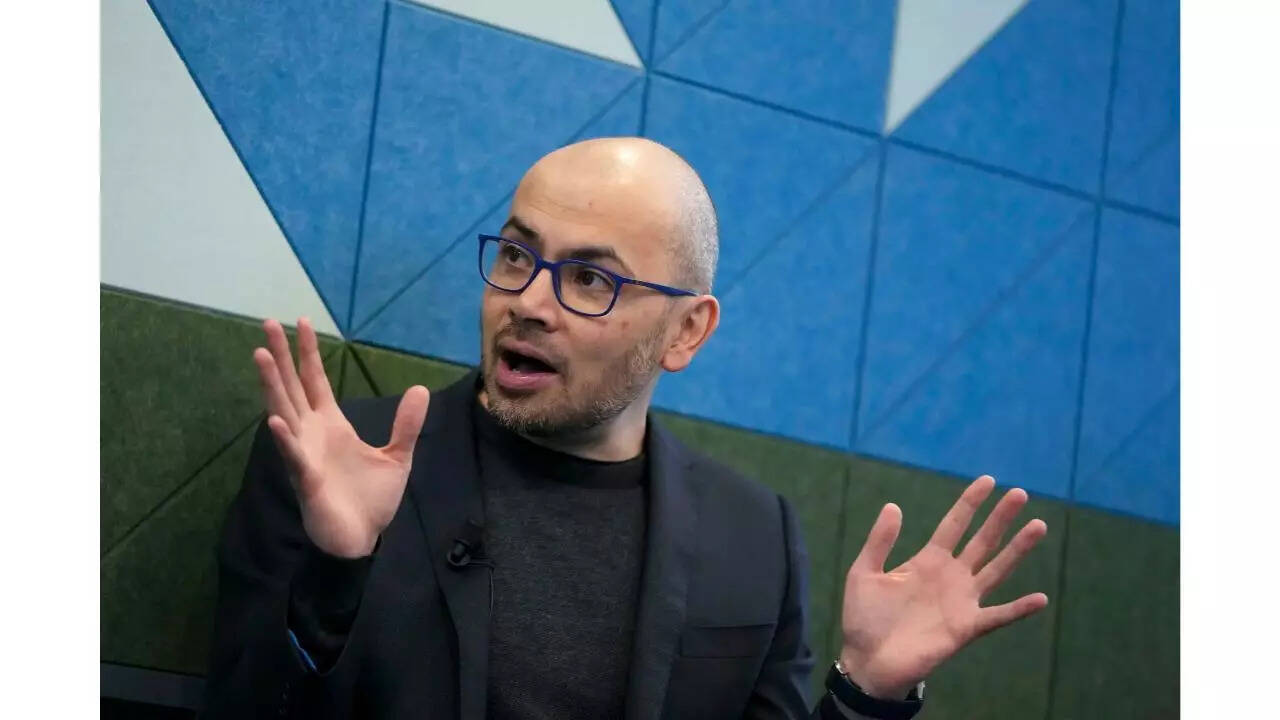
Google DeepMind CEO Demis Hassabis has once again predicted that artificial intelligence is close at hand, telling an audience at Stanford Graduate School of Business that AGI could arrive around 2030, plus or minus a year. He called it an “enormous transformative technology” that will usher in “a new human era.” Hassabis also added that a decade from now, society will look back and realise it was “standing in the foothills of the singularity” — the moment when AI surpasses human intelligence and begins improving itself autonomously.
Demis Hassabis said ‘We don’t have long to prepare’Hassabis has warned that society must prepare for the profound implications of AGI. With AI already automating daily tasks and coding work, fears of job displacement are rising. AGI — capable of reasoning, decision‑making and adaptation — could take on far more complex responsibilities.But Hassabis also emphasized that certain human qualities will become even more valuable.
In an interview with The Rundown AI’s Rowan Cheung, he said people with “taste, design sensibility, original thinking” and the ability to synthesize ideas across disciplines will be in a strong position over the next five years.“Look at what we built around us”To those worried about being replaced, Hassabis offered a reminder of human ingenuity:“We’re general intelligences ourselves, don’t forget.
Look at what we built around us — it’s incredible — with our hunter‑gatherer brains. Why would we stop here?” He said humans are “instantly adaptable,” and that AGI will unlock “amazing new things” rather than halt human creativity.A divided AI communityAlong with this, the Google DeepMind CEO also provided a timeline that sits among a wide range of predictions from other AI leaders: * Sam Altman has said humanity is close to building digital superintelligence.* Dario Amodei predicted powerful AI could emerge as early as late 2026.* Jack Clark and Marina Favaro wrote that by 2027, AI systems could complete tasks that take humans weeks.* Yann LeCun has dismissed the concept of general intelligence as “complete BS,” arguing current transformer models cannot reach human‑level cognition.* DeepMind’s chief AGI scientist Shane Legg estimates a 50% chance of “minimal AGI” by 2028.Demis Hassabis suggests US-lead watchdog for AI companies across the worldRecently, Google DeepMind CEO argued it's time someone started policing it—and that the United States should hold the badge.
In a manifesto titled "A Framework for Frontier AI and the Dawning of a New Age," the Nobel laureate laid out his most concrete regulatory pitch yet: a new standards body empowered to test the world's most advanced models before they ship, and, if the risk demanded it, to coordinate an industry-wide slowdown.Hassabis is specific about the shape of the thing.
A conventional government agency, he argues, "would not be able to move fast enough, or have the right resources." So instead he wants a public-private body modelled on the Financial Industry Regulatory Authority—the self-regulator that oversees US brokers and markets. Fund it largely through industry, staff it with independent technical experts and open-source representatives, and keep it answerable to the federal government.The mechanics are elegant, which Hassabis knows.
A model gets tagged "frontier-class" once it clears certain benchmark thresholds, and its maker becomes a "frontier lab" carrying extra responsibilities. That neatly sidesteps the endless fight over whether academic or open-source systems should be regulated—capability is the only thing that counts, not who built it or whether the code is public.
Labs would share models with the body up to 30 days before release, voluntarily at first, before the review calcifies into a hard requirement for the US market.Get the latest technology news and updates. Download the TOI App.