
Gulf bond markets rally despite uncertain outlook | Fortune
The Gulf bond market rally is picking up momentum.
In the week to 26 June, QatarEnergy, Avilease, Emirates NBD, FAB, Dukhan and Burjeel issued a combined $7.5bn of debt, a pretty hefty figure.
Notable among them was UAE healthcare group Burjeel Holdings’ $500 million debut sukuk issuance. It was more than three times oversubscribed, with the orderbook peaking at $1.6 billion.
International investors took 61% of the allocations, led by buyers from the U.K. (34%) and offshore U.S. accounts (24%), highlighting global confidence in Burjeel and the UAE market. Gulf investors accounted for the remaining 39%.
Listed on the Abu Dhabi Securities Exchange, Burjeel’s $500 million sukuk marks the opening tranche of a $1.5 billion sukuk program , which was put on hold with the outbreak of the U.S.-Iran war in February.
Gulf primary bond issuance came to an abrupt halt in the wake of the conflict, with corporate and sovereign bond yields jumping as geopolitical tensions escalated.
But the markets have staged a “relief rally” since the ceasefire came into effect on 8 April, with GCC fixed-income yields benefiting from a reduction in geopolitical risk premiums. I explore all the moving parts in my online piece here.
Yield spreads between GCC investment-grade debt and U.S. Treasury bonds have narrowed to pre-war levels, reflecting investor confidence in Gulf states’ robust government reserves and optimism that the conflict will not harm issuers’ finances in the long term.
This has seen both sovereigns and corporates raising billions of dollars in conventional bonds and sukuk over recent months.
Long considered safe havens within emerging markets, five of the six Gulf countries—Bahrain apart—are rated investment grade by the three major credit rating agencies. Investment grade makes it easier to raise funding when the need to borrow arises.
Not every corner of the market has recovered at the same pace, though. Spreads on speculative-grade GCC sukuk remain elevated, suggesting investors are still demanding a higher premium for riskier borrowers.
Furthermore, the flare up in tensions over recent days is an unwelcome reminder that the region remains vulnerable to further bouts of volatility, which, as Fitch has noted, means that: ”The future yield trajectory of GCC fixed income remains uncertain.”
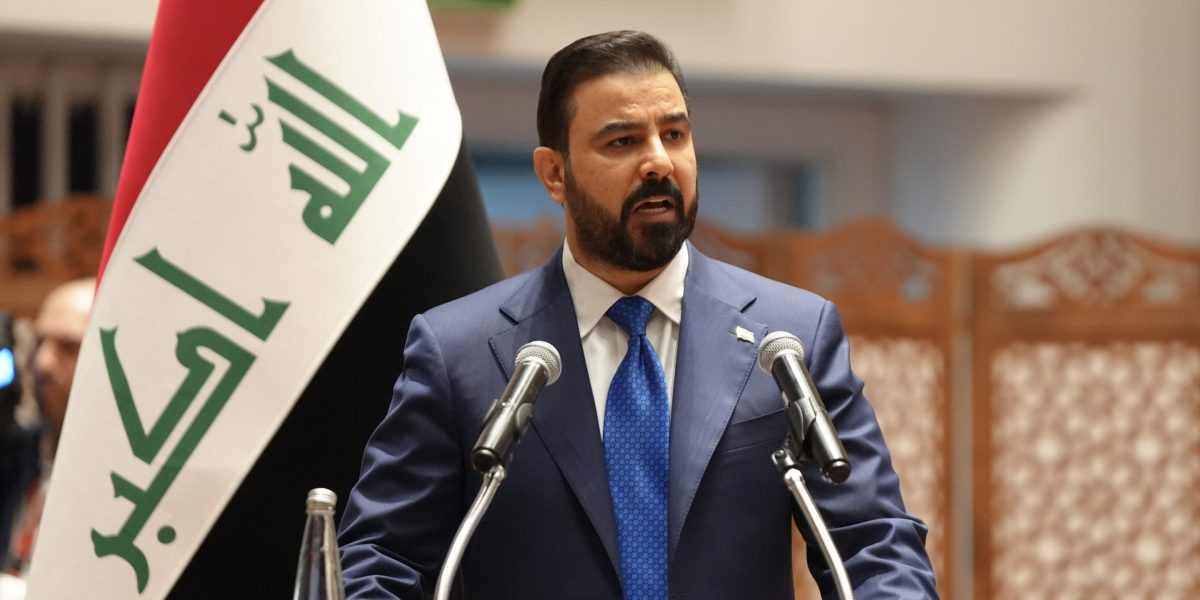
Iraq’s new prime minister, Ali Al Zaidi, is wasting no time in tackling the biggest challenges facing his country—with U.S. companies to be given “top priority if they want to do business in Iraq.”
In an interview with The National last week, Al Zaidi said that the country's ministries of oil, electricity and communications have all been directed to prioritise U.S. companies.
The government has already approved major oil projects with U.S. energy giants Chevron, Halliburton and HKN, while Iraq’s telecoms sector is in talks with Starlink.
Al Zaidi, who took office last month, outlined plans for a joint energy and development fund with the U.S., financed through the equivalent of 500,000 barrels per day (bpd).
The 500,000 bpd will go towards helping to replenish the U.S. Strategic Petroleum Reserve , which, in mid-June, fell to its lowest level since 1983.
Al Zaidi said production could potentially increase to two million bpd and possibly exceed the OPEC quota limitations.
Last week, Iraq's Oil Ministry denied reports suggesting Baghdad was about to follow in the footsteps of the UAE and end its OPEC membership.
However, Al Zaidi said that he would consider suspending its membership if its demands for a higher production quota are not met.
The prime minister has also launched a sweeping anti-corruption campaign , which has led to the arrest of 47 officials, including members of parliament and oil industry figures. It represents the most decisive action to root out corruption since the fall of Saddam Hussein in 2003.
The government has set up a new body to oversee the awarding of contracts and recovery of public funds, at a time when the country’s financial transactions are under extra scrutiny after recently being placed on the Financial Action Task Force’s “grey list.”
Iraq ranks 136 out of 181 on Transparency International’s 2025 Corruption Perceptions Index, with oil sector contracts often attracting graft investigations.
The timing of the crackdown is significant, with Al Zaidi due to visit Washington in mid-July with the aim of deepening strategic ties.
U.S.’ Fanatics, which operates iGaming products across multiple U.S. states, has formed a joint venture with the UAE’s Momentum Group to operate and expand its commercial gaming businesses.
The JV marks Fanatics’ first foray outside its core U.S. market.
As the leading UAE commercial gaming and entertainment company, the JV will give Fanatics access to all of Momentum’s existing licensed activities, including the UAE lottery, iGaming, sportsbook, and gaming content websites.
Conor Grant, President of Fanatics Gaming, said: “We are entering this market for the long term, committed to building something genuinely category-defining together.”
The value of the UAE gaming market ballooned from $484.1 million in 2023 to $1.16 billion in 2024, and is expected to grow at a compound annual growth rate of around 8% through to 2033.
With 75% of residents actively gaming and smartphone penetration exceeding 95%, the Emirates has become the region’s most lucrative per-player market. Its average revenue per gamer in 2025 was $90, one of the highest in the world and ahead of Saudi Arabia’s $60.
The UAE is rapidly establishing itself as a regional hub for game development, with dedicated gaming ecosystems taking shape in both Dubai and Abu Dhabi.
Dubai's DMCC Gaming Centre and initiatives connected to Dubai Media City are drawing global studios, indie developers and esports companies, while Abu Dhabi's ecosystem, anchored by AD Gaming and twofour54, continues to attract international publishers and talent.
State Street has secured a fund administration license in Saudi Arabia, thereby deepening the presence of one of the world’s biggest custodian banks in the kingdom.
The license will enable the bank to start managing and administering funds locally, alongside its existing custody and investment services offering—marking a significant expansion of its in-country capabilities. Custody services refer to the safekeeping and management of financial assets by a regulated institution.
The move comes amid rising demand for local asset servicing, with Saudi Arabia accelerating the development of its capital markets as part of its Vision 2030 agenda.
In April, Saudi’s sovereign wealth fund, PIF, anchored an equity exchange traded fund that it jointly launched with State Street, reflecting PIF’s continued focus on further strengthening the local market through innovative products and partnerships with leading asset managers.
The fund is the second PIF-anchored ETF investment with State Street Investment Management, and the fifth for PIF with leading global asset managers across nine markets.
The bank has had a presence in Saudi Arabia for over 25 years. It opened local offices in 2020 before launching its regional headquarters in Riyadh last October.
State Street’s Saudi subsidiary had $60 billion in assets under management and $127 billion in assets under custody as of October 2025.