
Has Keir Starmer left a £5bn defence funding hole for Andy Burnham?
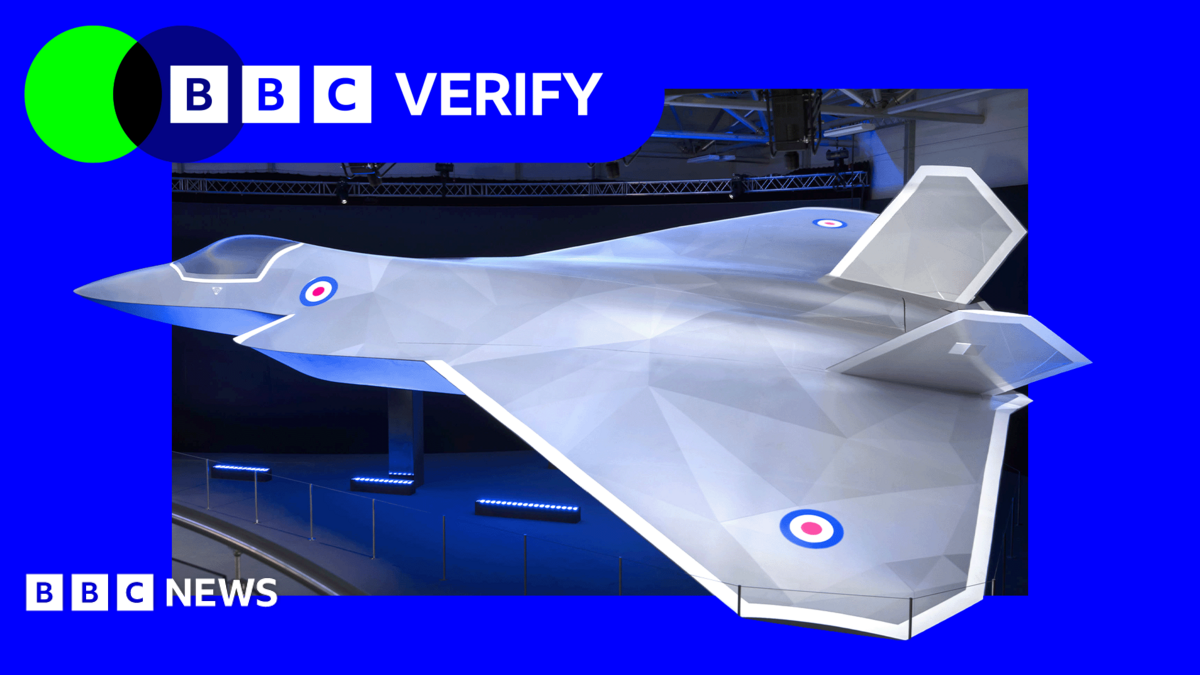
The Defence Investment Plan (DIP) increases military spending by £15bn over the next four years and Prime Minister Sir Keir Starmer has described this as "a historic shift", although critics say that this new money is still insufficient to keep the country safe.
Attention has turned now to how the extra spending in the DIP will be funded, with the Treasury revealing that the savings identified from other departments do not cover the full planned rise for defence.
This has resulted in talk of a "£5bn defence black hole" which could be a problem for Sir Keir's presumed successor Andy Burnham.
BBC Verify has looked into these figures to put them into context.
The Treasury has released a table showing that in the four years to 2029-30 defence spending will rise by an average of £3.75bn each year compared with its previous plans following the publication of the DIP.
The government has added up those annual increases to produce the figure of £15bn of extra spending on defence over four years.
The Treasury table also shows that around £1.2bn a year of that annual £3.75bn a year rise still has to be found and will be outlined in the Budget later in the year.
Adding up these annual funding shortfall figures over four years gives a total of £4.7bn.
However public finance experts say it's better to talk about budget shortfalls in annual terms, rather than cumulative totals spread over several years, which can produce exaggerated and confusing numbers.
So a clearer way to discuss the size of the DIP funding shortfall is around £1.2bn a year.
It is true that the next Budget - due in the autumn and Burnham's first assuming he becomes prime minister - will have to fund that gap whether through additional spending cuts, tax rises or additional borrowing.
Total Whitehall departmental spending in 2026/27 is projected to be £678bn so £1.2bn represents only a small fraction of that - 0.17%.
£1.2bn is an even smaller fraction (0.1%) of total tax revenues which are forecast to be £1,170bn in 2026/27.
However, it's probably more appropriate to compare the funding gap figure to the amount of headroom - or leeway - that the Chancellor Rachel Reeves left herself against meeting her chosen fiscal rule, which is to balance day-to-day spending with tax revenues by the final year of the Parliament.
The 2026 Spring Statement left her headroom of around £24bn against meeting this goal, so £1.2bn would represent around 5% of that.
Ruth Curtice of the Resolution Foundation said this does create a relatively large figure in the context of budget gaps, pointing out to BBC Radio 4's Today programme that a decade ago all the new tax and spending measures outlined in a Budget sometimes added up to only £2bn a year in cash terms.
Though it's also worth putting this £1.2bn in the context of other decisions that governments take that throw public finance forecasts off course, such as the regular last minute decisions by chancellors in budgets over the past 16 years to freeze fuel duty rather than increase it in line with inflation.
The Institute for Fiscal Studies (IFS) has estimated that the extension of the fuel duty freeze through to 2029-30 would cost around £5.5bn a year.
Ministers have argued that it is not unusual for governments to make decisions with spending implications which are then funded in subsequent Budgets.
Last year, for instance, Rachel Reeves announced a reversal of the cuts to the winter fuel payment without announcing where the money would come from.
There was major spending during the Covid pandemic for things like the furlough scheme which were announced outside of a Budget.
And in 2018 then-Prime Minister Theresa May announced announced a big five-year NHS funding package and left it to the next spending review and Budget to explain where that money was going to come from.
"It's not that unusual," says Thomas Pope, chief economist at the Institute for Government (IFG). "It's not best practice but it does happen."
He adds that the funding gap created by the DIP fits in the more "modest" category by historic standards of spending decisions taken between Budgets.
The Treasury says it has cut all other Whitehall departments' capital spending budgets by 1% over the next four years raising £1bn a year to help get extra money for defence.
There are also additional cuts to the budgets of the energy department (£500m per year on average) and transport department (£200m per year) which will involve cutting investment in roads.
There is also a contribution from public sector "asset sales" - such as government-owned land - which is set to raise around £275m per year on average over the next four years.
Another source of savings - £600m per year on average - comes from "Treasury support for ongoing international objectives and more efficient defence procurement". This means the Treasury will take responsibility from the MoD for future financial commitments to Ukraine if there is a ceasefire.
This could create more resources for the MoD, but it simply shifts those costs to another part of the public sector.
"If these new Treasury responsibilities require any spending, this will need to be paid for from somewhere else, potentially squeezing other budgets further," says Max Warner of the IFS.
It says this will be delivered through plans, among other things, to automate 20% of the MoD's human resources and finance departments by 2028 and by cutting spending on consultants.
It also expects savings from accelerating the use of Artificial Intelligence, with around £50m a year of "digital" efficiencies.
The biggest efficiency savings - around £1bn a year - are supposed to come from reforms of "acquisition", which means buying new defence equipment.
Defence procurement has historically been a source of major budget overruns for the MoD.
Public finance experts warned that it cannot be guaranteed that these savings will be delivered.
Carl Emmerson, a partner at consultancy London Economics, noted the government already has ambitious efficiency targets baked into its 2025 Spending Review settlements with individual departments, which set their budgets over the coming years.
"This just makes that challenge harder," he said.
"Sometimes efficiency savings just means cuts and doing less and therefore delivering slightly less," said Thomas Pope of the IFG.