
Haworth moor project to reduce risk of severe wildfires
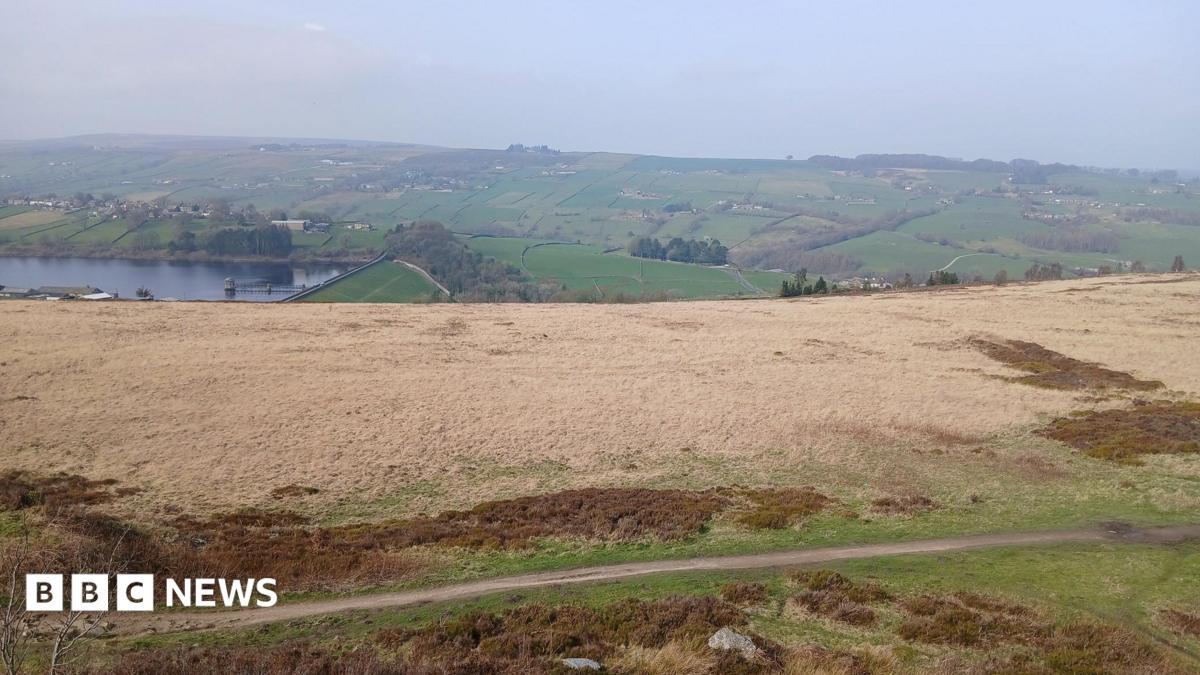
The risk of severe wildfires could be cut by reducing the dominance of a moorland grass that leaves the landscape vulnerable to outbreaks, according to researchers.
A trial project on Penistone Hill in Haworth is examining how molinia - a purple moor grass - could be managed to encourage biodiversity and reduce the risk of fires.
Paul Titterton, research and monitoring officer for conservation group Moors for the Future, said the plant can out-compete other species, creating the perfect environment for wildfires.
"Molinia can act as a severe wildfire risk because there's quite a lot of biomass, it can get quite dry," he said.
"Also generally when you see molinia-dominated areas, they are quite uniform in structure and height - so that just makes wildfire spread quicker and easier across the site."
Molinia also dominates the moorland because it returns faster than other plants after a fire, making it harder for the moss layer - which is better at holding on to moisture - to return.
"If you get rid of that moss layer, the peat can become quite flat and the water rushes off, so you get loss of water retention in peatlands," explained Titterton.
"So that can lead to things like flooding downstream and increased costs for water companies in terms of cleaning the water."
The researchers are examining how different conservation techniques could affect the recovery of blanket bog, and how grass management techniques could be improved.
The project is a combined effort between Bradford Council, which manages the land, Yorkshire Water, which owns the land and Natural England, which is funding the scheme.
"At the moment, we're in the sort of baseline data collection phase, so trying to understand what the site is like," Titterton said.
This will continue for the next year so the researchers can understand the effect of a variety of weather conditions, then in spring 2027 the on-ground conservation work will begin.
Listen to highlights from West Yorkshire on BBC Sounds, catch up with the latest episode of Look North.