
Health ministry revises residents' terms in new framework statute
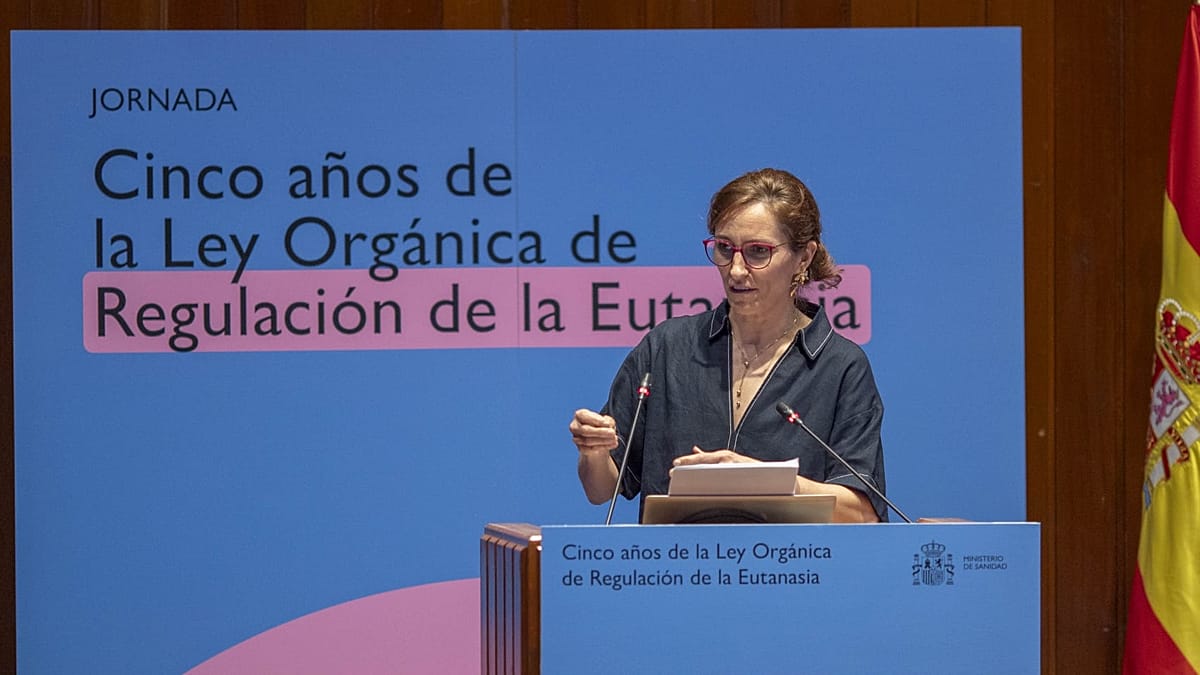
The Ministry of Health has added an extra strand to its reform of the Medical Framework Statute (which has triggered strikes across the country and criticism from across the ideological spectrum within the profession), focusing on the working conditions of MIR doctors, Spain’s resident physicians.
According to the announcement by Minister García, who will stand as Más Madrid’s candidate for the Madrid region, the ministry plans to cut MIR and other specialists’ 24-hour on-call shifts to a maximum of 17 hours, with no more than four such shifts a month (up to 68 hours a month) and without a standard working day afterwards; set ordinary working hours at 35 a week; improve their pay supplements (rising with years of experience) and ensure that they are informed of their rotations two months in advance.
Medical sources warn that this last point will be difficult to meet, as even many senior doctors in some departments do not know their rotas that far ahead. If it goes ahead, they stress, it would completely change day-to-day life in large hospitals, which currently depend on the overuse and exploitation of MIR residents, and it would create unequal conditions between experienced professionals and trainees.
The ministry wants there to be at least 12 consecutive hours between shifts, only to clarify immediately afterwards that if the service requires it, this will not apply. Staff must then be compensated "within a maximum of 14 days".
These so-called service "needs", already written into the current framework statute and due to be approved again under the new draft bill, are what worry professionals, as many of the working conditions that should be guaranteed are flouted on the grounds that management requires their presence.
This can be seen in article 97 of the draft itself, which states that if adequate continuity of care cannot be guaranteed and "provided that there are organisational or care-related reasons that justify it, the maximum duration" of the working day may be exceeded.
Professionals are calling for several measures that they do not see reflected in García’s reform. García is an anaesthetist and belongs to Sumar, the junior partner in the government. Among their demands are that on-call shifts count towards Social Security contributions and that a supplement for night work or compensatory rest days after several consecutive shifts be introduced, as in agreements such as that of the National Police.
They are also asking for the creation of a specific professional category for doctors, a maximum 35-hour working week (as García is now promising for MIR doctors), and for any extra work to be considered voluntary and paid. They likewise call for the introduction of a voluntary early-retirement scheme, full or partial, and a ban on forced mobility.
The Spanish MIR Association (AME) believes that the new on-call and rest arrangements and the pay improvements proposed by the ministry represent "a step forward" but are "insufficient", as they will not end their precarious situation.