
'Hell ship' from Second World War found in Philippines
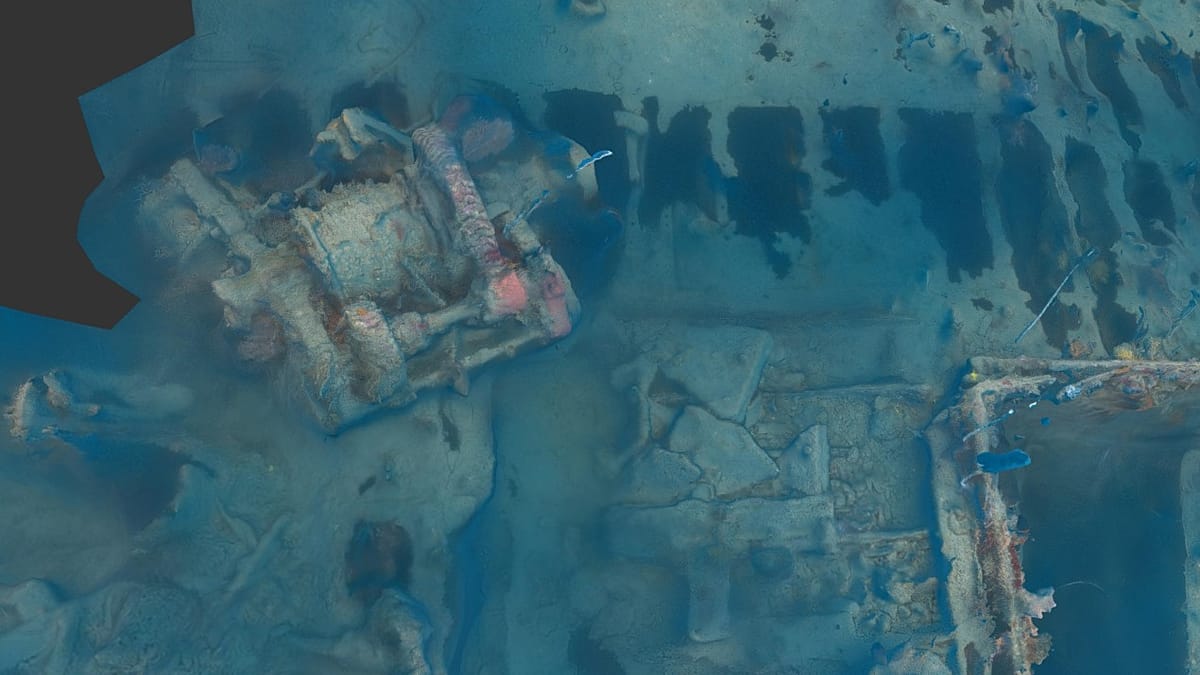
On 21 September 1944, the Hofuku Maru was sailing as the second ship in a Japanese convoy off the western coast of Luzon. On board were 1,289 British and Dutch prisoners of war, many of them already weakened after being forced to work on the so‑called Burma–Thailand “Death Railway”.
The conditions were extreme: no light, inadequate ventilation, no sanitation, and food and water rations barely sufficient to survive. The ship carried no markings to identify it as a prisoner transport.
When aircraft from Task Force 38 of the US Navy attacked the convoy, they fired their torpedoes at what, to them, was a legitimate military target. One torpedo struck the hull of the Hofuku Maru.
The ship broke in two and sank in less than three minutes, with up to 1,000 prisoners still trapped in the holds. Those who managed to swim to shore were recaptured by Japanese forces. Of the 1,289 prisoners on board, 1,047 died.
For eight decades the wreck remained undiscovered. Post‑war records were fragmentary and contradictory, Allied action reports gave only approximate coordinates, and survivors’ testimonies differed on basic details. The families of more than a thousand dead soldiers had nowhere to go to remember them.
More than 130 cargo vessels and passenger liners were converted by the Japanese Empire to transport prisoners between forced labour camps in Southeast Asia. Of the more than 125,000 Allied prisoners shipped on these vessels, around 20,000 died during the crossings.
The prisoners themselves called them “hell ships”. Despite the scale of what happened, their story remains one of the least known episodes of the Second World War.
The turning point came in 2025, when researcher John Duresky, a collaborator of the Hellships Memorial Foundation, came across a digitised Japanese document that no one had examined closely. Written by officers on board the convoy’s flagship, it set out a timeline and a map of the attack and specified that the Hofuku Maru was the second ship in the formation when it was hit and broken in two.
By cross‑referencing that information with the action report of USS Bunker Hill, the team concluded that the wreck had to be more than 50 kilometres south of the area where historians had searched until then.
“We were absolutely stunned to discover that Japanese sources held information on where they attacked the convoy and which ships were hit,” said Randy Anderson, the foundation’s founder. “It was the smoking gun.”
Armed with the new coordinates, a team made up of television explorer Josh Gates, underwater imaging specialist Evan Kovacs and maritime archaeologist Calvin Mires deployed sonar equipment off Zambales province. The wreck was located at a depth of around 50 metres, a few kilometres off the western coast of Luzon.
Five deep technical dives were carried out. Volcanic ash from Mount Pinatubo, which erupted in 1991, covered parts of the site, but the team took hundreds of photographs and assembled a three‑dimensional photogrammetric model. The dimensions of the hull, the position of the masts and the layout of the holds matched the original shipyard plans.
The wreck was found broken in two – or in three sections, according to some team members – which tallied with both American and Japanese accounts of its sinking.
During the dives, human remains were found among the debris, making the site a war grave protected under international conventions. The exact coordinates have not been released in order to protect the wreck.
The Netherlands has announced that it will work with other countries to find a way to honour the victims, while the Hellships Memorial Foundation will begin contacting the families of the dead. Five hell ship wrecks are still unaccounted for.
The discovery of the Hofuku Maru does not close the chapter, but it does mean that the prisoners’ families now know where their forebears lie, and that they can rest in peace 80 years after the sinking of the Hofuku Maru.