
Here's Where Gas Prices Are Falling Fastest Amid Iran War Negotiations
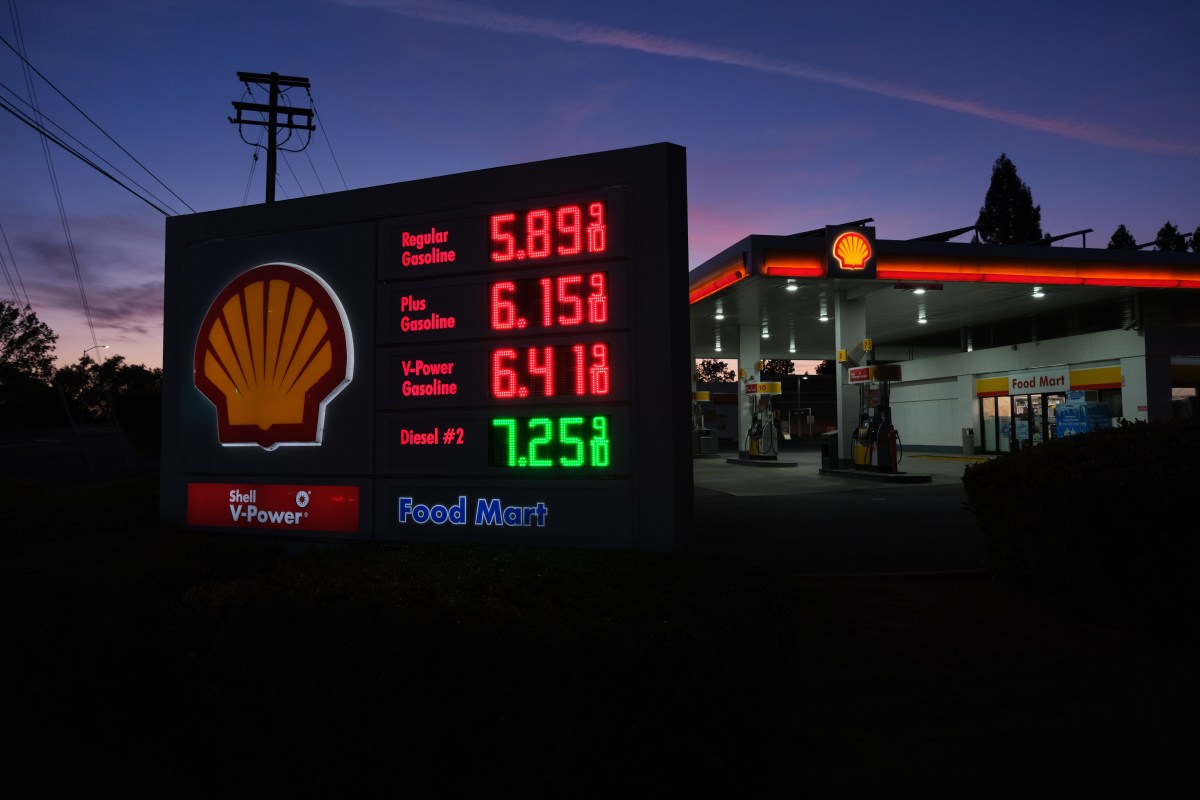
Gas prices are falling across most of the United States as easing tensions between Washington and Tehran push oil costs lower.
However, so far, the relief has been uneven, with some states seeing sharper drops than others.
The national average price for a gallon of regular gasoline has fallen below $4, dropping to about $3.86, according to the most recent data from AAA.
“The national average has come down significantly since May and even though last year's July 4th national average was $3.15, the fact we're down below $4/gallon is welcome news for drivers,” a spokesperson for AAA told Newsweek. “Gas prices vary across the country due to state taxes, demand, and proximity to refineries and distribution sites.”
For millions of Americans heading into the July Fourth holiday, even modest price declines could provide relief, but prices remain significantly higher than last year.
Gas prices are still roughly 60 cents higher than a year ago, according to GasBuddy data, and Independence Day gas prices are expected to land around $4.00 to $4.40 nationally, compared with roughly $3.13 last year.
At the same time, travel demand is near record highs, with 72.2 million Americans expected to travel at least 50 miles during the Fourth of July week, AAA said this month.
So far, the largest recent declines are concentrated in higher-cost Western states, where earlier spikes were steepest, according to Gas Prices Live.
These states tend to see more volatile swings because of stricter fuel standards and higher taxes, meaning prices rise faster during disruptions but also fall faster when oil costs ease.
Overall, experts say areas that surged the most during early Iran war tensions are now seeing the fastest declines as crude prices retreat.
“The declines came despite a turbulent week, as fresh attacks were traded between the U.S. and Iran before both sides agreed to halt hostilities just in time Sunday, preventing what could have been a significant spike in oil prices,” Patrick De Haan, head of petroleum analysis at GasBuddy, said in a statement Monday.
“For now, GasBuddy anticipates the national average will continue drifting lower this week, though the situation remains anything but predictable.”
In contrast, lower-cost regions, particularly across the South and parts of the Midwest, are seeing more modest week-to-week declines.
States like Texas (with a gas price average of $3.29), Oklahoma ($3.35), and Mississippi ($3.46) already have some of the lowest prices in the country.
Because prices in these states didn’t spike as sharply earlier this year, the recent drop is less dramatic.
“Those factors create a persistent price premium, so consumers there typically wait longer to see relief at the pump,” Kevin Thompson, the CEO of 9i Capital Group and the host of the 9innings podcast, told Newsweek.
For these states, their strong proximity to Gulf Coast refineries kept supply steady, and they also deal with less exposure to imported fuel costs and regulatory pressures.
Several factors are pushing gas prices down, but Iran War negotiations have played a significant role.
Crude oil prices have cooled as the U.S. and Iran move forward with negotiations and shipping traffic through the Strait of Hormuz recovers. However, retail gasoline prices typically move with a 4- to 6-week delay after crude oil prices change.
“Gas price swings destroy household budgets faster than most people realize,” Michael Ryan, a finance expert and the founder of MichaelRyanMoney.com, told Newsweek. “And nobody talks about the real damage. Gas falling $2.21 per gallon between Indiana and California sounds like a regional quirk. It's actually a wealth transfer from working people to the government.”
President Donald Trump has publicly criticized oil companies for not lowering prices more quickly.
“The big Oil Companies are not dropping their price at the pump commensurate with the sharply lower prices they are paying for Oil,” Trump wrote in a Truth Social post last week. “Those prices are dropping like a rock! In other words, customers are being ‘gouged.’ I have instructed the DOJ to immediately start looking into this. Gasoline prices better start going down a lot faster than what I’m seeing!”
Currently, the national average for gasoline prices is $3.86. The July 4, 2025 average was roughly $3.13, according to AAA.
So even with recent declines, drivers in the most expensive states are paying $1 to $2 more per gallon than those in the cheapest parts of the country.
Gas prices could continue drifting lower, but price volatility remains likely.
Heavy July Fourth travel demand is also expected to keep pressure on prices, even as oil costs ease.
“I expect roughly the same number of cars on the road, but people may choose shorter trips to help offset higher travel cost,” Thompson said.