
Hospital concerns ignored for 15 years, scientist tells inquiry
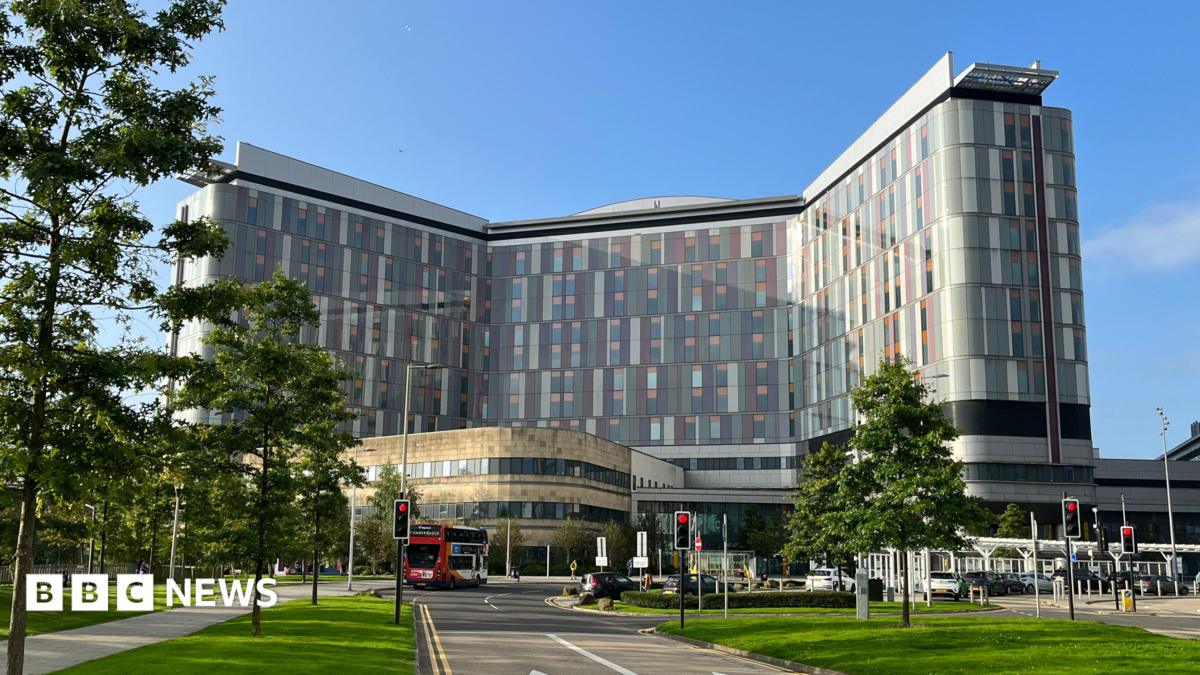
A scientist involved in the development of Scotland's super-hospital has claimed his concerns over patient safety were repeatedly ignored.
Dr Michael Bradnam told the Scottish Hospitals Inquiry he had spent 15 years raising issues with ventilation systems, electrical safety and humidity control at the Queen Elizabeth University Hospital (QEUH) campus in Glasgow.
In a late submission to the probe, launched in the wake of a series of patient deaths, Bradnam said there had been no "formal responses" to his complaints.
NHS Greater Glasgow and Clyde (NHSGGC) said it was reviewing the evidence, but that patient safety remained its "utmost concern".
The inquiry was launched in 2019 to examine mistakes made in the planning, design and construction of the QEUH campus, which includes the Royal Hospital for Children (RHC), following concerns about unusual infections and the deaths of four patients.
Scotland's independent public prosecution and death investigation authority is looking into seven deaths for potential links to the environment at the hospital.
Bradnam, a medical physicist, said he had worked in the health board for more than 40 years and had been involved in the QEUH project for about 20 years.
In evidence presented to the inquiry, he said he had submitted three separate formal situation, background, assessment and recommendations, known as SBARs, relating to the QEUH.
SBARs are the health service's standard procedure for recording significant issues and making recommendations to management.
Bradnam said his first report, in 2020, concerned ventilation and temperature control in rooms with anaesthetic gases.
In his evidence, he said a hospital estates worker had told him those rooms were only set up to have two to three air changes per hour, but that an external contractor who assessed the ventilation system believed it was set up for six.
Bradnam said both were "lower than the 15 air changes per hour" he believed was required to protect staff.
He also said the actual ventilation rates showed a "deficiency" in the design as the system was not able to achieve the rate it was supposed to.
A second report, in 2024, related to electrical safety in critical patient care areas.
It specifically raised concerns that "no department within NHSGGC" was performing checks on wiring and earth bonding for electrical equipment.
In his evidence, Bradnam said this presented a "safety risk to patients and a business risk to the organisation".
A third SBAR complaint, lodged in 2025, was around environmental humidity control in imaging rooms at the QEUH and RHC.
Bradnam said he had identified "recurring humidity control failures" affecting facilities and "elevated humidity levels" had been found.
He raised concerns about the "potential impact on high-value medical imaging equipment" and the "possibility of condensation forming within ventilation systems".
Bradnam recommended that these issues warranted "further investigation" due to the potential risks to "equipment reliability and the possibility of microbial growth".
It is not known whether these issues were probed further.
During a meeting with the health board's chief executive, Prof Jann Gardner, earlier this year, Bradnam said he raised the possibility that "elevated humidity levels in the supply air could be contributing to mould growth within the ventilation system".
Gardner later said a review of imaging facilities had been launched.
In a previous email to management in 2014, Bradnam expressed concern the hospital's diagnostic team was being "pressured" into installing high-value imaging equipment before the building was complete.
He said that risked the "deterioration and damage" of an MRI scanner, which cost about £10m.
Bradnam said he had not received any "formal response" to his complaints, nor any "confirmation that my recommendations have been implemented or that the assurance gaps they identified have been addressed".
He also said he did not know whether the complaints were escalated to management level within the health board.
"By 2026, I had been raising concerns for at least 15 years," he told the inquiry.
"Although some had been partially addressed, I had not seen evidence of a documented, system-wide gap analysis or of a documented process for demonstrating that the identified assurance gaps, particularly those relating to legacy issues, had been resolved and formally closed across the imaging facilities."
The inquiry closed its submissions process in January 2026.
Bradnam said he had only recently been able to contact the probe due to health issues and a family bereavement.
A spokesman for NHSGGC said it had established a new working group, which included Bradnam, to review his concerns.
He added: "The work of this group is currently under way with plans to further augment the expert input and we await full recommendation in due course.
"We are therefore not in a position to comment further at this time, however, patient safety remains our utmost priority and as work progresses through the working group, we will take forward any actions identified as appropriate."
Police have submitted a "standard prosecution report" to the Crown Office and Procurator Fiscal Service (COPFS) relating to four of the seven deaths under investigation.
They include Milly Main, who died at the age of 10 after contracting the stenotrophomonas bacteria while undergoing treatment for leukaemia.
They also relate to two other children and 73-year-old Gail Armstrong.
During closing submissions earlier this year, NHSGGC said, on the balance of probabilities, there was a connection between some infections and the water system.
The health board said it did not accept a link between the hospital environment and particular individual cases of infection.
In three other cases - the deaths of Andrew Slorance, Tony Dynes and Molly Cuddihy - police have been asked to gather information about the circumstances.
No prosecution report has been submitted in those cases.
A Scottish government spokesperson said the safety and public confidence oversight group, composed of key infection control experts, whistleblowers and patients, had been set up to monitor work on safety measures at the QEUH earlier this year.
They added: "Ministers have complete confidence in Lord Brodie and the independent inquiry.
"It is right that Lord Brodie be given the time and space to get to the truth for families without political influence, interference or speculation on the outcome of his conclusions."
John Cuddihy is among those sitting on the oversight group.
His daughter, Molly, died in August 2025 at the age of 23, seven years after becoming seriously ill with an infection potentially acquired at the hospital.
Cuddihy accused NHSGGC of being "less than transparent" with their release of information.
Molly Cuddihy died seven years after becoming seriously ill with an infection potentially picked up at the hospital
He said the fact that some of Bradnam's points had gone unanswered for 15 years was a "significant concern".
"I think it raises the question of how many other clinicians are there whose concerns remain hidden," he said.
"It further echoes the concerns expressed by other clinicians and staff that this culture where they are not being listened to and their issues not being acted upon ultimately impacts on patient safety.
"Public confidence is more than governance, it's about transparency and enabling us to scrutinise the evidence that is laid before us and to assure ourselves that the risks have not only been identified but managed and mitigated."
The Scottish Hospitals Inquiry is scheduled to issue its findings in the coming months.