
How to spot the early signs of dementia in your dog
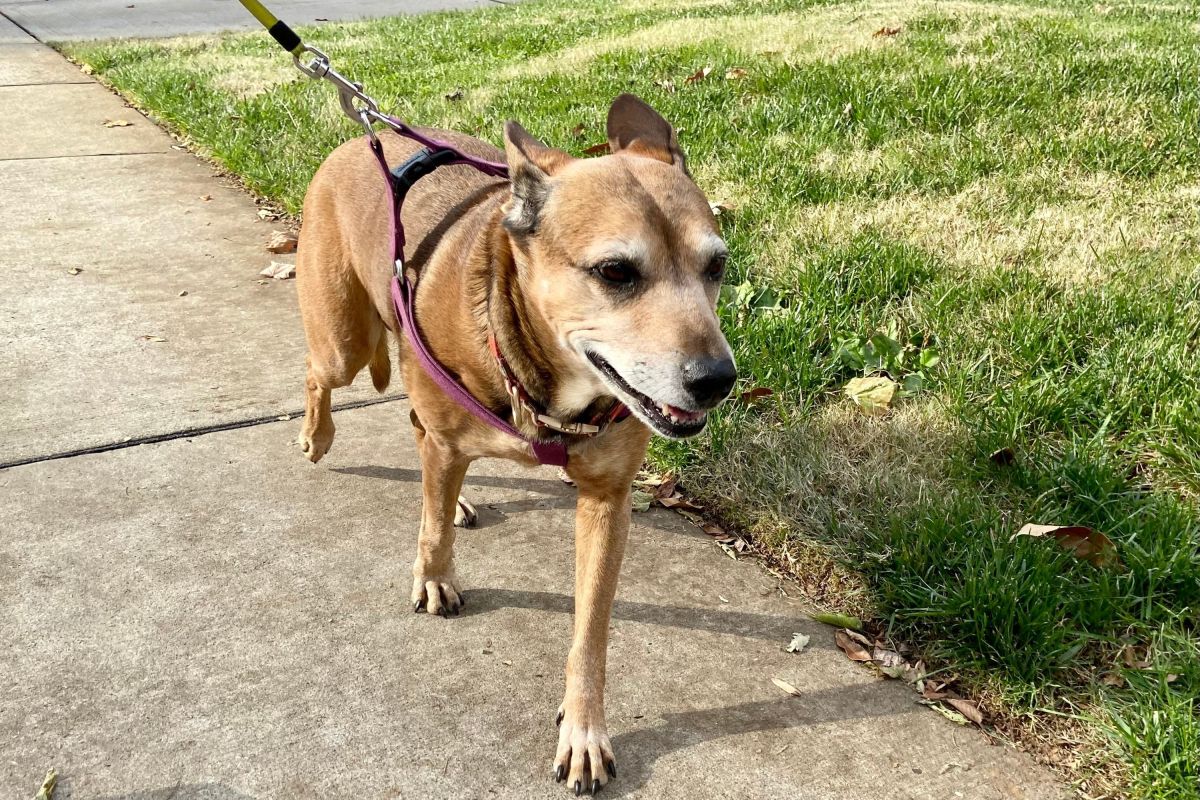
As dogs grow older, it's natural to expect some changes in their behavior, but experts say there's an important distinction between normal aging and canine dementia.
New research published in Frontiers in Veterinary Science suggests that changes in how a dog walks could eventually help veterinarians identify canine cognitive dysfunction (CCD) earlier. Researchers found that dogs with signs of cognitive impairment tended to have shorter stride lengths in their front limbs, even after accounting for age and pain.
While the findings offer a promising new avenue for research, Dr. Dani Powers, Thrive Pet Healthcare's National Specialty Director of Neurology and veterinary neurologist at Thrive Pet Healthcare Specialists San Antonio, told Newsweek that changes in a dog's walk are only one potential clue, but not enough to diagnose dementia.
For Powers, the importance of the study is twofold: it helps understand subtle early signs of cognitive decline in aging dogs that could lead to earlier intervention, while also offering insight into similar conditions in humans.
Although the new study focused on stride length, most owners are more likely to notice gradual changes in their dog's behavior at home.
"For example, a dog might forget a learned behavior every few weeks at first, but as dementia progresses, episodes may start happening every week or even every day," she said. "This slow change over time is usually more important than any single isolated event."
An aging dog's stride length may be a piece of the puzzle, but Powers emphasized that the information alone cannot diagnose CCD.
Many owners dismiss these changes as a normal part of aging, but Powers said that's a common misconception.
"…age itself is not a disease," she said. "But aging does increase the risk of medical conditions that need attention and management."
Orthopedic pain, hormonal disorders and neurological diseases can all mimic or overlap with signs of cognitive decline, making a veterinary evaluation essential.
Powers recommends discussing any changes in a dog's behavior, routine or mobility during regular wellness visits, particularly once pets are older than 7 years. Annual, or even semiannual, examinations and blood work can help veterinarians identify medical problems early and determine whether further testing is needed.
Because several medical conditions can produce symptoms similar to dementia, veterinarians first work to rule out those possibilities before diagnosing canine cognitive dysfunction.
Unlike many illnesses, CCD cannot be confirmed with a single test. Instead, it is considered a diagnosis of exclusion, meaning veterinarians first rule out other possible causes for a dog's symptoms, including pain, arthritis, hormonal disorders, vision or hearing loss and neurological disease.
"If tests do not show any problems with your dog’s metabolism, joints, or nerves, then cognitive dysfunction becomes a more likely reason," Powers said.
Evaluation may include blood work, urinalysis, imaging such as X-rays or MRI scans, and behavioral questionnaires designed to assess cognitive function.
Researchers are also investigating biomarkers—including amyloid beta, neurofilament light chain and glial fibrillary acidic protein—that could one day make diagnosis more objective, although these tests are not yet routinely available, Powers said.
She noted that while the findings are promising, they only show an association, not a cause-and-effect relationship. More research is needed before gait changes can be used as a clinical tool.
Limitations in the study included the lack of randomization, the absence of a control group or advanced diagnostics to rule out causes of gait changes, and possible selection bias and subjective cognitive scoring.
The findings also mirror what is seen in humans, where changes in walks often accompany dementia and Alzheimer's disease as neurodegeneration progresses.
Still, Powers cautioned that owners should not assume a change in their dog's walk means dementia.
"Stride length alone is not enough to diagnose canine cognitive dysfunction," Powers said. "This study adds to our understanding, but gait changes are just one piece of a much larger clinical picture."
There is currently no cure for CCD; however, early intervention may help maintain a dog's quality of life. Treatment often combines medications, supplements, therapeutic diets, environmental enrichment, regular exercise and behavior modification tailored to the individual dog.
"Every dog is different," Powers said. "Some decline slowly over the years, while others progress more quickly."
While more research is needed before changes in stride length can be used as a diagnostic tool, the findings suggest they could one day become another "piece of the puzzle" in identifying CCD earlier.
Contact Newsweek editors on this story: Kara Dolman and Sam Wilson.