
How to Transition from Employee to Entrepreneur: Your Roadmap to Freedom - Success Knocks | The Business Magazine
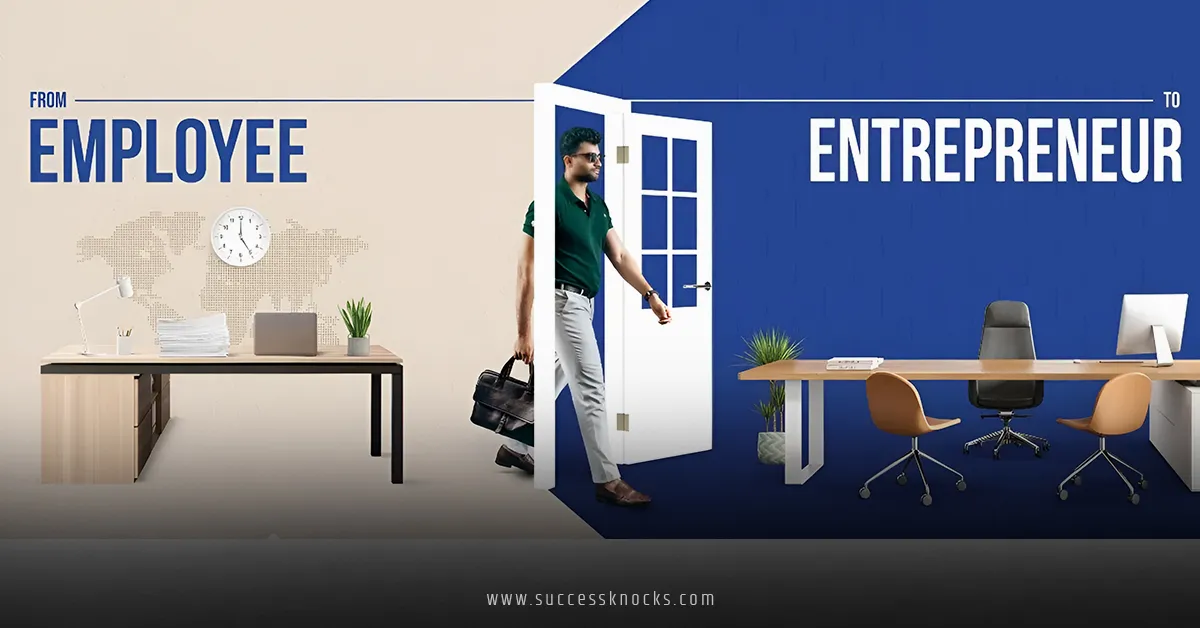
How to transition from employee to entrepreneur is a question that haunts many 9-to-5 workers dreaming of breaking free from the daily grind. The idea of swapping a steady paycheck for the unpredictable thrill of entrepreneurship is both exhilarating and terrifying. But here’s the thing: it’s not just about quitting your job and hoping for the best. It’s about strategy, mindset, and calculated risks. This guide will walk you through the process of making that leap, packed with practical steps, personal insights, and a sprinkle of motivation to keep you moving forward. Ready to trade your cubicle for a corner office of your own making? Let’s dive in.
Ever feel like you’re just a cog in someone else’s machine? That’s where the itch to become an entrepreneur often starts. How to transition from employee to entrepreneur begins with understanding why you want this change. For some, it’s about creative control—building something that’s uniquely yours. For others, it’s the promise of financial independence or the flexibility to design a life that fits your values. Whatever your reason, pinpointing it is like setting the GPS for your entrepreneurial journey.
Let’s be real: not every job is soul-crushing, but many leave you feeling unfulfilled. Maybe you’re tired of office politics, micromanaging bosses, or the monotony of tasks that don’t spark joy. This dissatisfaction can be a powerful motivator. It’s like the universe nudging you to take a chance on yourself. Recognizing these feelings is the first step in learning how to transition from employee to entrepreneur.
Transitioning from employee to entrepreneur isn’t just about changing your job title—it’s about rewiring how you think. Employees often prioritize security and predictability, while entrepreneurs thrive on uncertainty and opportunity. Start seeing challenges as puzzles to solve, not roadblocks. Ask yourself: What’s the worst that could happen if I take a risk? Spoiler alert: it’s rarely as bad as you imagine.
You don’t need to quit your job tomorrow to start acting like an entrepreneur. Begin with small steps—like taking a side project or learning a new skill. These wins build confidence, like stacking bricks to construct your entrepreneurial foundation. For example, I once knew someone who started selling handmade candles on weekends while working as a bank teller. Those small sales gave her the courage to eventually launch a full-fledged online store.
How to transition from employee to entrepreneur starts with a solid idea. But don’t fall into the trap of thinking it has to be revolutionary. Your business idea should blend what you love with what people need. Are you a whiz at graphic design? Maybe there’s a niche for creating branding packages for small businesses. Love fitness? Consider online coaching or a fitness app. The key is to solve a problem for a specific audience.
Before you dive headfirst, test the waters. Talk to potential customers, create a simple landing page, or offer a beta version of your product or service. Validation is like dipping your toe in the pool before jumping in—it ensures you won’t freeze. For instance, Forbes suggests conducting market research to confirm demand, which can save you from costly missteps.
Entrepreneurship is a rollercoaster, and you’ll need a financial cushion to enjoy the ride. Aim to save at least six months’ worth of living expenses—12 months is even better. Cut back on non-essentials (yes, that daily latte adds up) and redirect those funds into your “freedom fund.” This safety net gives you the confidence to focus on your business without panicking about bills.
Don’t quit your day job just yet. Starting your business as a side hustle lets you test your idea while maintaining income stability. It’s like training wheels for your entrepreneurial bike. Use evenings and weekends to build your brand, create content, or network. Over time, your side hustle can grow into your main gig, making the transition from employee to entrepreneur smoother.
As an employee, your schedule is often dictated by someone else. As an entrepreneur, you’re the boss—but that means you’re also the timekeeper. Tools like Trello or Notion can help you prioritize tasks. Think of time management as the scaffolding that holds your business together while you’re learning how to transition from employee to entrepreneur.
You don’t need an MBA, but understanding the basics of marketing, finance, and sales is crucial. Platforms like Coursera offer affordable courses on everything from digital marketing to bookkeeping. These skills are your entrepreneurial toolkit, helping you navigate the complexities of running a business. You can also explore ways to boost your soft skills. This could include investing in negotiations training to become better at striking deals and conflict management, or leadership training to learn how to inspire and organise employees.
A business plan is your roadmap. It doesn’t have to be a 50-page document—think of it as a sketch of your goals, target market, and revenue model. Include sections on your product or service, marketing strategy, and financial projections. This plan is like a compass, guiding you through the chaos of starting a business.
Think long-term: how will your business grow? If you’re launching a freelance writing business, could you eventually hire other writers or create online courses? Planning for scalability ensures you’re not just trading one job for another. It’s a critical part of how to transition from employee to entrepreneur successfully.
In today’s digital world, your brand is your calling card. Create a professional website and leverage social media to showcase your expertise. Platforms like LinkedIn or Instagram can help you connect with your audience. Think of your online presence as a storefront—make it inviting and authentic.
Networking isn’t just about collecting business cards; it’s about building relationships. Attend industry events, join online communities, or reach out to mentors. According to Entrepreneur, strong networks can open doors to partnerships, clients, and opportunities you didn’t even know existed.
Timing is everything when learning how to transition from employee to entrepreneur. Don’t quit your job until your side hustle generates consistent income or you’ve hit key milestones, like securing your first few clients. It’s like waiting for the perfect wave before surfing—you want to ride, not wipe out.
If possible, negotiate a part-time or remote role with your employer as you transition. This halfway house approach gives you income while you focus on scaling your business. It’s not always feasible, but when it is, it’s a game-changer.
Entrepreneurship is a marathon, not a sprint. You’ll face setbacks—maybe a marketing campaign flops or a client backs out. Treat these as lessons, not failures. Each misstep is like a plot twist in your entrepreneurial story, pushing you closer to success.
Markets change, customer needs evolve, and your business must adapt. Stay open to pivoting your strategy or even your entire business model. Flexibility is the secret sauce of how to transition from employee to entrepreneur without losing your sanity.
How to transition from employee to entrepreneur is a journey of courage, strategy, and growth. It starts with a mindset shift, followed by practical steps like validating your idea, building a financial safety net, and honing essential skills. By creating a solid plan, establishing your brand, and networking strategically, you set yourself up for success. Yes, the road will have bumps, but each step brings you closer to a life of freedom and purpose. So, what’s stopping you? Take that first step today—your entrepreneurial adventure is waiting.
The timeline varies, but most successful transitions take 6-18 months. Building a side hustle while saving money and validating your idea is key to learning how to transition from employee to entrepreneur smoothly.
Not necessarily! Many businesses start with minimal investment, especially service-based ones like consulting or freelancing. A financial cushion helps, but creativity and resourcefulness are just as important.
Fear is normal! Start small with a side hustle to build confidence. Knowing how to transition from employee to entrepreneur means taking calculated risks, not reckless ones.
Validate your idea by researching the market and getting feedback from potential customers. Testing small-scale before fully committing is a smart way to ensure success.
Absolutely. While experience helps, passion and a willingness to learn can bridge the gap. Use online resources and networks to build the skills needed for how to transition from employee to entrepreneur.