
IBM sub-1 nm chip enters territory where engineering collides with physics
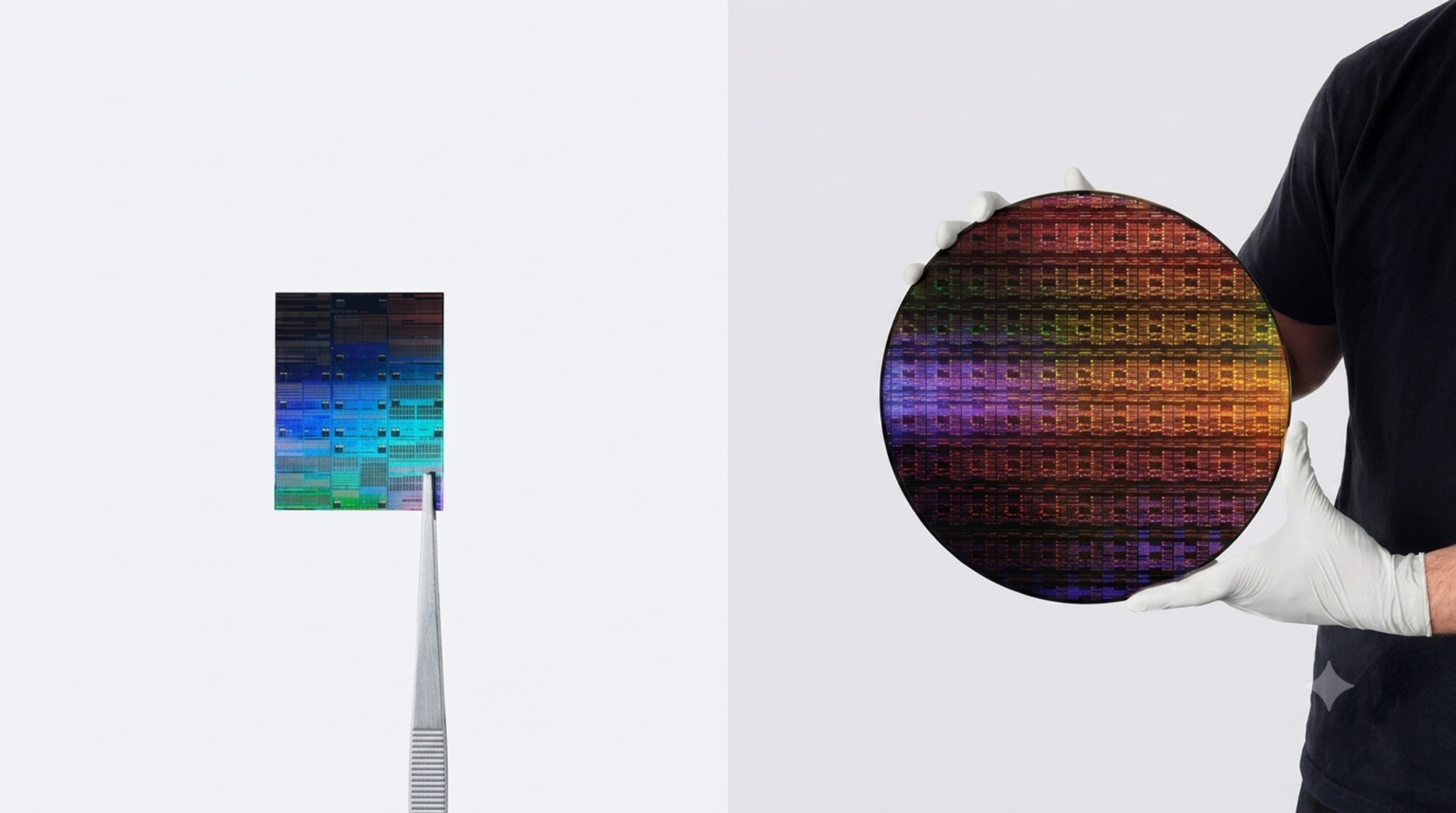
IBM has unveiled what it describes as the world's first sub-1 nm chip technology, carrying nearly 100 billion transistors on a fingernail-sized surface.
The breakthrough revolves around a new 3D NanoStack architecture that moves transistor scaling into the 0.7 nm or 7 angstrom era.
For context, today's most advanced commercial chips typically sit around the 2nm mark, making this a substantial leap in density.
The semiconductor industry has spent decades squeezing more transistors onto increasingly smaller pieces of silicon to improve computing performance.
That process has become progressively harder as transistor dimensions approach the scale of only a few atoms across modern processors.
IBM's approach avoids further horizontal compression by stacking transistor layers vertically through a three-dimensional nanosheet architecture instead.
The design packs nearly twice the transistor density of IBM's 2 nm chip technology introduced back in 2021.
According to the company, the architecture also delivers approximately 40% greater SRAM scaling to support increasingly demanding AI workloads.
This vertical method allows engineers to separate n-type and p-type transistors into distinct layers, which, according to IBM, permits independent optimization of materials for each.
, compared it with building a big block of flats rather than houses in a city.
"IBM's NanoStack is like proposing a 100-storey skyscraper," said Professor Alan Woodward, a computer scientist at Surrey University.
Using this analogy, IBM’s closest competitors, like Intel and Samsung, are somewhere around a 30 to 50-storey building, a far cry from IBM.
In testing, the company reported a 50% performance improvement and 70% greater energy efficiency compared with its existing 2nm chips, alongside a 40% gain in on-chip memory scaling.
Despite the quoted performance improvements, the technology remains years from commercial use, with IBM estimating production could begin within five years at the earliest.
"With our new NanoStack architecture, we're not just making smaller transistors, we're reinventing how chips are built to deliver dramatically more power and energy efficiency," said Jay Gambetta, Director of IBM Research and IBM Fellow.
Vertical stacking introduces complications mostly around heat dissipation, since transistors generate heat that becomes harder to manage when layered closely together.
This same tight spacing also raises the stakes for wafer alignment, since layers must be bonded with extreme precision to avoid malfunction.
Researchers acknowledge that when gaps between layers grow too thin, transistors can fail to switch off correctly, undermining the very density gains NanoStack is meant to deliver.
These engineering trade-offs are symptoms of a deeper problem facing the entire chip industry.
For decades, manufacturers have relied on Moore's Law, the pattern of transistor counts doubling roughly every two years.
But that pace has grown harder to sustain as designs approach the physical limits of individual atoms.
Whether NanoStack genuinely extends that trajectory by another decade, as IBM projects, depends on whether these unresolved manufacturing challenges can be solved at scale.
It is partly for this reason that IBM has drawn in partners including ASML, Lam Research, and Tokyo Electron, signalling an industry-wide effort behind this push toward angstrom-level scaling.
Even so, similar bold claims accompanied IBM's 2nm chip unveiling in 2021, but turning lab success into mass production historically takes longer than initial announcements.
Follow TechRadar on Google News and add us as a preferred source to get our expert news, reviews, and opinion in your feeds. Make sure to click the Follow button!
And of course you can also follow TechRadar on TikTok for news, reviews, unboxings in video form, and get regular updates from us on WhatsApp too.
Efosa has been writing about technology for over 7 years, initially driven by curiosity but now fueled by a strong passion for the field. He holds both a Master's and a PhD in sciences, which provided him with a solid foundation in analytical thinking.
Please logout and then login again, you will then be prompted to enter your display name.