
In 1927, John D Rockefeller Jr secretly used a shell company to buy over 35,000 Wyoming acres for $1.4 million; NPS says acquiring the same amount of Jackson Hole land today would cost over $1 billion
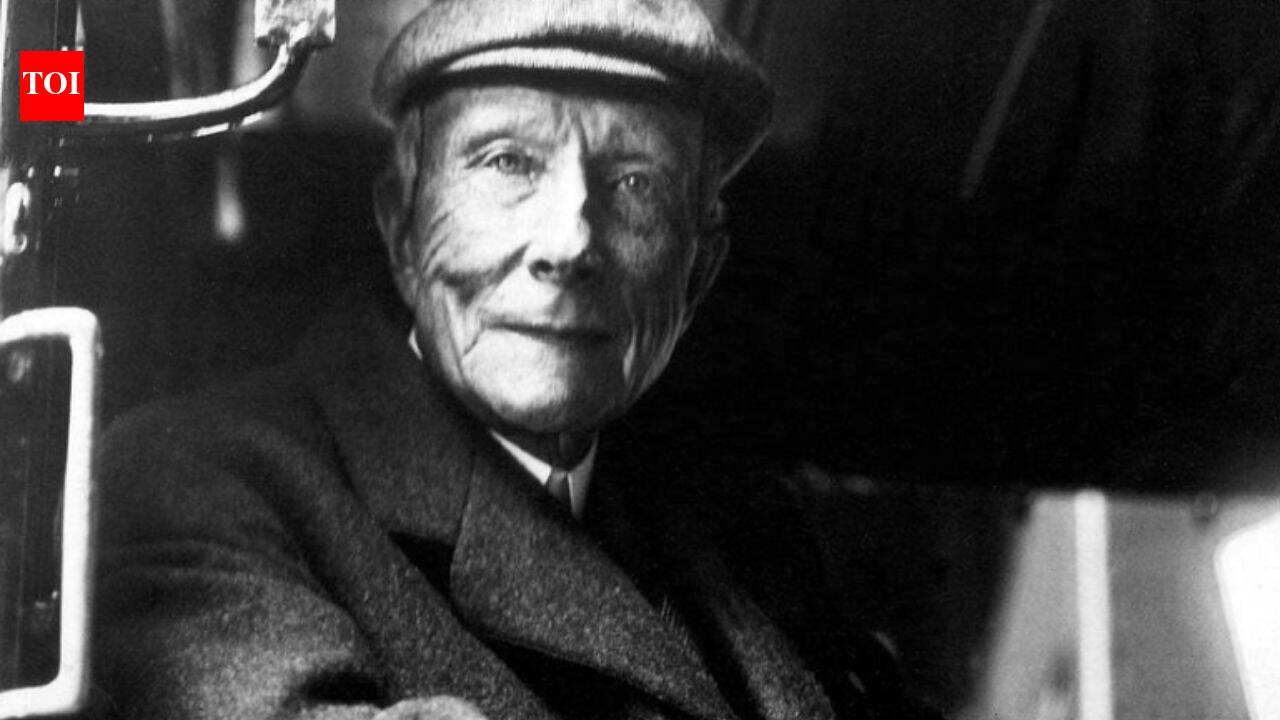
In the 1920s, Jackson Hole in Wyoming was changing quickly. Tourism was growing, development was spreading and wealthy visitors were arriving in the valley for an authentic cowboy experience. At the same time, local ranchers and businessmen were becoming concerned about the growing number of cabins, gas stations, dancehalls, billboards and racetracks appearing across the landscape.According to National Park Servoce, the push to protect Jackson Hole began to take shape in 1923, when local residents met at Maud Noble’s cabin.
Their aim was to preserve the valley’s open spaces and prevent further unwanted development. A few years later, the conservation effort gained a powerful supporter when businessman John D Rockefeller Jr visited the area.Rockefeller toured Jackson Hole in 1926 with Yellowstone Superintendent Horace Albright.
He was impressed by the mountain scenery and began considering a plan to buy private land across the valley. The eventual aim was to donate the land to the federal government so it could become part of the now Grand Teton National Park.But the land-buying plan was not made public at first. Rockefeller and Albright wanted to acquire large areas without revealing who was behind the purchases.
A shell company was created in 1927 for this purpose. It was called the Snake River Land Company.The secret purchaseIn February 1927, Albright wrote to Rockefeller outlining what a definite plan of action for buying land in Jackson Hole. He advised Rockefeller not to reveal the larger plan of acquiring private holdings in the valley.“Say nothing, at the present time, about the larger or ultimate plan of acquiring all of the private holdings in the Jackson Hole,” Albright wrote.He also suggested that the purchases be made through an agency or agencies and presented as part of a plan to create a recreation and hunting club.
The strategy was intended to prevent landowners from increasing their prices after learning that Rockefeller was behind the purchases. The Snake River Land Company was therefore set up in 1927. It presented itself to the local community as a recreation company.Harold Fabian handled legal matters for the company, while Robert E Miller, described by the NPS as the most influential man in the valley at the time, bought the land directly.
Neither man knew the identity of the anonymous donors who were providing the money.Intrestingly, Miller was known to disagree strongly with Albright and the Park Service over their ideas for conserving Jackson Hole. Yet he was the person purchasing land on behalf of the company whose ultimate purpose was linked to that conservation effort.A 35,000-acre land dealThe Snake River Land Company began buying land north of the Gros Ventre River and continued its purchases from west to east across the valley.
According to the National Park Service, the company eventually acquired more than 35,000 acres for $1.4 million. That worked out to about $39.61 per acre.The price was a bargain for Rockefeller, but it was also a fair price for Jackson Hole at the time because the area was going through an agricultural depression.The scale of the purchase is striking when compared with the value of land in the same area today.
The National Park Service says acquiring the same amount of Jackson Hole land today would cost more than $1 billion.The land was not bought simply as a private investment. Rockefeller intended to give the properties to the federal government so they could eventually become part of a protected national park landscape.
However, when the truth eventually emerged, many people in Jackson Hole felt betrayed.The revelationBy 1930, Rockefeller, Albright and the Park Service made their plans public. Residents learned that the Snake River Land Company had been buying large areas of the valley with Rockefeller's money and that the long-term intention was to transfer the land to the federal government.The revelation caused distrust in the community.
The dispute lead to several investigations, including a Senate investigation in 1932 initiated by Wyoming senators.According to South Dakota Senator Peter Norbeck, “it would appear from all that has occurred here that Mr Rockefeller is having a mighty hard time of it trying to do nothing more than give away a couple of million dollars of his money.”The Snake River Land Company was eventually exonerated.
But the NPS says the deception created a lasting foundation of mistrust in Jackson Hole. That mistrust affected Rockefeller's plans.How land became Grand TetonThe creation of the present-day Grand Teton National Park took several more years. Congress created the original Grand Teton National Park in 1929 to protect the Teton Range and several lakes at the foot of the mountains.
In 1943, President Franklin D Roosevelt declared additional land in the valley as Jackson Hole National Monument.Rockefeller continued to hold the land purchased through the Snake River Land Company. In 1949, he donated the land he had acquired to the government so it could be included in the national park.A year later, in 1950, Congress combined the original national park, the national monument and Rockefeller's donated lands to establish present-day Grand Teton National Park.The story did not end there.
In 1972, Congress established the John D Rockefeller, Jr Memorial Parkway between Yellowstone and Grand Teton. The parkway was created to honour Rockefeller's philanthropy and his commitment to the National Park System.Catch the latest World News and Live updates. Download the TOI app.