
In the 1970s, Pulitzer Prize-winning poet W.S. Merwin and his wife Paula bought a barren piece of land in Hawaii; planting one sapling at a time, they transformed the wasteland into a 19-acre forest with more than 3,000 palms
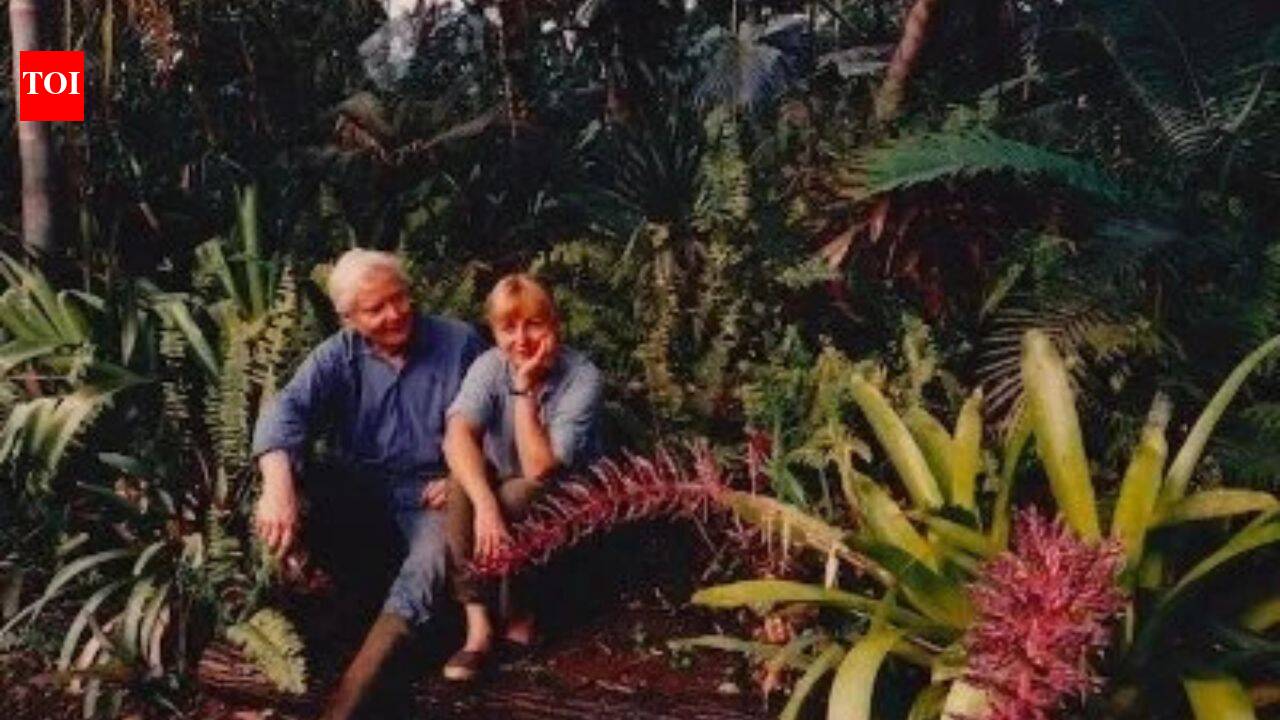
An acclaimed American poet laureate, two-time Pulitzer Prize-winning author, environmental activist and literary translator, W.S. Merwin held many titles throughout his life. But what he held even more closely was his love for nature. The poet who moved to Maui in the 1970s, to study Zen Buddhism ended up buying a barren parcel of land and transforming it into a 19-acre palm forest that lives and breathes to this day, according to a report by The Merwin Conservancy.W.S.
MerwinBorn in New York City in 1927, and raised in New Jersey and Scranton, Pennsylvania, Merwin was the son of a Presbyterian minister. “I started writing hymns for my father almost as soon as I could write at all,” he said about his development as a writer. He attended Princeton University. “It was not until I had received a scholarship and gone away to the university that I began to read poetry steadily and try incessantly, and with abiding desperation, to write it,” he said in an interview.After graduating from Princeton, he moved to Europe and worked as a translator and tutor, first for the royal family of Portugal, and later in Mallorca, Spain as a tutor for the son of Robert Graves.
He would shortly thereafter buy a derelict farmhouse in the rural Dordogne Valley of Southern France, and restore it over many years.One of America's most decorated poets, Merwin published over 50 books in his lifetime and translated dozens more. His poems often found an intersection between the power of memory, landscape and language.
During the Vietnam War, Merwin refused his first Pulitzer Prize and requested that the award money be divided between a peace activist, Alan Blanchard and the Draft Resistance Movement.A wasteland into a forestAs he moved to Maui in 1975 to study under the Zen Buddhist teacher Robert Aitken, he was encouraged to purchase a denuded parcel of land on the island with the soil decimated in 1976.
He was living in New York City at the time and was growing weary of city life. Though he remained passionately opposed to the war in Vietnam, he was becoming disillusioned with the political outrage of others that easily spilt into hatred and unrestrained anger. On Maui he found some of the quiet and anonymity that he had been longing for, along with a climate suited to year-round gardening.
He had decided that he would attempt to restore a small piece of Hawai‘ian rainforest. He did not know where or how to begin, so he simply began by putting plants into the soil.Previously, in the nineteenth century, the land had been extensively logged to provide lumber for whaling ships. After much of the forest was gone, cattle were put out to graze.
The water of the stream that once flowed down among the trees had been diverted to the agricultural fields in the center of the island. Most recently, a pineapple plantation had been started and then failed some years later, after the farmers ploughed the land vertically—up and down the slope instead of across it—causing what little remained of the topsoil to wash away.This small parcel had been pronounced agricultural wasteland, and as William walked through the property, he could see that things were in poor condition: a dry streambed; soil that supported only sparse grass.
“I stood there hearing the thrush and wanting to stay there,” he wrote in The House and the Garden.A landscape shaped by volcanic historyMaui, the second youngest of the major islands in the Hawai‘ian archipelago—began its rise from a volcanic hot spot in the Pacific Ocean about 1.6 million years ago.
The island consists of two shield volcanoes: Kahālāwai in the west at nearly six thousand feet and Haleakalā in the east at ten thousand feet—joined in the middle by a central isthmus. When the volcanoes cooled and quieted over the ensuing millennia, the early ancestors of what would come to be the endemic flora of the islands were dispersed by migrating birds, wind, and water from across the Pacific.
Through hundreds of thousands of years of adaptation and evolution in great isolation, and from an estimated 250 to 300 species of originally deposited seeds and fruits that took root on the islands, there came to be approximately 1,030 unique species of flowering plants and 162 species of ferns across the islands.The wasted land that William bought in 1977 is part of an ahupua‘a called Pe‘ahi—the valley and watershed of the Pe‘ahi Stream.
When he arrived, the stream had already been dry for over a century, and the land around it stripped of its trees. “I had long dreamed,” he wrote, “of having a chance, one day, to try to restore a bit of the earth’s surface that had been abused by human ‘improvement.’ I loved the wind-swept ridge, empty of the sounds of machines, just as it was, with its tawny, dry grass waving in the wind of late summer.”He built his home there and soon after, met his wife Paula Dunaway, whom he had previously met in 1970 in New York City.
According to a report by Emergence Magazine, they met at a mutual friend's gathering and walked her home, seventy blocks. They were married a year later.The couple set out on a 40-year journey to give back to the land, attentively cultivating their plot of land in the Pe’ahi Valley on the north shore of Maui, Hawaii.
Merwin discovered his love for gardening, particularly during the years he spent living in a rural village in the South of France. One year, he stopped to watch the farmers, who had gathered to manually separate the season’s harvest of grain from the chaff and stems. The next year, the arrival of the threshing machine brought with it the abrupt end of that ritual of community and cooperation.Not native, but endangeredTogether they planted several hundred native koa trees.
Nearly all of them died, meeting the same fate as the vast majority of native species that William had attempted to put into the ground thus far. A friend from the local arboretum told him he would never be successful in restoring native rainforest. “I said, ‘Well, I can’t restore native forest,’” Merwin recalled in an interview.
“I can’t restore native things very well at all. But palms are endangered all over the world.”There are an estimated 2,600 species of palm trees in the world, and the palm family, Arecaceae, dates back at least eighty million years in the fossil record. Over a thousand palm species are critically endangered, with habitat loss due to the encroachment of human development being one major cause.
Merwin began to research palm trees from Hawai‘i, Madagascar, Cuba, Australia, and Brazil. He began to raise them from seeds and plant them in places on the property that seemed best suited to their preferred climate.One sapling at a time, they transformed the "wasteland" into a thriving 19-acre palm forest that remains a dedicated and treasured member of the environmentalist community, to date.
Over the years, he and Paula came into possession of two adjacent properties, expanding their original three acres to nineteen. They planted trees and worked in the garden nearly every day. The collection is one of the largest in the world, has nearly 3,000 individual palm trees, representing over 480 taxonomic species and more than 125 genera.According to experts at the National Tropical Botanical Gardens, the collection “is a living treasure house of palm DNA.” The property also has agricultural, wildlife habitat, archaeological and scenic values.The forest that outlived its creatorThe couple later established a non-profit organization The Merwin Conservancy in order to preserve and protect their home, and its biodiverse landscape that includes the palms, as well as other rare and endangered flora.
In 2015, Merwin and his lifetime of work, both poetical and environmental, were the subject of the documentary film, Even Though the Whole World Is Burning. Merwin died at his home in 2019 at 91, having outlived his wife by two years. By then he had expanded his land to 19 acres and transformed the once-depleted hillside into a tropical arboretum.Catch the latest World News and Live updates.
Download the TOI app.