
Isles of Scilly Museum to display treasure from 1680 shipwreck
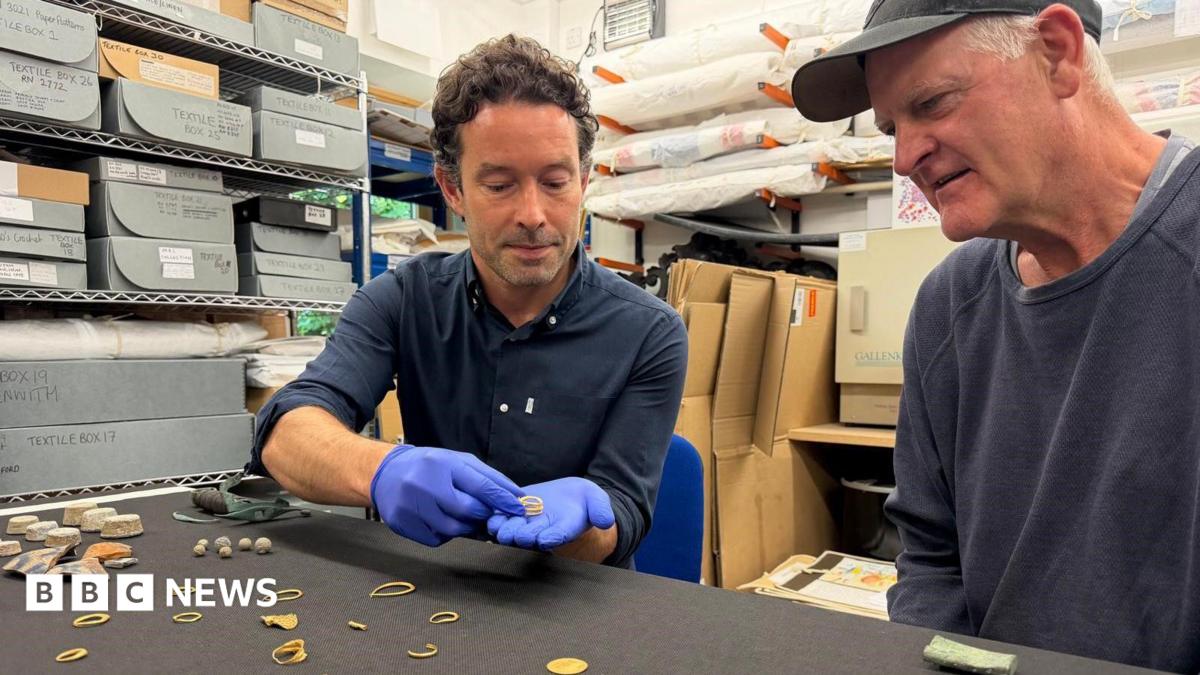
Xavier Duffy (left) said the condition of the finds was "outstanding"
Artefacts from a shipwreck dating back to 1680 have been given to a museum.
Items from The Phoenix have been donated to the Isles of Scilly Museum by diver and author Todd Stevens, who identified the wreck site off the coast of Samson in 2017 following years of historical investigation and underwater exploration.
Among the recovered material are coins, navigational instruments, sword fragments, jewellery and other items believed to have belonged to the captain and his crew.
Museum curator Xavier Duffy said the quality of the finds was "outstanding" and added "it's hard to believe these items have been sitting on the seabed for nearly 350 years".
The Phoenix was a 46-gun ship captained by William Wildy of Whitechapel and under charter to the East India Company.
The vessel was returning from Amoy, China, carrying cargo including pepper, spices, silks and cloth when it was wrecked in poor weather near the Isles of Scilly on 11 January 1680.
Stevens identified the area of the wreck site using a historic map of the waters surrounding the islands, found in the National Maritime Museum archive, with the words "Cap Wildy lost" scrawled over the area west of the island of Samson.
Documentary evidence and distinctive ballast known as kentledge, which was made from broken cannon pieces, subsequently confirmed the wreck as the Phoenix.
Duffy said contemporary correspondence after the sinking showed the loss of the Phoenix prompted the construction of the lighthouse on St Agnes, the first on the Isles of Scilly.
The donated artefacts are set go on display in the museum's new Maritime Gallery at the Town Hall in Hugh Town, St Mary's.
Follow BBC Cornwall on X, external, Facebook, external and Instagram, external. Send your story ideas to [email protected], external.