
Jackery Wants to Stick AI Between Your Solar Panels and Electrical Grid
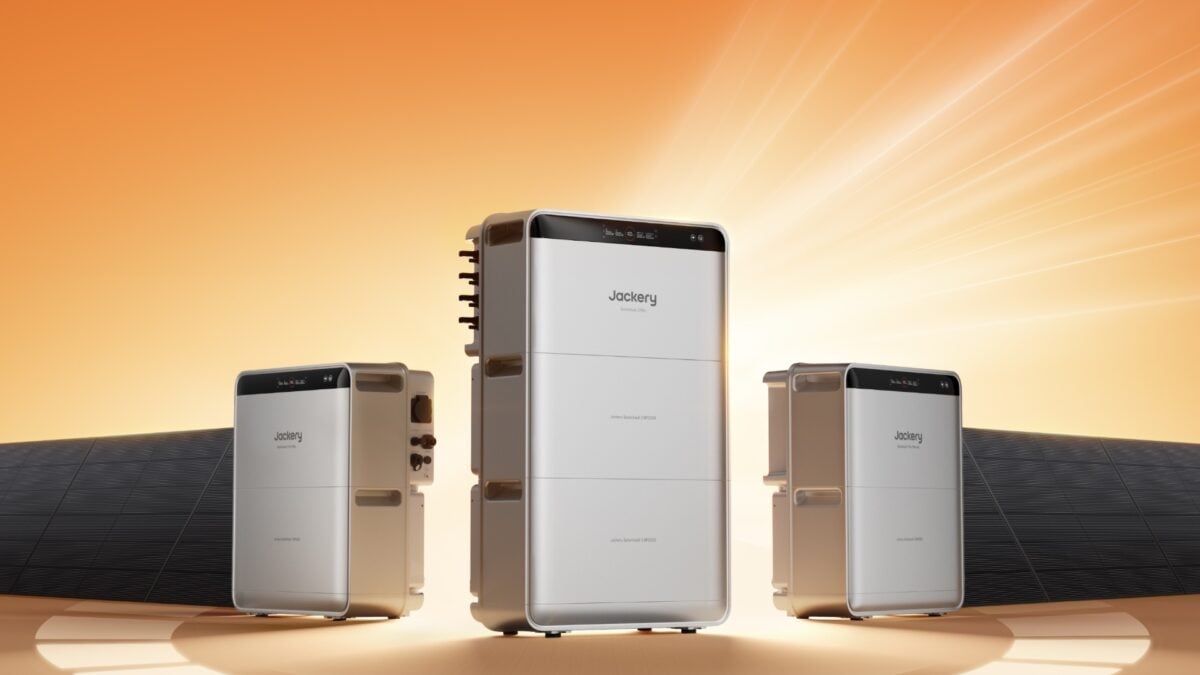
This week, Jackery announced the Ark AI EMS, an “AI-powered” software-based energy management system for homes with backup batteries and solar power. It’s similar to the software that drives the Anker Solix E10, but with a heavy emphasis on AI automation that Anker’s system lacks.
The Ark AI EMS features “24-hour predictive forecasting” that manages charging and power delivery depending on “real-world conditions like upcoming sunlight and learned home energy use behavior.” Jackery claims users will save up to 75% in combined solar and battery setups compared to solar installations without batteries.
The company says all of its automations are clearly noted and that the system “prioritizes manual user commands to eliminate the obscured, ‘black box’ operation common to modern integrated AI.” Good, I suppose, although I’m not sure how comfortable I am giving control of my house’s electrical grid over to a technology that’s as prone to inexplicable output as AI is.
Like most battery backup companies, Jackery promotes the idea of saving money by banking energy during times when rates are low and using that energy later, when rates are higher. According to a Jackery YouTube video, the Ark AI EMS will be able to automate that and other power scenarios, with modes that prioritize running your battery down when electricity is cheap or attempting to balance battery health with savings, among other things. It’s not clear exactly what that “balanced” mode means, but in one “moderate wear” scenario shown in the video, the battery is allowed to drop to 5% before it stops outputting, while in “balanced mode,” it will only drop to 10%. The video also shows the system prioritizing solar power for charging batteries over using the power grid.
That’s all stuff the Anker Solix E10‘s software can do, although from the looks of things, Jackery’s app has a cleaner, easier-to-discern presentation than what I experienced while testing the Solix E10. Really, it’s the AI features that set the Ark AI EMS apart. Jackery has not announced pricing for the Ark system. The company is planning to release Ark in the U.S., a Jackery representative confirmed via email, but it’s waiting to see how local U.S. regulations pan out before providing a release date.
Jackery is also bringing its modular SolarVault Series 3 batteries to the U.S. in the first quarter of 2027. The batteries are similar to Anker’s Solix batteries, in that they’re designed to bank solar energy and to be expandable. For a quick comparison, Jackery’s French site lists the SolarVault 3 Pro with a 2.5kWh capacity that’s expandable up to 45.36kWh, or about half of Anker’s fully expanded home backup battery capacity.
Later in 2027, the company is planning a U.S. release of its Solar Roof, which doesn’t use the usual flat panels that make up most American solar installations; instead, it’s made up of wavy panels that look like terra-cotta tiles and replace your roof shingles, rather than being bolted onto them. The company claims they can reach “up to 25% cell efficiency,” meaning a quarter of the sunlight that hits them is converted to electricity. (Residential solar in the U.S. tends to hover around 20%, according to a 2025 solar fact sheet from the University of Michigan’s Center for Sustainable Systems.)
Eric Migicovsky, leader of the revived Pebble, is making smartwatches for himself. You're just along for the ride.
Stay cool and enjoy the long, sunny days ahead with these gadgets to upgrade your life this summer and beyond.
Love sticking pretty lights in your patio? Govee’s lights are an easy, but very spendy way to do it.
Jackery announces three new tiers of modular home backup batteries.
The Google Home Speaker is available for preorder today and hits shelves on June 25.
Segway’s high-end robotic lawn mower is great at mowing—with the right environment and preparation.