
Japan just completed another step toward independent satellite navigation
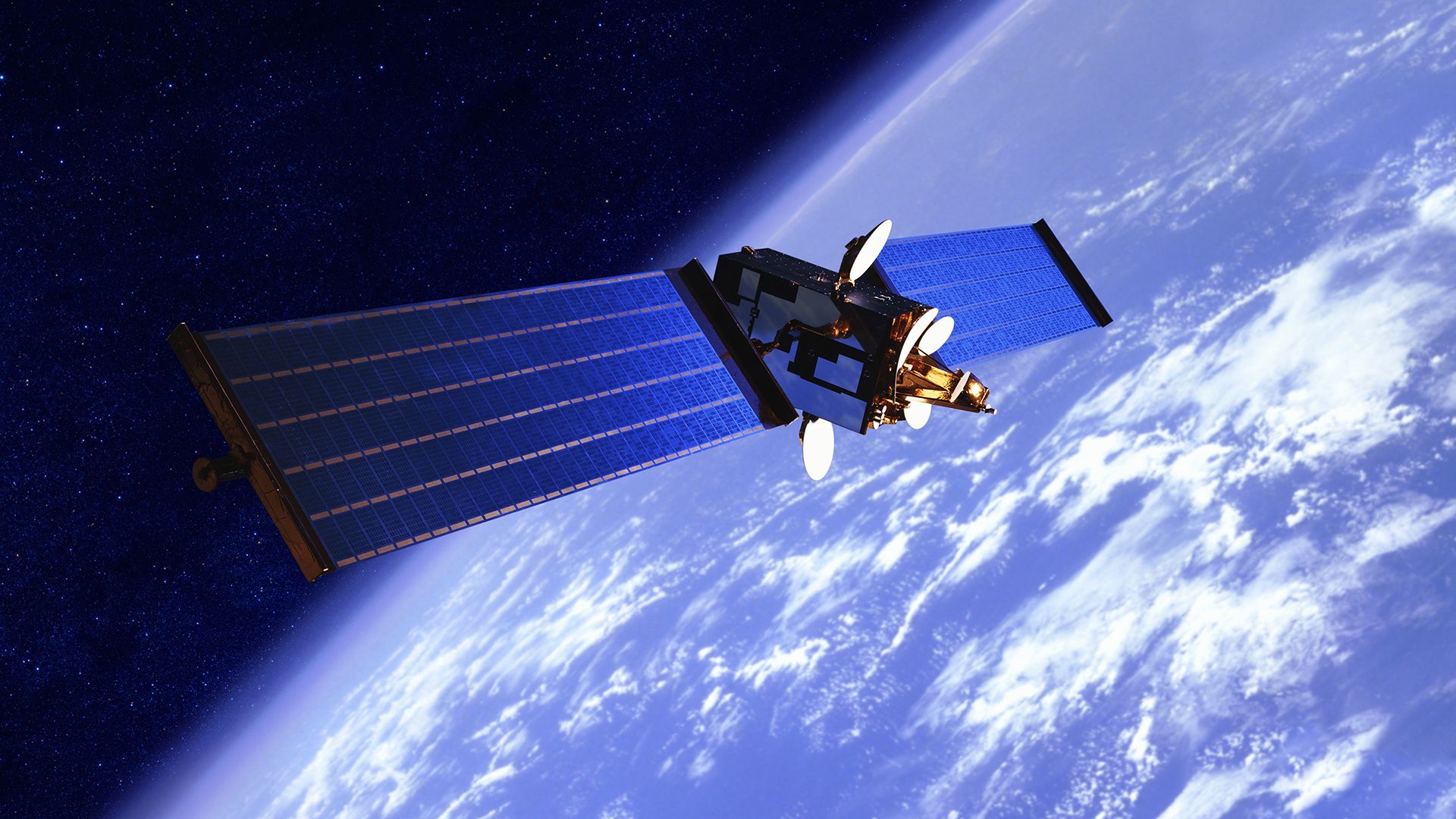
Mountainous terrain and densely packed city blocks across Japan can obstruct ordinary satellite positioning signals from reaching receivers on the ground.
Standard Global Positioning System coverage was never built with those obstacles in mind, leaving gaps in accuracy across parts of the country.
Japan has spent more than a decade building its own answer to that gap, and this week that effort reached a new milestone.
Japanese authorities developed the Quasi-Zenith Satellite System, a constellation designed to guarantee near-constant coverage and sharper location accuracy across the archipelago.
Japan's Cabinet Office states that the system complements GPS by ensuring a navigation satellite remains almost always somewhere above the country.
Japan's islands span latitudes between 20° and 45° North, a spread too wide for one geostationary satellite to cover alone.
The QZSS satellites therefore fly an inclined geostationary orbit that traces a figure-eight pattern when viewed from the ground.
The newest satellite in that constellation, known as Michibiki No. 7 or QZS-7, reached its intended orbit early Tuesday local time aboard an H3 rocket.
This orbit causes satellites to move more slowly while above the Northern Hemisphere, spending roughly 13 hours near the equator each cycle.
The first configuration used four satellites, and one of them appeared over Japan every eight hours during that early arrangement.
One satellite remained at an elevation of 70° or higher at all times, though not always at the exact zenith overhead.
That detail about elevation, rather than reaching the true zenith overhead, is actually what gave the constellation its distinctive quasi-zenith name.
The H3 rocket, which carried the QZS-7, is the Japan Aerospace Exploration Agency's (JAXA) newest mid-range launcher, and Tuesday's flight was the rocket's ninth mission since its debut.
Two of those nine missions failed the rocket's short operational history so far.
The most recent failure occurred in December 2025, when a glue-related fault destroyed the navigation satellite payload it was carrying.
That lost satellite was QZS-5, an earlier orbiter meant to expand Japan's navigation constellation before its launch attempt failed.
The first experimental QZSS satellite went into space in 2010, followed by four production satellites launched between 2017 and 2021.
Japan's government later decided to expand the constellation further, growing the planned fleet from four satellites to seven satellites total.
QZS-6 launched successfully in February 2025, arriving in orbit months before the failed December attempt to launch QZS-5 occurred.
Officials say three more satellites are planned sometime during the 2030s, though no direct replacement for QZS-5 has yet been confirmed.
Tuesday's success suggests Japan now holds nearly all of the satellite navigation coverage it originally set out to build.
It also offers JAXA a measure of reassurance that the H3 rocket, despite its rocky record, can still serve as a dependable workhorse for future missions.
Follow TechRadar on Google News and add us as a preferred source to get our expert news, reviews, and opinion in your feeds.
Efosa has been writing about technology for over 7 years, initially driven by curiosity but now fueled by a strong passion for the field. He holds both a Master's and a PhD in sciences, which provided him with a solid foundation in analytical thinking.
Please logout and then login again, you will then be prompted to enter your display name.