
Johnson & Johnson offers to pay $5.5bn to settle baby powder lawsuits
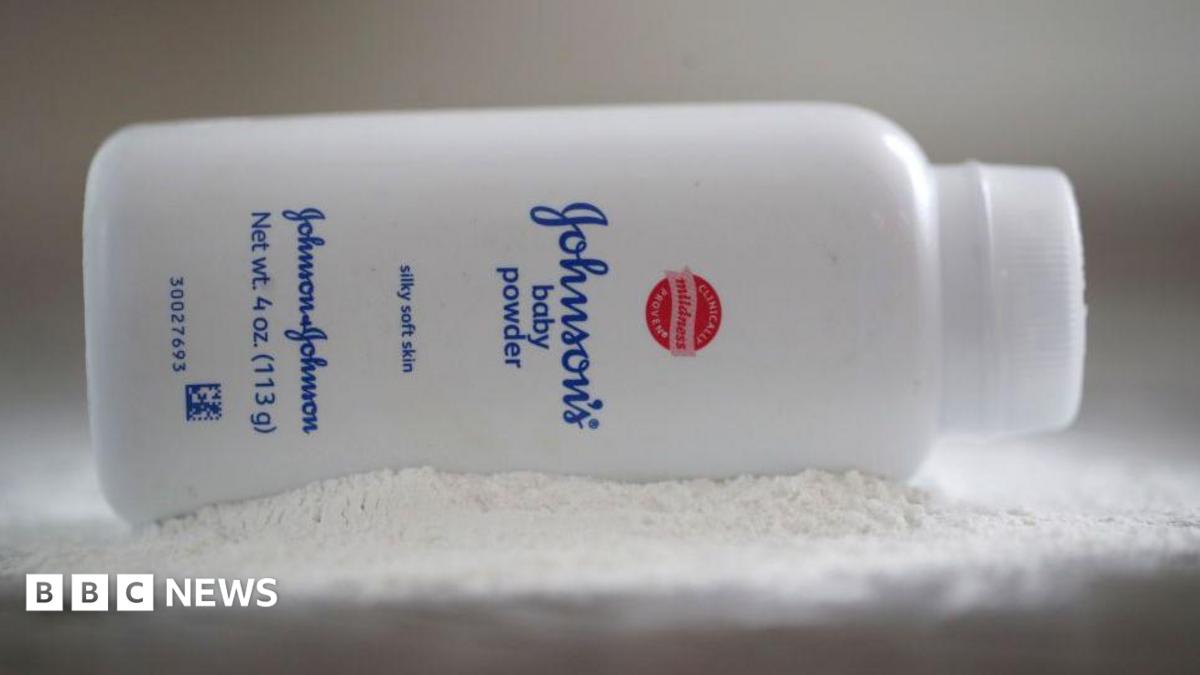
Johnson & Johnson (J&J) has offered to pay as much as $5.5bn (£4.14bn) to resolve tens of thousands of lawsuits alleging that its baby powder and other products containing talcum cause ovarian cancer.
The proposed landmark settlement aims to close a long-running legal battle that has weighed on the US healthcare giant for years.
J&J has denied that its talc-based products caused cancer and has changed the formula of its widely-used baby powder.
Erik Haas, the firm's vice president of litigation said on Monday, external that the allegations are "meritless" and that J&J was willing to settle in order to finally resolve the matter.
J&J said the settlement would cover about 69,000 cases, totalling most of the remaining talc-related claims. The firm will offer up to $3bn next year, with no additional payments due before 2028, it said.
The proposal must be accepted by legal firms representing 95% of the ovarian cancer claims in state and federal courts before it can be finalised, the J&J said.
Haas said in a statement that the company is confident that it would have "ultimately prevailed with further litigation" just as it has in the majority of cases heard in court to date.
He added that the proposed resolution "allows the company to put this matter behind it" and enable J&J to "remain focused on its mission to develop medicines and devices that save lives".
Lawsuits against J&J over its talc-based baby powder started as early as 2009.
Earlier in July, a federal court handed the firm a victory by questioning individual plaintiffs' ability to show that talc was the direct cause of their ovarian cancer.
Talc is a natural mineral made of magnesium, silicon, oxygen and hydrogen, known for its soapy feel and is often used in baby powder.
The company has faced lawsuits from consumers and their survivors who claim J&J's talc products caused cancer due to contamination with asbestos.
Talc is mined from the earth and is found in seams close to that of asbestos, which is a material known to cause cancer.
J&J has repeatedly denied the allegations and in its latest announcement said: "Studies show talc is safe, does not contain asbestos and does not cause cancer."
In 2022, J&J said it would stop making and selling its talc-based baby powder around the world.
The announcement came more than two years after it had ended sales of the product in the US.
"As part of a worldwide portfolio assessment, we have made the commercial decision to transition to an all cornstarch-based baby powder portfolio," J&J said at the time.