
lawyer eric lee defends boulder terrorist's family from deportation amid controversy over radical clients
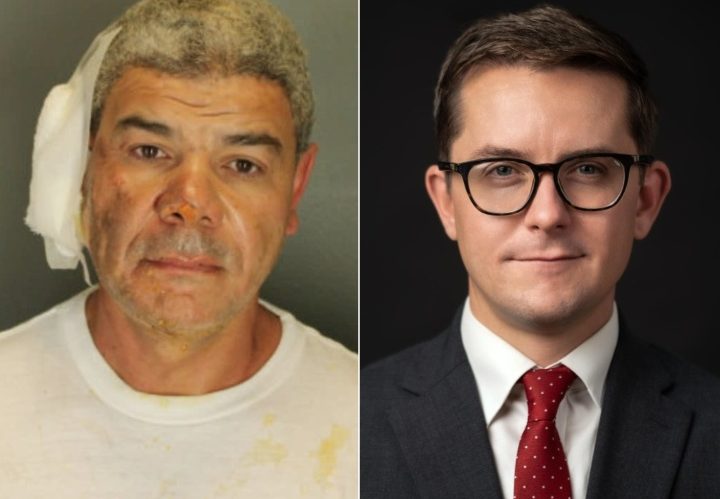
A lawyer representing the family of the Boulder, Colo., firebomber in their deportation case has a long history of defending anti-Israel radicals, including a Yale Law School scholar who moonlit as a member of a U.S.-sanctioned terrorist fundraising organization and a Brown University faculty member who attended slain Hezbollah leader Hassan Nasrallah's funeral. Eric Lee, one of the four lawyers who came to the defense of Mohammed Soliman's family, has argued that their removal is reminiscent of Nazi Germany. However, a judge ruled last week that deportation proceedings against the family could continue and that they could remain detained.
Lee's history of defending radical clients has sparked controversy. One of his most well-known clients is Helyeh Doutaghi, a research scholar at Yale Law School who was put on leave for moonlighting as a member of Samidoun, a organization sanctioned by the U.S. government as a "sham charity" and a "front organization" for the Popular Front for the Liberation of Palestine (PFLP), a foreign-designated terrorist organization. Doutaghi delivered a speech in Iran for a Samidoun-sponsored screening of a film honoring Lebanese terrorist Georges Abdallah and traveled with a Samidoun group on a 2023 "fact-finding mission" to Venezuela to observe the impact of "U.S. sanctions and coercive economic measures."
Lee has also defended Rasha Alawieh, an assistant professor of medicine at Brown University who was deported after authorities found evidence she attended Hezbollah leader Hassan Nasrallah's funeral in Lebanon. He's also represented well-known student radicals on elite college campuses, including Prahlad Iyengar, who was suspended from the Massachusetts Institute of Technology after the university accused him of supporting terrorism in an article that featured PFLP flyers and argued violence is necessary in the anti-Israel movement to overcome "colonial oppression."
Another Lee client was Momodou Taal, the Cornell University student who had his visa revoked in March after calling for the destruction of the United States and celebrating Hamas's Oct. 7 attacks. Taal sued the Trump administration over its executive order calling to expel pro-Hamas visa holders, and Lee represented Taal in both the suit and the deportation proceedings. Lee argued that the order forced Taal to withdraw from "public engagement" and thus "deprived" his friends "of their rights to listen" to his "ideas and suggestions," which included a call for campus protesters to take their "cue from the armed resistance in Palestine."
Lee's activism has also raised eyebrows. During a May 31 speech before the Socialist Equality Party in London, Lee claimed that "nobody, no reasonable person, can have any idea of what type of speech is antisemitic." He has also shared posts from Unity of Fields, a self-described "militant front against the US-NATO-zionist axis of imperialism" that has vowed to bring violence to America. The posts boasted about detainees breaking out of an ICE detention center and called for "MANY Al-AQSA FLOODS!", referring to Hamas's name for the terror group's Oct. 7 attack.
Lee has long defended immigrants, even winning an award for his involvement in a 2024 Supreme Court case that he lost. He's also been highly critical of both parties on immigration, accusing them of abandoning "their responsibility of upholding democratic rights." Since Trump's election, Lee has repeatedly called for Americans to "forcefully" rise up against the president and his immigration policies, particularly in Los Angeles. However, his history of defending radical clients and his own activism have sparked controversy, with some questioning his commitment to democratic values.
Lee did not return a request for comment on his representation of the Soliman family and his history of defending radical clients. The case has sparked a heated debate over immigration, national security, and the limits of free speech, with some arguing that Lee's clients pose a threat to American values and others seeing them as victims of an overly broad and restrictive immigration policy.