
Mamdani’s Promised Rent Freeze Approved in New York: What to Know
Follow this section to personalize your feed and get instant alerts.
Follow this tag to personalize your feed and get instant alerts.
Follow this author to personalize your feed and get instant alerts.
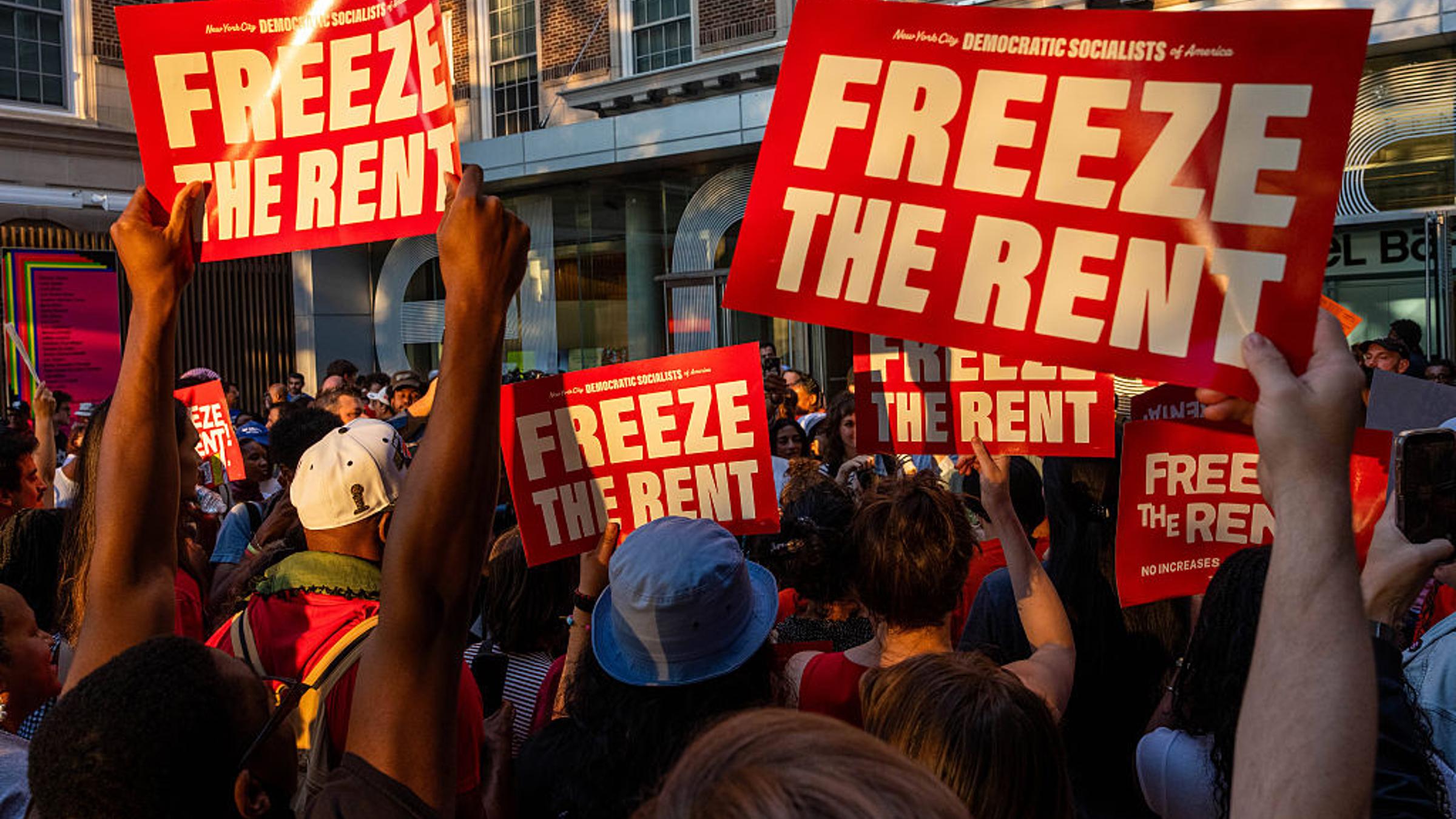
Attendees celebrate following a vote by the Rent Guidelines Board in New York on June 25, 2026.
Follow this author to personalize your feed and get instant alerts.
“Freeze the rent” became the definitive rallying cry of Zohran Mamdani’s affordability-focused mayoral campaign for New York City, one of the most expensive cities in the world. Despite skepticism that he could actually pull it off, a board he controls made good on his pledge on Thursday, just six months into his term.
The city’s Rent Guidelines Board, in a 7-1 vote, approved a rent freeze covering both one-year and two-year leases for people living in about 1 million rent-stabilized apartments, which make up about 27% of the overall housing stock across New York City’s five boroughs.
The rent freeze takes effect on Oct. 1 and ends Sept. 30, 2027.
The approval was expected, despite protests from some renters and landlords, who argued that frozen rents would hamper the maintenance of aging buildings as costs rise. But the Thursday vote could also face a legal challenge after a landlord representative on the board resigned at the 11th hour, claiming that the freeze was being railroaded into force.
Mamdani, who lived in a rent-stabilized apartment in Queens with his wife before moving into the mayoral residence, Gracie Mansion, this year, framed the vote as a “historic victory” for the city’s tenants. “This is the relief that working people across our city deserve,” Mamdani said in a statement.
The board’s decision comes on the heels of Mamdani’s political victory, after a group of progressive candidates for the U.S. House whom he endorsed swept their Democratic primaries earlier this week.
New York City is infamous for its housing crisis. Of the roughly 3.7 million housing units in the city, two-thirds of the apartments in the city are rentals. The net rental vacancy rate in 2023 across all housing in the city was 1.41%, indicating a tight market and, if there were no guardrails, could give leverage to landlords to increase rents.
In 1969, when rents in post-war buildings rose rapidly and the vacancy rate plummeted, then-Mayor John Lindsay appointed a Rent Guidelines Board to evaluate proposed rent self-regulations. Since then, the city introduced a rent stabilization system to help combat the crisis by ensuring certain apartments remain affordable.
Rent-stabilized apartments are most often located in buildings with 6 or more units and were built before 1974. Annual rent increases in these stabilized units are thus limited to a maximum percentage prescribed by the RGB. Tenants of these properties also enjoy additional protections and rights, including the right to renew leases.
About 2 million people live in rent-stabilized housing, and according to the 2023 New York City Housing and Vacancy Survey, more people of color and the poor live in them, relative to market-rate housing.
In a May report, New York City’s Independent Budget Office estimates that the median rent in rent-stabilized housing is around $1,600, while market-rate rents are above $4,000 in high-demand areas, based on industry reports.
But regulation did not stop housing prices from being a pressing concern for New Yorkers. The RGB’s 2026 Income and Affordability Survey reported that more than half of renters in New York City use up to 30% or more of their income on rent, including nearly 30% who spend at least half of their income. In a fall 2025 survey conducted by the advocacy and research nonprofit Community Service Society, more than 1-in-4 rent-stabilized property tenants reported owing back rent.
Rental hikes did not stop either under Mamdani’s predecessor, Eric Adams: the RGB in 2025 voted for a 3% hike for one-year leases and a 4.5% increase for two-year leases. The Community Service Society also analyzed in September 2025 that the 12.6% cumulative stabilized rent increase during Adams’ term was several times larger than the hikes under former Mayor Bill de Blasio, as well as the final term of former Mayor Michael Bloomberg.
Mamdani thus made addressing the city’s housing crisis central to his mayoral campaign, vowing to freeze the rent “for every single rent-stabilized tenant.”
Mamdani’s plan to stabilize rent in these units hinged upon the RGB’s support. The nine board members, who need to have prior experience in economics, finance, or housing, are mayoral appointees and serve terms between two and four years.
In February, Mamdani appointed six of the RGB’s members, signaling that he could make true to his promise.
But on Thursday morning, before the board was set to decide on the rental rate increase, a board member representing landlords resigned.
In a statement posted to LinkedIn, Christina Smyth, whom Adams reappointed to the board in December 2025, said that the board’s 2026 rent stabilization order “was decided last year on the campaign trail” and that with Mamdani’s recent appointments, the board was “required to deliver a rent freeze” despite data from the board’s own research suggesting it would burden owners.
“Everything since has been theater,” Smyth added, citing hearings, public comments, and the data release.
The resignation took the board’s chair, Chantella Mitchell, by surprise, and, in a statement, she countered Smyth’s claims and affirmed the board’s independence.
Speaking to cable news network News 12, Mamdani echoed that the board acts independently and added that he “look[s] forward to the outcome, the decision that they will make.”
Mamdani himself has pointed out that rent freezes aren’t new. During the tenure of former Mayor de Blasio, the RGB in 2015 voted for a freeze on one-year leases in these rent-stabilized apartments, the first since the RGB’s establishment. These were followed by rent freezes in 2016, 2020, and the first half of 2021.
While renters often rejoice at these rent freezes, landlords and property owners often lament them, citing increasing operation and management costs. The RGB’s own research this year found that landlord costs rose by 5.3% in the past year.
Ann Korchak, board president of owner advocacy group Small Property Owners of New York, said in a statement to the media that the RGB should have postponed the vote until Smyth, the landlord representative, was replaced. The other board member representing landlords, Mamdani-appointed Maksim Wynn, voted in favor of the freeze.
“Proceeding with one of the most consequential rent votes in recent times with half of its owner representation undermined the balance and fairness of this process,” Korchak said.
James Whelan, president of the Real Estate Board of New York trade association, said the RGB “ignored its own data and made a terrible decision,” adding in a statement to the media that “older rent-stabilized buildings are already struggling under rising operating costs.”
“This decision will mean less investment in maintenance and repairs, accelerating the deterioration of the housing stock that millions of New Yorkers call home,” Whelan added. “Tonight’s vote may be politically popular, but it will make New York’s housing crisis worse.”