
Mark Cuban says he has the solution to growing income inequality, and it’s to reward every employee—from CEO to janitor—with company stock
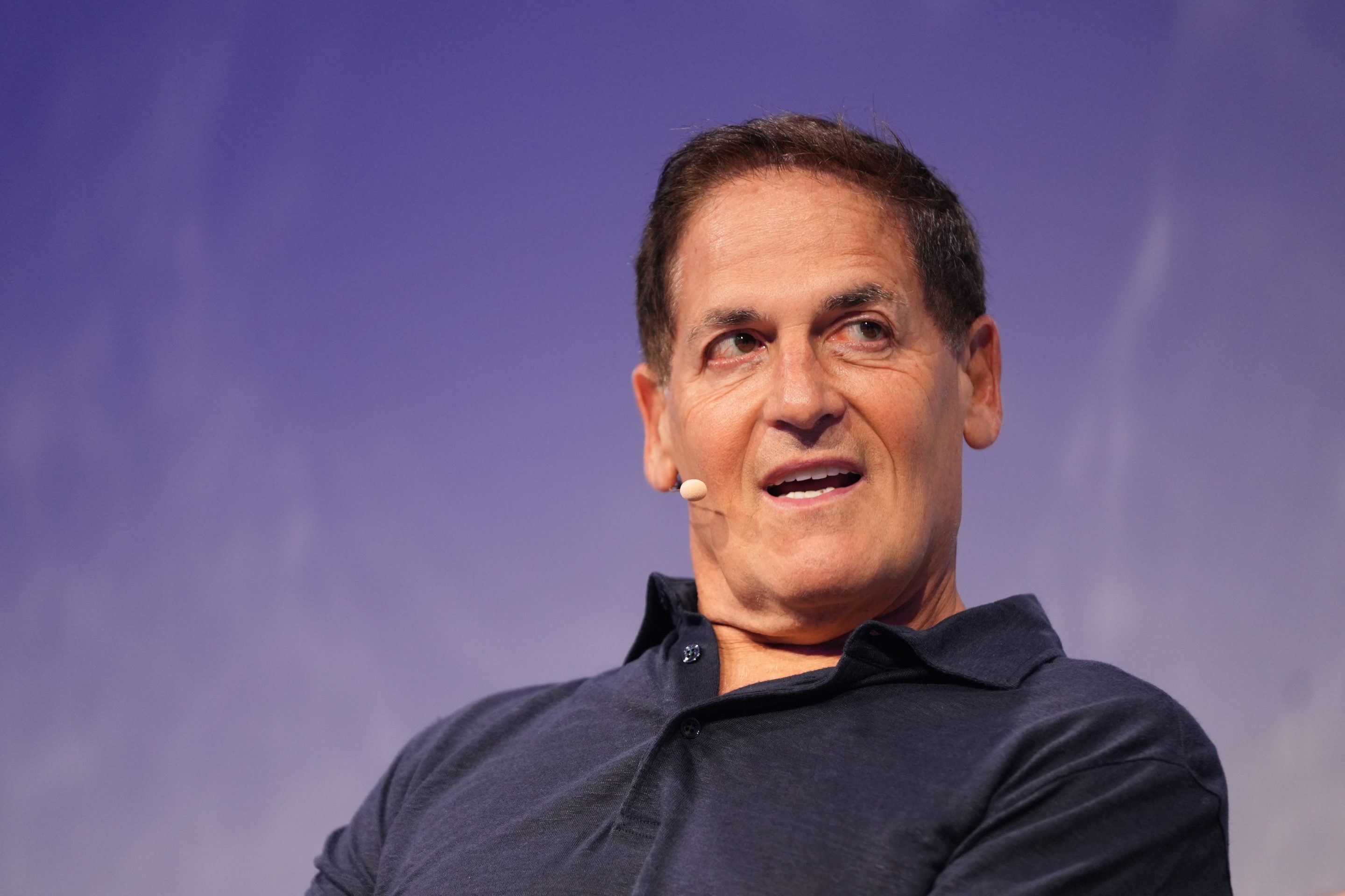
Following SpaceX’s blockbuster $1.77 trillion initial public offering, Juan Hernandez, a former welder for the aerospace and satellite company, saw his wealth balloon overnight as a result of his stake in the firm. Hernandez, who joined SpaceXin 2015 earning $28 per hour, now holds an estimated $880,000 in shares following the company’s IPO, the Wall Street Journal reported. According to billionaire investor Mark Cuban, this model of employees owning shares of the companies they work for should be the norm, not the exception.
Company stock options don’t just offer the possibility of a hefty payday for a business’ perhaps unsung workers, Cuban said; it’s a way to address the pervasive problem of growing income inequality. In a recent episode of the “What It Takes” podcast by Unmoderated News, Cuban outlined his own philosophy around how to close wealth disparities.
“I would like to see it so that every single CEO, founder, entrepreneur does what I did, which was to give equity to every single employee,” he said. “The way you’re going to reduce income inequality for anybody who works with somebody is making sure they get shares of stock and then they benefit.”
Cuban gave 330 employees at his media company Broadcast.com stock ahead of Yahoo acquiring it for $5.7 billion 1999, making 300 of them millionaires, he said. He similarly gave equity and cash bonuses to employees of his first IT consulting company MicroSolutions
This isn’t the first time Cuban has made remarks regarding a more equitable distribution of wealth. Cuban has previously advocated for a $20 federal minimum wage, recalling instances in which a company he invested in, but didn’t run or name, had employees in need of government assistance.
“I made sure they all got raises,” Cuban wrote in an X post. “It was embarrassing to me that we didn’t pay enough. I’ve made, or helped make, at least a thousand millionaires. And I’ll keep working to increase that number.”
The K-shaped economy of the rich getting rich and the poor poorer is reflected in the growing wage gap among U.S. employees: In 2024, S&P 500 CEOS made 285 times more than the median pay of their workers, up from 268 times in 2023, according to a report by the AFL-CIO. The chief executives saw an average compensation of $18.9 million with an average increase of $1.4 million, a 7% year-over-year increase.
Other tech leaders like the world’s richest man Elon Musk, who saw his wealth increase by $215 billion in 2025, have similarly advocated for employee ownership, arguing the strategy aligns company incentives. A little more than a month later, SpaceX’s IPO has already minted at least 4,400 millionaires.
“I’ve always had the philosophy that everyone at the company should receive stock in the company, so that they can participate in the upside of the company,” Musk told Texas Gov. Greg Abbott earlier this month.
Amid a rise of democratic socialist politicians like New York City Mayor Zohran Mamdani championing affordability platforms, Cuban—a believer in “compassionate capitalism”—has argued a free-market economy can generate similar solutions to those generated by government-owned social services. One such example is his launching of the pharmaceutical company Cost Plus Drugs in 2022, which is able to slash the cost of prescription medications by selling mostly generic products without the typical middlemen of Pharmacy Benefit Managers.
He’s taking the same mechanism to the income side as well, believing he found a viable way to encourage more companies to adopt his employee-ownership philosophy. For example, Cuban explained, governments can incentivize CEOs to give every employee the same percentage of stock warrants, options, or other equities by dangling the carrot of a lower corporate tax rate than the set 21%. In other words, if a CEO receives a stock valued at 10% of their cash compensation, workers should likewise receive 10% in stock of their own earnings.
“So if the CEO gets $100,000 worth of stock because they make $1 million in cash, and the janitor makes $50,000, then they deserve the same percentage in stock, and that will change the game,” Cuban said.
Research suggests employee-ownership can be an effective means of closing the wealth gap. A 2021 Harvard Business School study citing government data found that if all private firms in the U.S. became 30% employee-owned, household wealth in the country would effectively double. In contrast, the wealth of the richest Americans would decrease as a result of this model, with the top 1% of wealth holders seeing an average 14% decrease in their net wealth.
Allowing employees to hold company equity is also associated with increased productivity and less turnover, and a 2004 Rutgers University study found companies offering employee ownership stakes of at least 5% have a higher likelihood of survival than those without the benefit, which researchers attributed to greater employment security.
“When you align everyone’s incentives with a common goal, everyone will work harder to achieve that goal,” Ethan Rouen, a Harvard Business School professor of business administration, said in an interview for the college about Harvard’s research. “When you have an equity stake, all of a sudden you have a claim on the upside, and so that incentivizes you to work harder to increase that upside. It is something that has the potential to grow the pie and create wealth for everyone involved.”