
Meet the venture capital and crypto billionaires quietly bankrolling the fight against California's wealth tax | Fortune
Silicon Valley made a fortune betting on disruption. Now some of the most recognizable names in venture capital and Big Tech are spending millions to disrupt California’s plan to tax them.
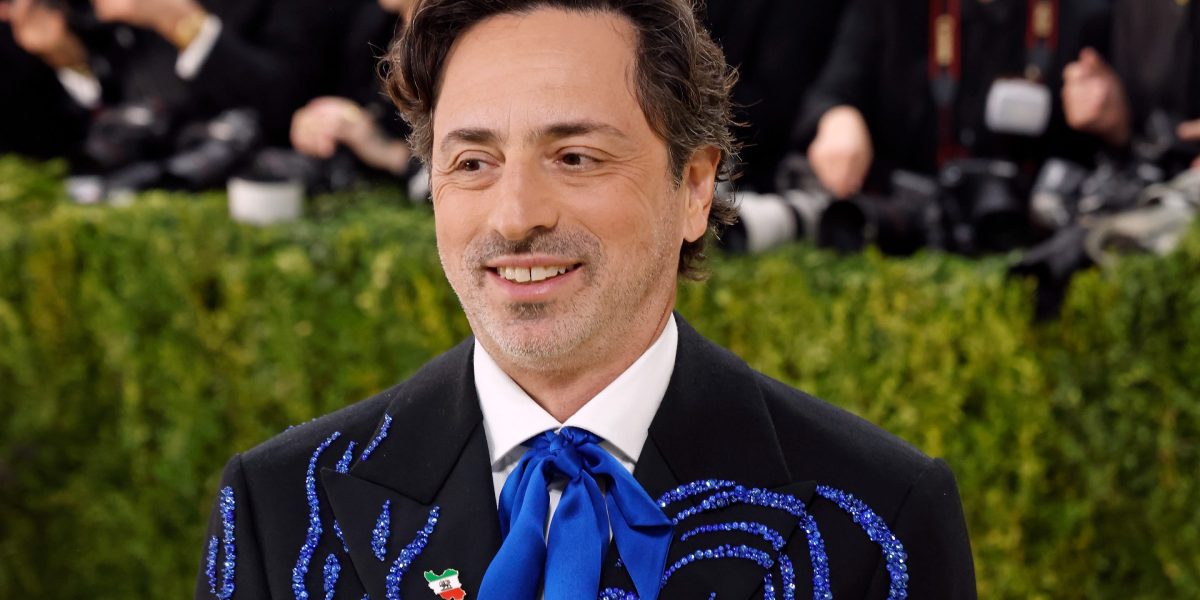
Campaign finance records show Palantir cofounder Peter Thiel, crypto billionaire Chris Larsen, Google cofounder Sergey Brin, and longtime venture capitalist John Doerr donated to political action committees opposing Proposition 40, which would levy a one-time tax on billionaires equal to 5% of their wealth if passed. Thiel officially cut ties with California in 2025 ahead of the proposed wealth tax, and Brin has also reduced his official and financial ties to the state.
Larsen gave $5 million to Golden State Promise, a committee opposing Proposition 40, and Ripple Labs, the company he cofounded, has put in another $5 million.
Another anti-Proposition 40 committee representing teachers, doctors, and small businesses has received $5 million from Building a Better California, whose top donors are Brin and Doerr. Golden State Promise has also received $450,000 from the California Business Roundtable Issues PAC, one of whose top donors is Thiel, who has given $3 million to the PAC itself.
The stakes are high for the donors. Experts estimate Proposition 40, if passed, will raise $100 billion for California over five years, with 90% earmarked for health care and the rest for food assistance and education. For someone whose net worth is $1.1 billion, the liability is $55 million, according to an analysis from Wealth Management. If the opposition defeats the ballot measure in November, billionaires will avoid that liability.
The multimillion-dollar checks are landing as California’s proposed wealth tax turned into a broader fight about whether taxing billionaire wealth would raise needed funds—or push founders and investors to move out of the state.
Over the weekend, billionaire entrepreneur and investor Mark Cuban publicly sparred over this question with Rep. Ro Khanna (D-Calif.), one of the most prominent defenders of the proposed tax. Cuban argued Prop. 40 misunderstands founders can be billionaires on paper while still being cash-poor and could drive startup talent out of the state entirely.
“If this passes, only idiot startup founders stay in Cali,” Cuban wrote on X.
Khanna pushed back by arguing truly illiquid “paper billionaires” make up only part of the population the tax would hit, and suggested a workaround in which founders could hand over their shares in the startup to the state in exchange for a loan to pay the tax.
“The government would still collect from the vast majority of billionaires who are not illiquid,” Khanna wrote.
Emmanuel Saez, director of UC Berkeley’s James M. and Cathleen D. Stone Center on Wealth and Income Inequality and co-author of an expert report on Prop. 40 arguing the tax asks a fair share from the roughly 250 Californians it would cover—billionaires the report says built their fortunes in the state and can absorb a one-time hit, especially if paid gradually. Saez told Fortune over email founders without the immediate money to pay the tax can “use a deferral option,” paying 5% of “whatever proceeds they take out of their business (as dividends or sales of stock) moving forward.”
“If the business fails, they won’t have to pay anything,” Saez said. “If the business succeeds, they’ll have to pay 5% of that success eventually.”
Khanna has also pushed the fight to tax billionaires beyond California. In March, he and Sen. Bernie Sanders (I-Vt.) introduced federal legislation proposing an annual 5% wealth tax on Americans worth more than $1 billion, with some of the proceeds earmarked for $3,000 payments to lower- and middle-income households.