
Michael Sheen investigates cancer concern around chemical dumping
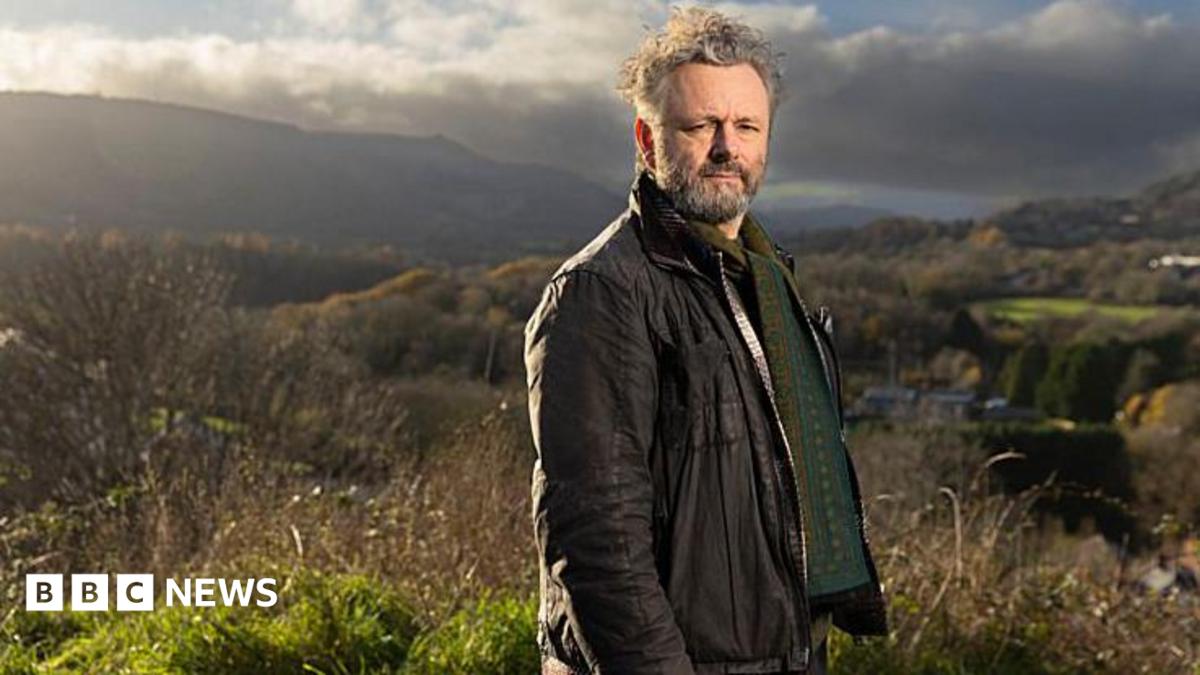
Michael Phillips spent his childhood in the 1980s playing with friends at a lagoon, firing air guns at rusty barrels that released clouds of coloured powder - completely oblivious to the toxic chemicals within.
Decades later, several of those friends and Phillips himself have developed rare cancers, which they believe may be linked to this.
Researcher and whistleblower Douglas Gowan tried to sound the alarm about 14 such sites - 12 of which were in Wales - but died before his warnings were heeded.
"What he told me made my blood run cold," said Hollywood actor Michael Sheen, who spoke to Gowan just months before he died and has now continued his investigation in a new BBC iPlayer documentary.
Gowan, a former farming consultant, alleged that chemical giant Monsanto had dumped "huge amounts of industrial chemicals all around Wales".
These included polychlorinated biphenyls (PCBs), he said, which he described as "some of the worst contaminants known to man" and were widely used during the last century, including for lipsticks and white goods.
"This stuff builds up in the environment, builds up in animals and fish, and it builds up in us," Gowan said.
Eastman Chemical Company, which is responsible for Monsanto's legacy production in the UK, did not respond to either Sheen and his team or the BBC when asked to comment.
Douglas Gowan spent half a century trying to make people listen to his concerns about chemical contamination in Wales
Sheen said PCBs were now known as "the godfather of forever chemicals".
He added: "There is something out there in the forest, there is something in our bodies that can turn against us and tear us apart, but it's not like it is in the horror films. It's invisible. It's a silent killer."
These manmade chemicals are stable, resistant to extreme temperatures and pressures and have insulating properties. Because of this they were used in everything from plastics and paint to electrical equipment.
After concerns about toxicity to humans and animals were raised, a series of bans were put in place around the world from the 1970s onwards.
But the chemicals take a long time to break down and have lingered in the environment, particularly in landfill, where they can leach into waterways and then into the sea.
Gowan told Sheen in the documentary: "There was no regulation at the time, they could dump it wherever they wanted to."
Archive footage shows a blaze at Llwyneinion near Ruabon in Wrexham, where the effects of the chemicals were reportedly felt up to 20 miles away
In the 1980s, a fire at the lagoon at Llwyneinion near Ruabon in Wrexham took 60 firefighters more than 18 hours to bring under control.
The effects of the chemicals were reportedly felt up to 20 miles (32km) away.
Phillips and his friends went to watch and he believes the impact of this exposure began to emerge in 2001.
"I started getting lumps on my shoulder, I caught cancer. I lost a large part of my shoulder that's literally as wide as my hand.
"While he was operating, my surgeon said 'this is strange, I've never seen this type of cancer before', and he'd had a distinguished career of 40 years."
Michael Phillips played at the lagoon near Ruabon as a child and believes it has had a devastating impact on his life
"I lost a very close friend who used to be [at the lagoon] all the time, more than me. He died of breast cancer.
"I have another friend who passed away with brain cancer. I've got another friend who is trying to get over brain cancer, I have another friend who's had all of his lymph glands taken out because they were cancerous."
Another friend has the exact type of cancer Phillips had, and his surgeon told him: "For me to catch what I had was like winning the lottery.
"For your friend who lives down the road to get exactly the same, he said it's like winning the lottery every day for six months. It's not a coincidence."
Phillips' blood tests showed higher-than-average PCB levels.
"It's chilling to think that having any PCBs in your blood is normal, when 90 years ago no-one would have had them as they didn't exist," said Sheen.
The actor also had his blood tested and it revealed 81 different types of PCBs, despite him not having lived near any dump sites.
"There is no safe level of PCBs, it's a risk all of us have to try and manage. The lower your level of PCBs, the lower your risk of getting cancer," he said.
Paul Pemberton has been a Wrexham councillor for more than 20 years and said the site had been "abused for many many years".
Scientists found cyanide, arsenic and PCBs at the site and said it needed to be cleaned up, he said.
"We were then quoted around about £45m and that would bankrupt the council," he said.
However, Wrexham council said later investigations and risk assessments concluded that although contaminants were present, the sites did not meet the legal threshold requiring remediation.
In 2017, Gowan said the companies responsible "should be made to remediate".
Wales was not Monsanto's first choice when it came to PCB dumping.
Initially it pumped PCBs into waterways in Anniston, Alabama.
In 1993, the whole town sued Monsanto for chemical contamination, resulting in one of the largest single town lawsuits in US history.
Donald Stewart, one of the attorneys involved, said it was settled for $300m.
Internal Monsanto documents showed they had been aware of the toxicity of PCBs in 1949, so how could they get away with knowingly exposing people to these chemicals?
Stewart said: "If you look at this area, it's working people. They were people who wouldn't be able to fight back."
In another memo from 1972, journalists Dan Ashby and Lucy Taylor helping Sheen with the investigation found that Monsanto had decided PCBs were a worldwide problem, an environmental danger and a risk to human health, and were shutting down work at Anniston.
But then there were proposals to increase capacity to make five million more kilograms of PCBs at their plant in Newport.
"They're doing it in Newport because the legal risk in America is so much," said Ashby.
"Then the government in the UK told industry we're not going to put any restrictions on importing PCBs. So they begin importing from around the world, hundreds of tonnes of PCBs."
Gowan said: "If one wanted to be cynical about it, you could say that almost they were choosing places where chronic health issues might be hidden behind pre-existing health issues.
"People grew up with the knowledge that... they were in an area that had coal mining, heavy industry, the environment was contaminated, and there were health problems."
Sheen and his team took their findings to Wales' Parliament in the hope that more tests can be done.
"They deserve their concerns to be met with proper research and appropriate action. Douglas spent most of his life fighting to get the truth out there.
"The fact we all have traces of this chemical in our blood shows that we all have skin in the game. We've got to get together, we've got to fight this."
Meanwhile, members of the documentary team will appear before the Welsh Affairs Committee as it looks into alleged toxic "forever chemical" contamination in south Wales, the BBC has been told.
At a screening of the documentary, Sheen said: "These are just the places we know about... Douglas Gowan believed that there was much more."
Kirsty Luff of Friends of the Earth Cymru has called for a public inquiry into the "scale and impact of toxic sites in Wales".
She warned that climate change would make the situation worse as "more frequent and intense flooding... will bring these contaminants to the surface where they can spread over fields, they can get into water courses".
Environmental regulator Natural Resources Wales tested Llwyneinion acid tar lagoon close to Ruabon.
Investigation work found the site did not meet the legal definition of contaminated land.
Wrexham council said because of this there was "no statutory requirement for remediation", but that it continued to carry out regular inspections and water monitoring.
It said only limited information from more recent testing had been shared with it, but it remained open to reviewing any new "robust and verifiable evidence".
The Welsh government said: "Addressing contaminated land is a key priority for this government.
"Our industrial heritage has left us with a difficult legacy that can affect both people and places - we want to ensure this does not pose a risk to our communities or our natural environment.
"A survey of local authorities carried out by Natural Resources Wales in 2015 identified more than 9,000 potential sites requiring further investigation.
"While not all of these sites will pose a risk to human health or the environment, this figure demonstrates the scale of the issue facing regulators in Wales.
"We now intend to develop a Wales-wide strategy to progressively restore post-industrial land, so that communities are no longer exposed to potential risks."