
Michel Barnier on the Neverending Lessons of Brexit
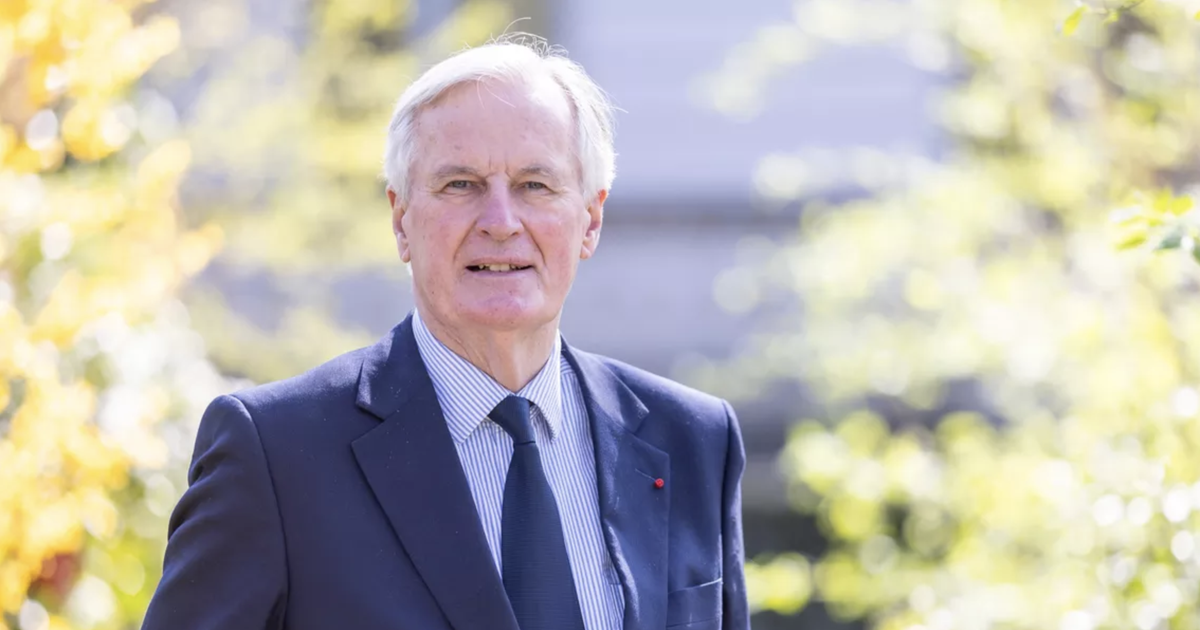
Michel Barnier, former French prime minister and former European Commissioner, led the negotiations on the terms of the United Kingdom’s withdrawal from the European Union for more than four years.
He recounted the experience in My Secret Brexit Diary. Ten years after the British referendum of June 23, 2016, he looks back on the episode and its consequences in an interview with Le Figaro
LE FIGARO. — When you began negotiating Brexit, did you already grasp the scale of the disruptions that lay ahead?
MICHEL BARNIER. — Frankly, no. Leaving the European Union is an extraordinarily complex undertaking. No one had ever done it before, and I hope no one will want to do it again. For the British, leaving the EU meant leaving 600 agreements covering every subject imaginable—maritime affairs, space, trade, and more. It is a complete unraveling, and we were entering uncharted territory. At the moment they decided to leave the Union, the British themselves did not know exactly what they would be leaving: would they leave the EU, the single market, the customs union?
They thought they could keep the benefits of the EU while escaping the constraints?
Yes. They first imagined they could divide us—which is why it was important to have a single negotiator representing all countries and institutions—and then have their cake and eat it too. It was Theresa May, after disastrous snap elections, who said: we are leaving everything. They were not obliged to do so. It was an entirely political decision and, in my view, contrary to their national interest.
Were any of Brexit’s promises fulfilled, or were they all broken?
The promise made to the British people that they would make decisions independently was fulfilled. Within the Union, there are areas we have chosen to manage together. In those fields—agriculture, transport, the environment—we no longer decide alone but with others. The promise of no longer being subject to that process was kept; they are free, very well. The fact remains that they joined the Union precisely to be part of the single market, and they left it for purely ideological and populist reasons.
Among the United Kingdom’s current difficulties—economic, social, and security-related—which, in your view, are attributable to Brexit?
I do not think all of the United Kingdom’s current difficulties were caused by Brexit. But I do think those difficulties are more serious and harder to solve because of Brexit.
There were economic promises—the “Singapore-on-Thames” vision—and the promise of controlling immigration…
None of that happened. There was a recession, much higher unemployment, and greater economic difficulties. Immigration continued to grow, but it changed in nature. Around one million European workers left the United Kingdom, many of them in vital jobs, particularly in healthcare. That intra-European workforce dried up just as non-European immigration from Asia and Africa surged. So that was yet another lie from Nigel Farage (leader of the ultranationalist Reform UK party, editor’s note).
He also promised £350 million a week in savings for the National Health Service…
Another lie. It is like when Jordan Bardella, who is campaigning for office in Frace, says that the French contribution to the European budget can be cut in half. That is impossible unless you are prepared to sacrifice the economy, small businesses, and farmers. One day I asked Mr. Farage how he envisioned relations between the United Kingdom and Europe after Brexit. He told me: “After Brexit, the European Union will have ceased to exist.” This man, like Jordan Bardella or Marine Le Pen, like Matteo Salvini in Italy and Geert Wilders in the Netherlands, wants to blow up the EU.
What were the consequences for the Union?
It weakened us as well; it was a lose-lose divorce. The British lost because they are now alone instead of remaining in solidarity with others. They thought they could rely on the United States; we can see that Mr. Trump holds them in the same contempt that he holds Europeans. We lost a major country with a seat on the UN Security Council. We absorbed the loss more easily because we are 27 countries. We had 500 million citizens and 23 or 24 million companies. We now have two million fewer companies and 60 million fewer inhabitants.
Brexit has become unpopular in the United Kingdom, yet Nigel Farage remains ahead in the polls. How do you explain that?
That is a very important question. There is a popular sentiment in the United Kingdom, which should not be confused with populism. Populism is represented by people like Farage, Le Pen, Bardella, and Mélenchon, who exploit hardship, feelings of abandonment, isolation, and the lack of respect citizens feel—factories disappearing from the UK, agriculture disappearing, immigration that nobody controls, borders full of holes. All of that is a genuine popular sentiment, and in France as in the United Kingdom we must take it into account, listen to it, understand it, and respond to it. The question is where the solutions to these problems lie. Some solutions certainly lie in Brussels, but not all of them. Some European countries let their industries decline—France and the United Kingdom—in favor of services. Others, such as Germany, Italy, and Sweden, defended their industries. Then there are local solutions. When we talk in France about shortages of doctors, the answer is not in Paris or Brussels; it lies in local intermunicipal public-service organization. When there is no train station and no transportation for people going to work, the answer lies at the regional level.
Is addressing each problem at the appropriate level one of Brexit’s lessons?
The first lesson is that problems must be addressed. Citizens are telling us that; it is the warning they are sending us. And to return to your point about Mr. Farage’s rise in the polls: he no longer has Brussels as a scapegoat, but the problems remain. Immigration, employment, transportation—these issues are not being adequately addressed in the United Kingdom. The same is true for us. France’s next president will have to tackle these problems with courage—the courage to act, perhaps even the courage to be unpopular, to act effectively and explain where the solutions lie. Citizens deserve to be told the truth and to see problems addressed.
Are you pleased to see the United Kingdom moving closer to the EU on strategic issues such as defense, energy, and AI?
I am very pleased. At the end of the negotiations, I proposed several chapters to Boris Johnson on behalf of the EU, particularly on foreign policy, defense, and intelligence cooperation. The prime minister initially accepted them and then said, “No, we’ll focus on trade, fishing, and so forth.” So we set all those issues aside, even though they have become more serious since Mr. Trump returned, since Mr. Putin launched his war of aggression against Ukraine, and since Mr. Xi in China has continued methodically destroying our industries through subsidized exports. It is clear that we need to stand together, and we can envision new cooperation in all of these fields.
One idea I proposed is the creation of a European Security and Defense Council. Something more flexible and perhaps more effective than Brussels bureaucracy on foreign policy and defense matters, allowing the member states most committed to their own defense and to common defense to involve non-EU countries such as the United Kingdom, Norway, and Ukraine. A framework in which we could work on our interests and our policies toward our major neighbors. Beyond that, we should invest together. The independence of the European continent requires massive investment—not only in defense but also in artificial intelligence. If we invest together, if we borrow as Europeans in order to invest, why not open that borrowing to the British as well?
Do you think the United Kingdom could eventually return to the EU? Would that be desirable?
Impossible is not a British word. The door is open, though not without conditions, of course. Could it happen quickly? I do not think so, because those who brought about Brexit are still around. At the same time, we have an interest in working together on issues outside the single market but related to foreign policy and security.
By straining the special relationship between London and Washington, is Donald Trump accelerating this rapprochement?
I believe so. Mr. Trump’s attitude is sounding the alarm. It is the first time in 65 years that the President of the United States has wanted to destroy the EU rather than help it. We want to remain within the Atlantic Alliance, provided everyone understands that alliance does not mean subservience and that we want to become stronger and more autonomous while remaining united. There are issues that no one else will solve for us. When we look at France’s budget deficit and its €3.2 trillion debt, that is not Brussels—it is our own doing. Problems of competitiveness, shortages of doctors, security, and immigration control are not someone else’s responsibility; they are ours. No one will solve these problems for us, and that is what the presidential election is about. But there are also global problems that we must confront together. That is why I am European as well as patriotic.
Does Brussels sometimes go too far in standardization?
The European Union must never stop respecting nations. I believe we need nations and national identity in order to combat nationalism. Every country has its own distinctiveness, culture, language—24 languages—and traditions. I am not a federalist; I am a Gaullist and passionately both patriotic and European.
Is Brexit an invitation to reform Europe?
Brexit was a shock, but Europe changed out of necessity: because of Russian aggression four and a half years ago; because of Chinese exports that are methodically destroying entire sectors of our industry; because of migration flows that have become intolerable in many countries; because of Mr. Trump’s aggressiveness; and because of unexpected crises such as Covid. All of this produced a new awareness, independent of Brexit. The 27 have generally responded well, and sometimes I find myself more optimistic about Europe than about France.
Is another effect of Brexit that parties such as the National Rally have slowed their desire to leave the EU?
I do not believe so. I do not think these people have changed their minds. At the beginning of my book, I recall that on the evening of June 23, Mrs. Le Pen, enthusiastic and triumphant, congratulated the British for having had the courage to free themselves from European servitude. Since then, she no longer says that France should leave the eurozone, but I do not think she believes any differently. It will be interesting to ask the leaders of these parties during the campaign: have you changed your minds? Do you acknowledge that you were wrong? I would like them to speak clearly and not try to dodge the question.
Every five years, the presidential election is a referendum on Europe. Are we electing someone who wants to continue the European project and keep France at the forefront, as it has been since de Gaulle? Or are we electing a nationalist? Mr. Mélenchon, Mrs. Le Pen, and Mr. Bardella are nationalists advocating withdrawal and retreat. I group them together because they are saying the same thing. These people are proposing policies that run contrary to France’s interests. If we withdraw into ourselves at a moment like this, if we are alone in this world, then we are finished; we will inevitably fall under the influence of China and the United States.
The Franco-German relationship is not in great shape at the moment, perhaps as an indirect effect of Brexit?
I am concerned to see that we can no longer speak to each other with real trust. This relationship has never been spontaneous, but I had hoped that Mr. Macron and Mr. Merz would get along somewhat better. It is very important that, with France’s next president, we restore a more constructive relationship, because this partnership is becoming increasingly necessary and increasingly insufficient.
Farage in the United Kingdom, Mélenchon or Bardella in France, and the AfD in Germany: what would happen to Europe if that became the winning trio?
That is a more than serious question. If nationalists who we know want to destroy Europe come to power in Germany or France, then the European project is finished. With these people, all we will have left are our tears, because we will be alone in a world where one must not be alone. No European country, even the largest, has the strength to sit alone at the table where those who decide the world’s order—or disorder—for the next 20 years are seated. That is why we must be European.