
Michigan Senate Candidate Abdul El-Sayed Criticized Trump Tax Cuts, Then Claimed $26K Deduction
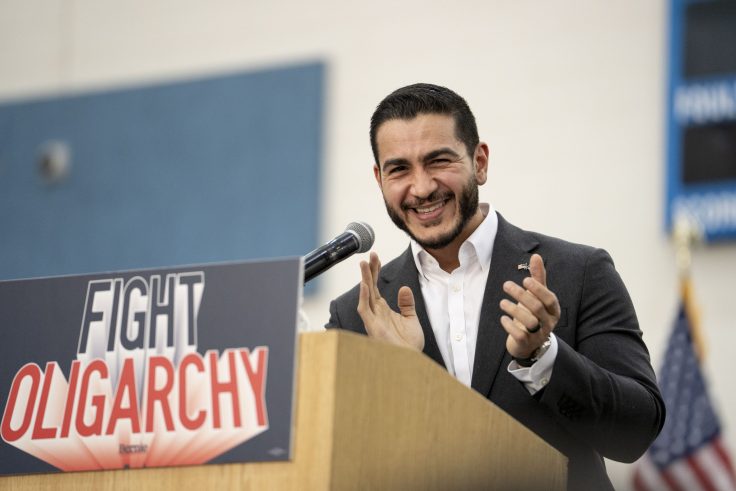
Michigan Senate hopeful Abdul El-Sayed denounced the Trump-era tax cuts as benefiting the wealthy during a 2025 rally with Senator Bernie Sanders, yet later utilized a $26,000 deduction created by the same legislation, according to tax records.
El-Sayed and his wife claimed a "qualified business income deduction" of $26,171 on their 2025 tax return. This deduction, part of the Tax Cuts and Jobs Act (2017) and later made permanent under the One Big Beautiful Bill Act (2025), allows owners of pass-through businesses, such as LLCs, to deduct 20% of their business income from taxes.
El-Sayed reported $167,000 in income from AME Higher LLC, his consulting and speaking firm, according to a Senate financial disclosure covering 2025 and early 2026. His wife, psychiatrist Sarah Jukaku, owns Mind Work Psychiatry, an LLC-based practice. The tax return listed $292,881 in "additional income," which includes pass-through business earnings. The deduction saved El-Sayed approximately $6,000 in taxes.
During a March 2025 interview with broadcaster Laura Flanders, El-Sayed criticized the tax law, stating it benefited "folks who don't really need more money" and accused billionaires of "gutting" government services. "They're gutting it for pennies on the dollar to pass tax cuts for the wealthy," he said.
El-Sayed's 2025 return showed total income of $686,069, surpassing the $611,500 threshold for Michigan's top 1% of households, per IRS data reported by Axios. Over 40% of his income ($262,000) came from capital gains, compared to 19% from wages. This contrasts with the average American, who in 2021 derived over 60% of personal income from wages, according to a Tax Foundation analysis.
El-Sayed faced pressure to release his tax return from primary opponent Representative Haley Stevens. He released the first two pages in July 2025, calling it "standard" and "mundane." The documents revealed his reliance on investment income, a point of contention in his campaign.
El-Sayed has advocated for "Medicare for All" but faces scrutiny over his wife's private psychiatry practice, which does not accept insurance. He previously criticized doctors who reject Medicaid, calling it discrimination against "black communities."