
Migrant row: Ireland seeks returns to Italy, Sea Watch 5 detained in Naples
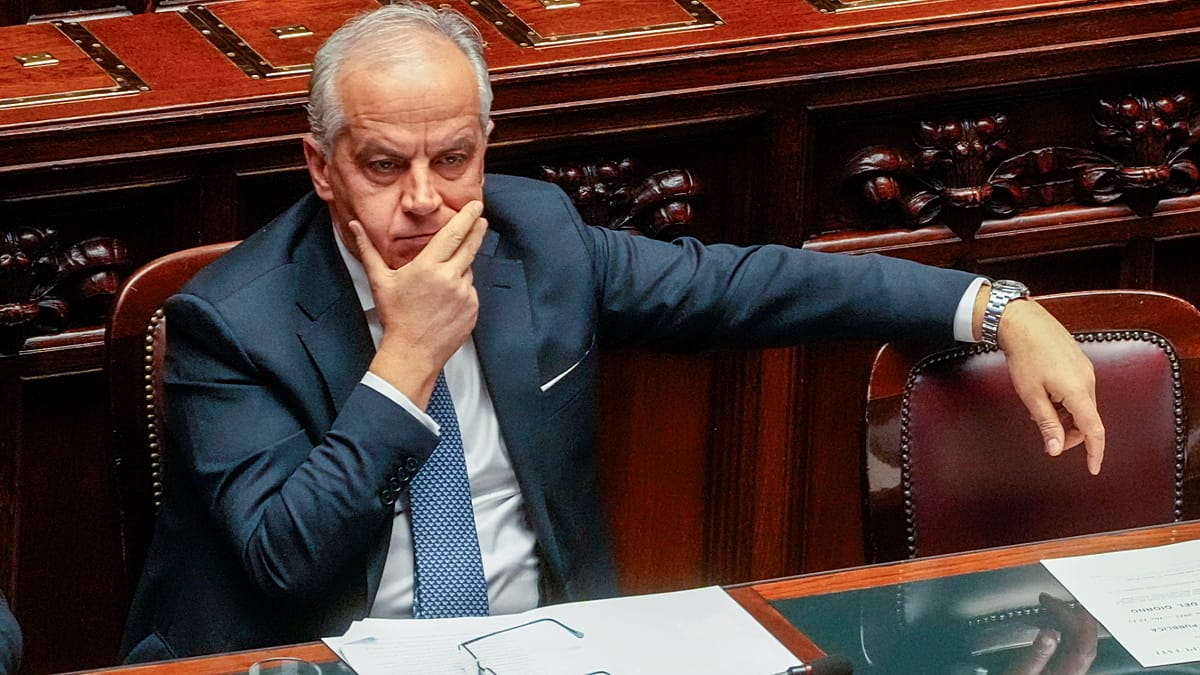
Rising tensions between Italy and the main European Union countries over the implementation of the new EU Pact on Migration and Asylum.
Ireland has become the seventh member state to call for asylum seekers to be returned to the countries of first entry and for strict compliance with the rules on secondary movements.
The most heated confrontation remains with Germany. While Berlin is pushing for readmissions of so-called 'Dublin cases' – migrants who arrived in one member state and then moved to another without having lodged an asylum application – Italy is strongly opposed to the activities in the Mediterranean of German NGO vessels.
In Naples, Sea Watch 5 has been hit with a 45-day administrative detention order and a 7,500-euro fine, accused of failing to cooperate with the Libyan coastguard, it emerged on Sunday.
Interior Minister Matteo Piantedosi has reiterated that operations must be coordinated exclusively by the competent states, while the NGO highlights the dangers posed by the Libyan authorities and announces an appeal.
"We informed Italy and neighbouring European countries," the German NGO told Italian media, "but not the so-called Libyan maritime rescue coordination centre, a puppet authority that serves to legitimise and make acceptable as an interlocutor those men and smugglers who, shortly after the rescue, pointed a rifle at us and ordered us to leave".
In an attempt to mend the rift and tackle the thorny issue of returns and NGOs, a bilateral meeting between the Italian minister and his German counterpart, Alexander Dobrindt, is scheduled for next month.
Also on the table is a proposal for a compensation mechanism between the transfers requested and the people rescued by private vessels. "With my German colleague, we have shared an assessment that sees NGO activity as a pull factor for irregular migration", Piantedosi reiterated.
Faced with accusations from the opposition, brushed off as "a confusion foul" devoid of substance, Piantedosi insists on the effectiveness of the government's action, pointing to a reduction in landings and a doubling of returns thanks to agreements with Tunisia and Libya.
On the issue of 'Dublin cases', the interior minister instead highlights a shift under the Meloni government: after the inertia of previous administrations, Italy has blocked the return of 80,000 migrants, reducing actual transfers to negligible figures, he said.
While acknowledging that Rome would have preferred stricter rules, Italy appears to defend the new EU Pact as a paradigm shift that introduces structural, mandatory solidarity for countries of first entry, even though current misunderstandings over responsibility for migrants risk undermining this mechanism.
The issue is complex, after years of de facto tolerance of migrants' so-called "secondary movements". Hungary and Poland face infringement procedures for rejecting the reform that came into force on 12 August, and the European Commission is closely monitoring Italy's stance, aware that without Rome, the Pact risks failure.
While recognising the technical progress Italy has made in adapting systems such as Eurodac, the EU executive warns that systematically blocking transfers could push other states to suspend mandatory solidarity, undermining the entire European framework.