
More Britons believe migration is 'mostly bad' after small boats crisis, reveals poll
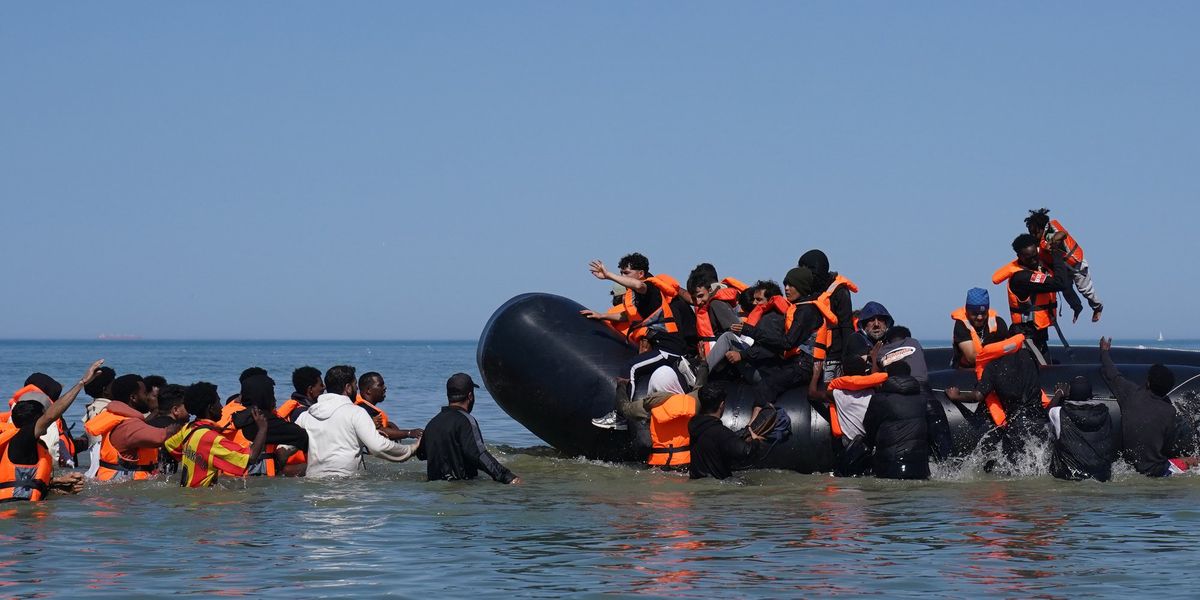
A plurality of Britons believe migration is "mostly bad" after more than 200,000 asylum seekers crossed the Channel in small boats, a new poll has revealed.
YouGov, which polled 2,053 adults on June 8 and June 9, found 43 per cent of respondents described migration as "mostly bad", up from 33 per cent in 2016.
The proportion of Britons who described migration as "mostly good" only dropped by one per cent.
However, YouGov found just 29 per cent of respondents now say migration is both "good and bad", down from 38 per cent in 2016.
The rise in concern is particularly pronounced among 2016 Remain-voting Britons, with the proportion now expressing a more negative view towards migration jumping from 12 per cent to 22 per cent.
Matthew Smith, the head of data journalism at YouGov, said: "We found a ten-point increase in the number saying it has been mostly bad (to 43 per cent) and a nine-point reduction in the number deeming it ‘both good and bad’ (to 29 per cent), meaning the negative view of immigration has supplanted the balanced view as the most commonly held among the wider public.
“Both Leavers and Remainers had a similarly-sized increase in the number saying immigration has been mostly bad for the country. That said, not all the changes have been anti-immigration.
"There has been a stark drop in the number of Britons wanting to see fewer Poles coming to the UK than in 2016, from 42 per cent to 26 per cent.”
YouGov also asked Britons whether they would be in favour of migrants coming from specific countries.
More than a fifth said the UK should no longer accept migrants from Nigeria.
Meanwhile, around a quarter of Britons supported having a complete ban on Pakistani citizens settling in the UK.
A similar figure backed stopping migration from Israel, with the proportion of those wanting to stop new arrivals from Russia hitting 34 per cent.
The polling, which was shared with The Times, also asked Britons what factors were most important when considering whether an economic migrant should come into the UK.
More than 90 per cent cited a criminal record for major or violent crime as an important factor.
Around four-in-five Britons also pointed to skills shortages, proficiency in English and a migrant's education attainment level.
There was a noticeable discrepancy on whether a migrant's religion is important.
Around one-in-three Britons described religion as important, with the figure dropping to just 12 per cent among Green Party voters.
However, the proportion did rise to 67 per cent among Reform UK supporters.
Legal net migration to the UK rose sharply after the 2016 Brexit vote, peaking at a record 606,000 in the year to December 2022.
High levels of legal migration long dominated Britain's political discourse and were one of the major drivers of the referendum, yet the numbers climbed rather than fell afterwards, partly due to new visa routes for Ukrainians and Hong Kongers.
Meanwhile, unauthorised Channel crossings have become a serious problem since 2018.
More than 46,000 arrived in the UK via small boat in 2022, up from just 299 in 2018.
Roughly 39,000 people used this method in the year to March 2026, accounting for about 90 per cent of all unauthorised entries detected.
The Home Office also logged 46,497 people entering by irregular routes in the year to December 2025, with 89 per cent of those crossing the Channel by small boat.