
Nancy Guthrie search: why human remains in Pima County aren't unusual
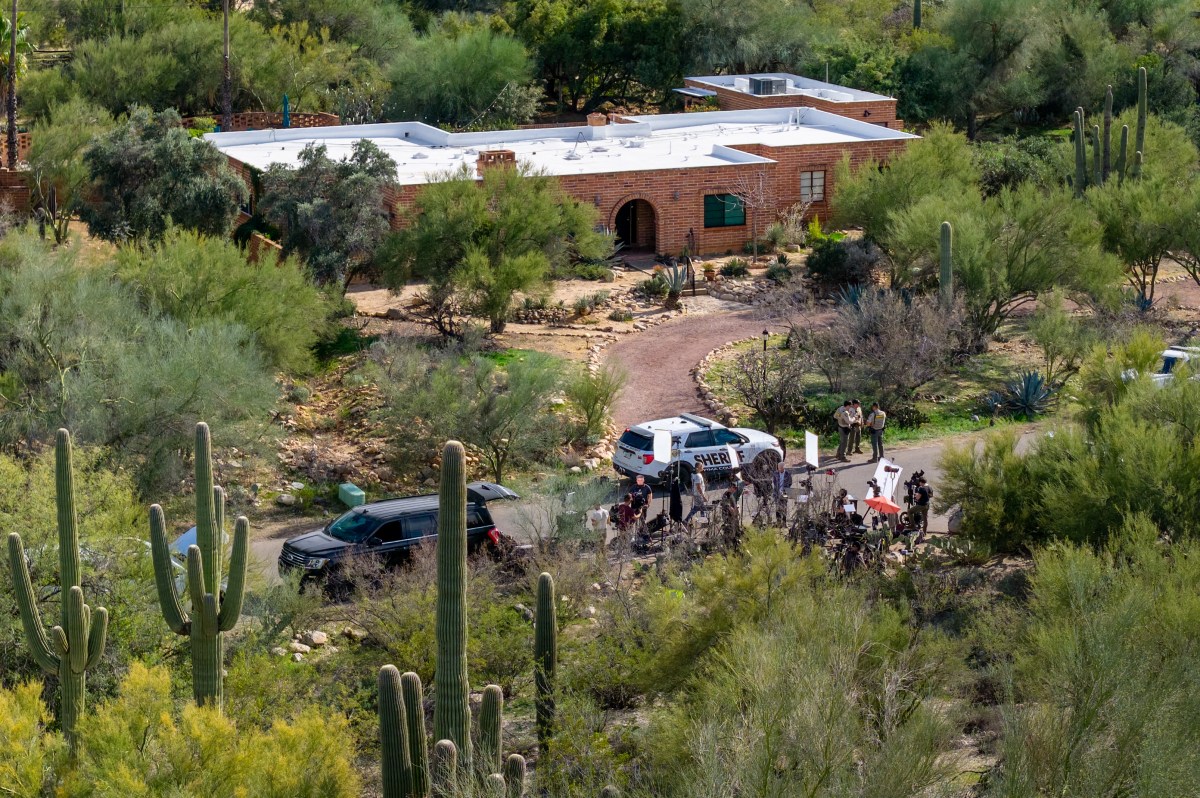
The discovery of human remains about 15 miles from Nancy Guthrie’s home outside Tucson, Arizona, quickly prompted speculation online about a possible link to the case of the woman who disappeared from her home more than six months ago.
But authorities said there was no indication "at this time" that the remains are connected to the Guthrie investigation.
Investigators appear to have determined that time-of-death markers indicate the remains have been there longer than Guthrie has been missing. The 84-year-old mother of Today co-host Savannah Guthrie was reported missing from her home outside Tucson on February 1.
In a statement posted on X, Pima County Sheriff Chris Nanos said deputies responded to reports of human remains found in a desert near West Ajo Way and South La Cholla Boulevard.
"The remains appear to have been at the location for an extended period of time," he said. "At this time, there is no indication they are connected to the Nancy Guthrie investigation."
The remains "must be intact enough to tell a story for Sheriff Nanos to indicate the remains aren't Nancy," Jenniffer Coffindaffer, a former FBI agent, told Newsweek. "This could be due to the clothing/shoes found near the remains, pelvis size, femur length, or other obvious indication that the remains are not that of an elderly female."
While the discovery garnered significant attention due to the interest in the Guthrie case, such discoveries are also not uncommon in southern Arizona.
The Pima County Office of the Medical Examiner handles about 4,500 death investigations each year.
And the county reportedly leads the nation in the number of skeletal remains it stores, in a bid to connect those remains to a loved one or next of kin through its Indigent Interment Program.
The chief medical examiner Greg Hess said in 2024 that the county maintains up to 600 sets of skeletal remains, according to a report by the National Association of Counties.
That number is higher than other counties partly because of unidentified migrants who die in the harsh conditions of the Sonoran Desert after crossing the border.
"We have more unidentified remains than other places, because of just the nature of the environment," Hess said. "It’s really hot and dry and people die outside, and their remains are not protected from the environment. They’ll decompose and become skeletal remains relatively quickly."
But the discovery of human remains just miles from Guthrie’s home prompted online attention since high-profile missing persons cases often create a magnifying-glass effect, bringing increased interest to more routine discoveries.
Coffindaffer said that although many of the remains found in the desert are believed to belong to migrants, it "can't be overlooked that deserts, and Pima County is largely desert, are a popular 'dumping ground' for criminals who have taken lives."
Nancy Guthrie was last seen at her home in the Catalina Foothills near Tucson, Arizona, on January 31. She was reported missing the following day.
Authorities say she was kidnapped, abducted or otherwise taken against her will and that drops of her blood were found near the front doorstep.
In mid-February, the FBI released surveillance videos showing a masked man on her porch on the night she disappeared. But since then, there’s been no sign of her and authorities have not said whether she is still alive. They have not identified a suspect or arrested any suspects in her disappearance.
The investigation gained national attention after alleged ransom communications were sent to media outlets. In the first note released by authorities, the writer claimed she had been taken and demanded $4 million in cryptocurrency for her return. A second note later claimed she had died after being taken, but authorities have not confirmed that claim and continue to search for answers about her whereabouts.
As the disappearance of Guthrie reached the six-month mark earlier in August, authorities released two ransom notes that were sent to media outlets in the days after she vanished, with the hope that it could generate new leads and identify the person or people responsible for her disappearance.
The first ransom note, sent on February 2, was addressed to Savannah Guthrie. It said her mother was "safe but scared" and would be released unharmed once her captors received $4 million in Bitcoin, with the ransom amount increasing if the first demand was not met.
It said Guthrie would be released within 12 hours if the payment was received. It also included a threat to kill her if the ransom wasn’t paid.
"Your mother is aware of this and her life is in your hands," it said. "It is in the best interest of everyone to have this completed as soon as possible."
A second note, sent on February 6, said Guthrie died shortly after she was taken. "She is buried in nature now," it said. "Nothing you could have done could have changed the outcome." The note ended with an apology: "We are truly sorry."
The release of the notes may provide investigators with more than potential evidence in the case.
In releasing the notes, the sheriff’s department said "we believe these distinctive linguistic characteristics may be recognizable to someone who knows or has interacted with the notes’ writer."
Lisa Miller, a retired detective and former law enforcement executive with the Colorado Attorney General's Office, told Fox News Digital that the messages contain distinctive language patterns that could help identify their author. Miller pointed to recurring grammatical quirks, unusual word formations and repeated phrases appearing in both notes, which she said suggest they were likely written by the same person.
She also said that the author's use of words such as "perished" and the phrase "buried in nature" may reflect an individual writing style, or "idiolect," that someone who knows the writer could recognize and report to authorities.
Experts recently told Newsweek that although the case is cooling off, it remains far from cold, with more leads and DNA evidence to assess in the next phase.
They noted it remains active as long as investigators have leads to pursue, including tips, video and DNA evidence.
Jennifer Coffindaffer, a former FBI special agent, told Newsweek that experts were still reviewing DNA evidence that was recovered from Guthrie’s home that doesn’t belong to her or those in close contact with her. She also said there were also thousands of leads that had likely still not been run down "due to the sheer volume of them."
"This case is nowhere near cold only six months in. That is not a long time under these circumstances," Coffindaffer said.
Kenneth Gray, a former FBI agent who is now a professor in the University of New Haven's Henry C. Lee College of Criminal Justice and Forensic Sciences, said a case was only cold "when all investigative leads have been exhausted and no one is actively working the case."
"You might say this case is cooling, but not yet a cold case," Gray told Newsweek. "All it takes is a good lead and the case will be off and running again."
Contact Newsweek editors on this story: Ben Kelly and Cristina Diciu.
Update, 08/18/26 09:51 a.m. ET: this article was updated with comment from Jennifer Coffindaffer.