
Navy to commission submarine hunter Malvan today; India raising warship fleet to counter China, Pak underwater threat in IOR - The Times of India
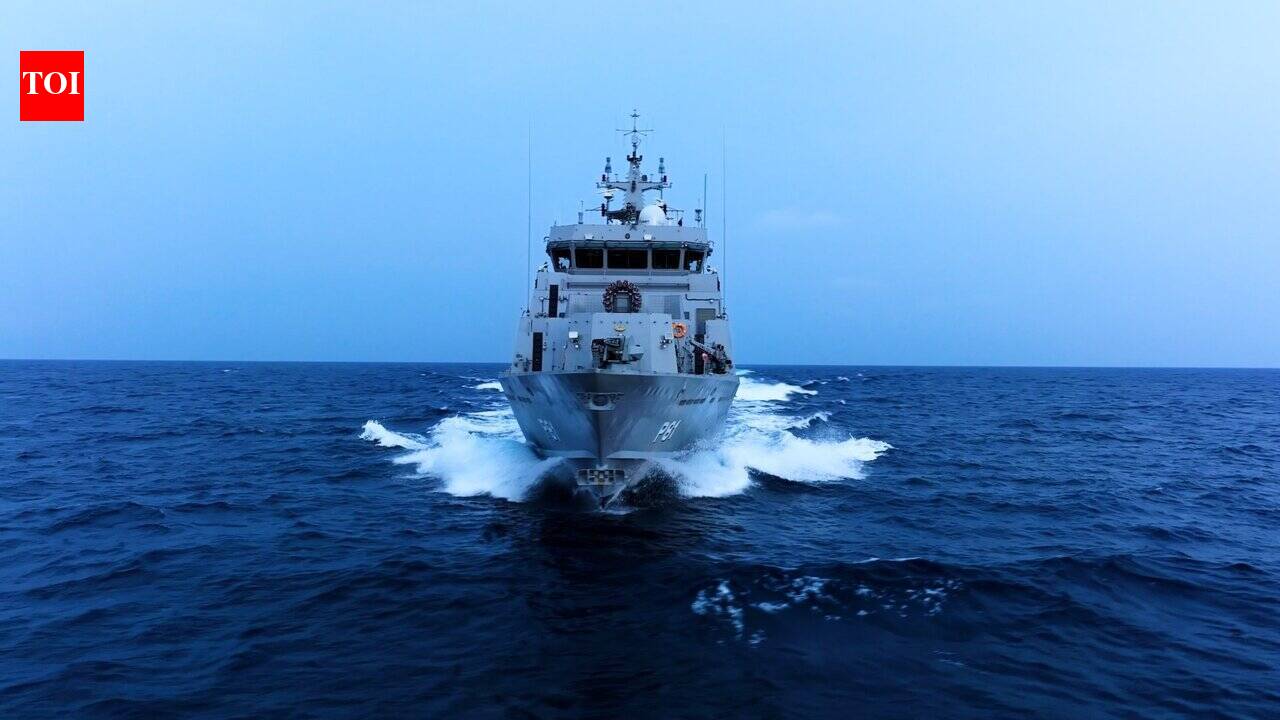
NEW DELHI: Adding teeth to India’s indigenously-developed submarine hunter fleet, the Indian Navy will on Wednesday commission INS Malvan, the second of eight Mahe-class anti-submarine warfare shallow water craft (ASW-SWC) in Kochi. India is rapidly expanding its anti-submarine warfare fleet to counter the growing deployment of nuclear and conventional submarines by China and Pakistan in the Indian Ocean Region.
The submarine-hunter fleet protects vital sea lines of communication and maintains undersea deterrence in both deep-sea and shallow coastal waters.IAF chief Air Chief Marshal Amar Preet Singh will preside over the ceremony in Kochi, along with Vice Admiral Sanjay Vatsayan, Flag Officer Commanding-in-Chief, Western Naval Command.Named after the historic coastal town of Malwan, the warship reflects the rich maritime legacy associated with Chhatrapati Shivaji Maharaj and carries forward the tradition of the erstwhile INS Malwan, which served the Indian Navy till 2003.On X, the Indian Navy recently posted about the unveiling of the warship’s crest, “Silenct, Swift, Lethal.
Unveiling the crest of Malvan, featuring the formidable Bagh Nakha — a symbol of courage, agility and audacity. Encircled by waves, it reflects the ship’s resolve to remain ever vigilant and to strike silently in safeguarding India’s maritime frontiers. Silent Claws.”Built by Cochin Shipyard Limited (CSL), the 80-metre-long vessel, with a displacement of over 1,100 tonnes, is designed to conduct anti-submarine operations in coastal and shallow waters, replace the aging Abhay-class corvettes and support low intensity maritime operations (LIMO) and mine warfare.
The ship is fitted with waterjet propulsion and advanced systems, including torpedoes, anti-submarine rockets, modern radars and sonar.Malvan epitomises India's Aatmanirbhar Bharat vision in modern naval shipbuilding and design. With over 80% indigenous content, the warship exemplifies India’s growing mastery in warship design, construction and integration.The Indian Navy is inducting 16 specialised ASW-SWCs to hunt enemy submarines and secure the country's 7,516 km coastline.
These heavily-armed vessels are being built indigenously with over 80% domestic content.A total of 8 Arnala-class anti-submarine warfare shallow water craft are being built for the Indian Navy. They form half of a larger 16-ship program, with the remaining 8 vessels belonging to the similar Mahe-class.
While INS Malvan is part of the Mahe-class (built by Cochin Shipyard), the Arnala-class vessels are being constructed by Garden Reach Shipbuilders & Engineers (GRSE).Compact, yet formidable, Malvan reflects agility, precision and endurance — qualities essential for asserting dominance in shallow waters.
Its commissioning marks the continued induction of a new generation of indigenous shallow-water warriors, which are sleek, swift and indigenous.The Indian Navy currently operates an active fleet of approximately 145 warships and submarines, with an aggressive modernisation plan to reach a 200-ship fleet by 2035.
It is targeting a 200-ship fleet as regional maritime competition grows and China expands its presence in the Indo-Pacific.China operates approximately 60 to 65 submarines, while Pakistan currently has an active fleet of 8 submarines, with an ongoing $5 billion modernization program to expand its fleet to 13 boats.Last month itself, the Navy inducted five indigenously built warships in a single massive block, maintaining a steady pace of commissioning a new vessel or submarine roughly every 40 days.The Navy plans to induct nearly 50 and support vessels over the next 3 to 4 years amid rising regional security competition and growing pressure on key sea lanes.
Last May, Vice Admiral Sanjay Vatsyan said the Indian Navy currently has around 45 ships under construction at Indian shipyards. Vice Admiral Vatsyan said the govt has already given acceptance of necessity, an initial procurement approval, for another 69 ships, six submarines and 120 fast interceptor craft.