
No new strikes, no peace deal: What Donald Trump’s ‘low-key’ Iran strategy means
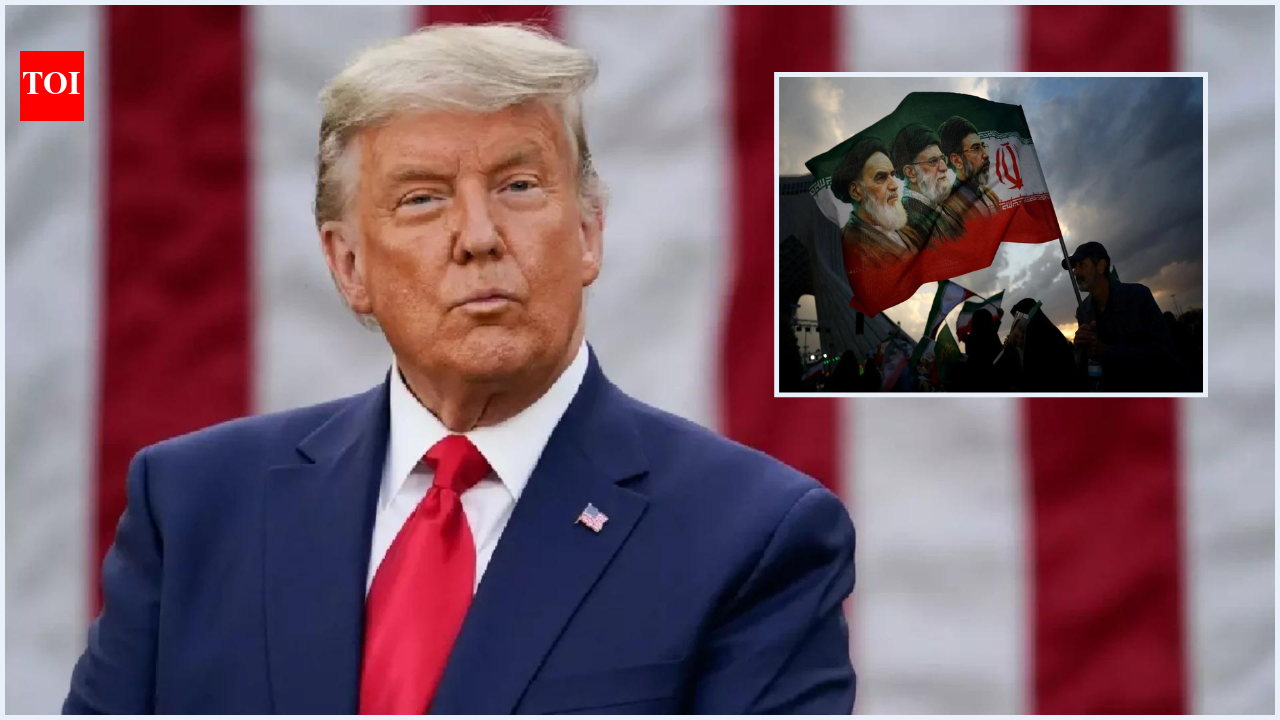
The 60-day deadline set under a June agreement between the US and Iran to end the war and resolve the dispute over Tehran’s nuclear programme expired on Monday, with the two sides seemingly further apart than before.During the period, President Donald Trump repeatedly warned that America was “locked and loaded” and ready to act if diplomacy failed, fuelling speculation that a military offensive might be launched as soon as the deal window closed.But as the deadline loomed, Trump signalled a different approach.Describing Washington’s strategy as “low-key”, the US president appeared to ease the immediate pace of military escalation while keeping pressure on Tehran through sanctions, economic measures and the naval blockade.In an interview with Axios earlier this month, Trump said Washington was “only semi-negotiating” with Iran, suggesting that the US was deliberately keeping the diplomatic channel open without committing to a full-fledged negotiation.“We are only semi-negotiating with them.
We are just watching Iran with its huge inflation and the fact they have no money,” Trump said.Trump said Iran was “in very bad shape” economically and claimed Tehran was struggling to find enough money to pay its troops.He attributed part of the pressure to the US naval blockade.“It will work out. It always works out.
It's like a chess game,” Trump said.Washington appears to believe that further economic pressure could force Tehran back to the negotiating table without the need for another major offensive.But “low-key” does not mean the US has backed away from confrontation.Vice President JD Vance made that clear on Saturday, saying Washington still considers the conflict to be ongoing.
“This thing is not over. It's obviously not at the beginning. We're in the middle of the game, and we're applying a whole host of tools — diplomatic, economic, military tools — to ensure that we get the best outcome for the American people,” Vance told Fox News.What does ‘low-keying’ mean?Trump's comments came after weeks in which the confrontation appeared to be heading towards another military escalation.
Instead of announcing fresh strikes, he stressed Iran's inflation, economic weakness and difficulty financing its government and military.The approach has three connected elements: economic pressure, the naval blockade and continued diplomatic contacts.The US has already sanctioned Iranian individuals, companies, vessels and financial networks.According to Reuters, the administration is considering additional measures against Chinese refiners that buy Iranian oil, Chinese banks involved in Iranian transactions and other entities accused of helping Tehran evade sanctions.More than 1,000 individuals, vessels and aircraft linked to Iran had faced US penalties since the conflict began, while hundreds of billions of dollars in cryptocurrency assets had also been frozen.Trump has argued that the naval blockade is worsening Iran's financial crisis by restricting its ability to export and import goods and limiting access to international markets.At the same time, Trump says Washington and Tehran are “semi-negotiating”, although Iranian officials have disputed the description of those contacts as formal negotiations.Why is Trump choosing this approach?The shift comes after months of military action.
Trump launched the Iran war jointly with Israel in February and initially predicted a short conflict. As the confrontation continued, Washington has had to balance military objectives with the costs and demands of a prolonged war.Trump has repeatedly presented Iran's economic weakness as central to his strategy.In a subsequent interview reported by Reuters, Trump framed Washington's choices as either allowing Iran to fail economically or hitting it “really hard” militarily.
He also pointed to frozen assets and financial restrictions as sources of leverage.The strategy therefore keeps military force in reserve while giving economic pressure more time to work. The calculation is that worsening inflation, disrupted trade and reduced revenue could eventually make Tehran more willing to compromise.But the two sides remain far apart over what those negotiations should achieve.Strait of Hormuz becomes key bargaining chipThe Strait of Hormuz, through which a large share of global oil shipments passes, is now central to the dispute.Iran has been negotiating with Oman over arrangements concerning shipping through the strait.
On August 9, Iranian officials said the agreement with Oman was in its “final stages”.However, Tehran said an agreement with Oman would not automatically mean the strait would reopen to international shipping.Iran has demanded that the US end the blockade and sanctions and provide compensation for war-related damage.Tehran is insisting that Washington act before shipping could fully resume.Washington wants the waterway reopened, while Iran has linked normal shipping to US concessions.
The strait has therefore become part of the broader US-Iran bargaining process rather than merely a shipping issue.Why Trump is not rushing to strike againBefore the Axios interview, renewed US attacks on Iran were a major concern. Trump had earlier said the US was “locked and loaded and ready to go against the Islamic Republic of Iran”.However, several Middle Eastern countries asked him to hold off.“Based on this request, I have agreed, for the future benefit of the WORLD and, likewise, the survival of a successful and prosperous Iran, to cancel the attack, subject to being able to rapidly make a DEAL,” Trump posted on Truth Social.His subsequent approach suggests Washington is now willing to wait and see whether economic pressure and diplomacy can produce results.That does not mean military force has disappeared.
Trump continues to present escalation as an option, including his warning that Iran could either be allowed to deteriorate economically or be hit “really hard”.The current strategy is therefore one of pressure combined with restraint.Are the US and Iran actually negotiating?This remains one of the most complicated aspects of the situation.Trump has repeatedly said talks are taking place, while Tehran has disputed Washington's description of those contacts.Earlier in August, Trump said talks with Iran were underway, while Iranian officials denied that a formal meeting had been scheduled.Conflicting statements raised questions about whether the countries were actually moving towards a diplomatic solution.The distinction between communication and formal negotiations is important.
Messages can pass through intermediaries such as Oman, Pakistan or Qatar without the two sides formally sitting at a negotiating table.That appears closer to what Trump means by “semi-negotiating”.These backchannels have become increasingly important.Axios reported that the Trump administration had pursued a secret channel to Iran's Islamic Revolutionary Guard Corps after earlier negotiations became complicated by uncertainty over who represented the most powerful elements of the Iranian system.The report said the channel was facilitated through Kurdish leader Masoud Barzani, while Pakistan and Qatar had also been involved in mediation efforts.Who actually speaks for Iran?Another obstacle is Iran's internal power structure.Axios reported that US negotiators have struggled to determine whether their counterparts genuinely represent the Islamic Revolutionary Guard Corps, which has gained greater influence during the conflict.Any agreement would have to be implemented by the people and institutions controlling Iran's military, security and political decisions.Uncertainty over who has the authority to negotiate and enforce a deal has therefore complicated diplomacy.The involvement of Oman, Pakistan, Qatar and other countries provides multiple routes for messages and proposals to move between Washington and Tehran.Iran's demandsWhile Washington is counting on economic pressure to increase Iran's willingness to compromise, Tehran is using its own leverage.The dispute over the Strait of Hormuz is a clear example.
Iran has linked reopening the waterway to US action on sanctions and the blockade, as well as compensation for war-related damage.Washington is using sanctions, financial restrictions and the blockade to pressure Iran. Tehran, meanwhile, is using its position over a strategically important shipping route as leverage.Both sides are therefore trying to use the pressure facing the other to secure concessions.What about Iran's nuclear programme?The nuclear issue has long been central to the US-Iran confrontation, but recent reporting suggests the immediate focus may have broadened towards the wider conflict and reopening the Strait of Hormuz.A report cited by The Daily Beast said Trump had privately indicated that he could be willing to end the conflict without securing the original nuclear objective.
The White House has not publicly confirmed that account.The report said reopening the Strait of Hormuz had become an increasingly important priority as the conflict continued.If confirmed, this would suggest a shift in Washington's immediate priorities, with de-escalation, shipping and economic issues potentially taking precedence over resolving every nuclear-related demand.Trump, however, has not formally announced that the nuclear issue has been removed from US demands.Military pressure behind the diplomacyEven as Washington calls the approach “low-key”, the military dimension remains significant.The US Army has used much of its global stockpile of highly accurate long-range missiles during its five-month war with Iran, according to people familiar with the data.The weapons include Army Tactical Missile Systems, or ATACMS, and Precision Strike Missiles, or PrSM.
Two sources said the US had used “virtually all” of these weapons, although they declined to provide exact figures.The US military has also reportedly lost at least 45 MQ-9 Reaper drones during the war, about 25% of its fleet.The Reaper is used for surveillance and targeted strikes and can cost $30 million-$50 million depending on its sensors and weapons, according to the US Air Force.The losses could represent more than $1.3 billion in equipment costs, according to three US officials familiar with Pentagon data, quoted by the Washington Post.The drones have been used extensively around the Strait of Hormuz.
Their relatively slow speed and low-altitude operations have made them vulnerable to Iranian forces and Iran-aligned groups in Yemen and Iraq.A fourth US official said not all the drones were shot down; some crashed after operators lost communications links.The US military had about 185 Reapers before the conflict, including 165 operated by the Air Force and 20 by the Marine Corps, based on public budget data and service figures.None of the Marine Corps' Reapers have been lost, according to Lt Col Joshua Benson, a Marine Corps spokesman.In May, Lt Gen David Tabor, a senior Air Force officer, told the Senate that the number of remaining Reapers had fallen to about 135.
He said the Air Force was concerned about the losses and was exploring ways to replenish the fleet.The Pentagon is already phasing out the General Atomics-built Reaper and plans to replace it with cheaper armed surveillance drones capable of operating in swarms.The long-range missiles cost more than $1 million each and are important because they allow accurate strikes from a distance.
ATACMS have also been used extensively in Ukraine, while PrSM is a newer, longer-range system expected to replace ATACMS.Falling stocks could affect how Washington approaches another large-scale attack on Iran and potentially its ability to deter other adversaries, including Russia and China.A fourth person familiar with the matter said the US could resupply the weapons, with US Central Command able to reload from military supplies held around the world.The White House, responding to questions about the stockpile, issued a statement from Trump saying the US had “far more munitions than anyone in the world” and “far more than we need”.Why economic pressure could work — and failTrump's strategy rests on a straightforward calculation: if Iran's economy becomes weak enough, Tehran may conclude that continuing the confrontation is more costly than making concessions.But economic pressure does not automatically produce diplomatic concessions.
Iran has spent years developing ways to circumvent sanctions, maintain access to revenue and find alternative trading partners.The Trump administration is therefore considering additional sanctions, particularly against Chinese companies and financial institutions involved in Iranian oil and financial transactions.Washington is also weighing sanctions against Chinese “teapot” refiners, banks involved in Iranian transactions and other networks.Targeting Chinese companies could create friction with Beijing, a major buyer of Iranian oil, while the wider disruption around Hormuz could affect global energy markets and shipping costs.Diplomatic window remains openDespite the pressure and rhetoric, diplomacy has not stopped.The news agency Associated Press reported that the Trump administration had expanded diplomatic outreach to Austria and Greece as efforts to restart negotiations stalled.Austria hosts the International Atomic Energy Agency, while Greece has significant maritime interests.The involvement of multiple countries shows that several diplomatic channels remain active even as Washington maintains sanctions, the blockade and the threat of military escalation.Is “low-keying” a retreat?Not exactly.Trump's description does not indicate that the US is ending its confrontation with Iran.
There has been no indication that Washington is lifting sanctions or ending the naval blockade.Instead, it describes a tactical shift: lowering the immediate level of military escalation while allowing economic pressure to accumulate and diplomatic channels to remain open.The immediate test will be whether that pressure produces movement on the Strait of Hormuz.If Iran agrees to reopen the waterway without securing all its demands, Washington could present that as evidence that its strategy is working.
If Tehran refuses, pressure will continue on both sides, including through the wider effects on energy markets and shipping.Another test will be whether backchannel negotiations can produce an agreement that Iran's different power centres are willing and able to enforce.For now, Trump's “low-keying” approach is neither a peace deal nor a retreat.
It is a strategy of pressure with military force held in reserve, giving economic sanctions and diplomacy more time to work.The central question is whether that combination will eventually push Tehran towards an agreement or whether Iran will continue using its own leverage to resist.Catch the latest World News and Live updates.
Download the TOI app.