
Nvidia signs over $500 bn AI‑compute financing MoUs with six Wall Street firms
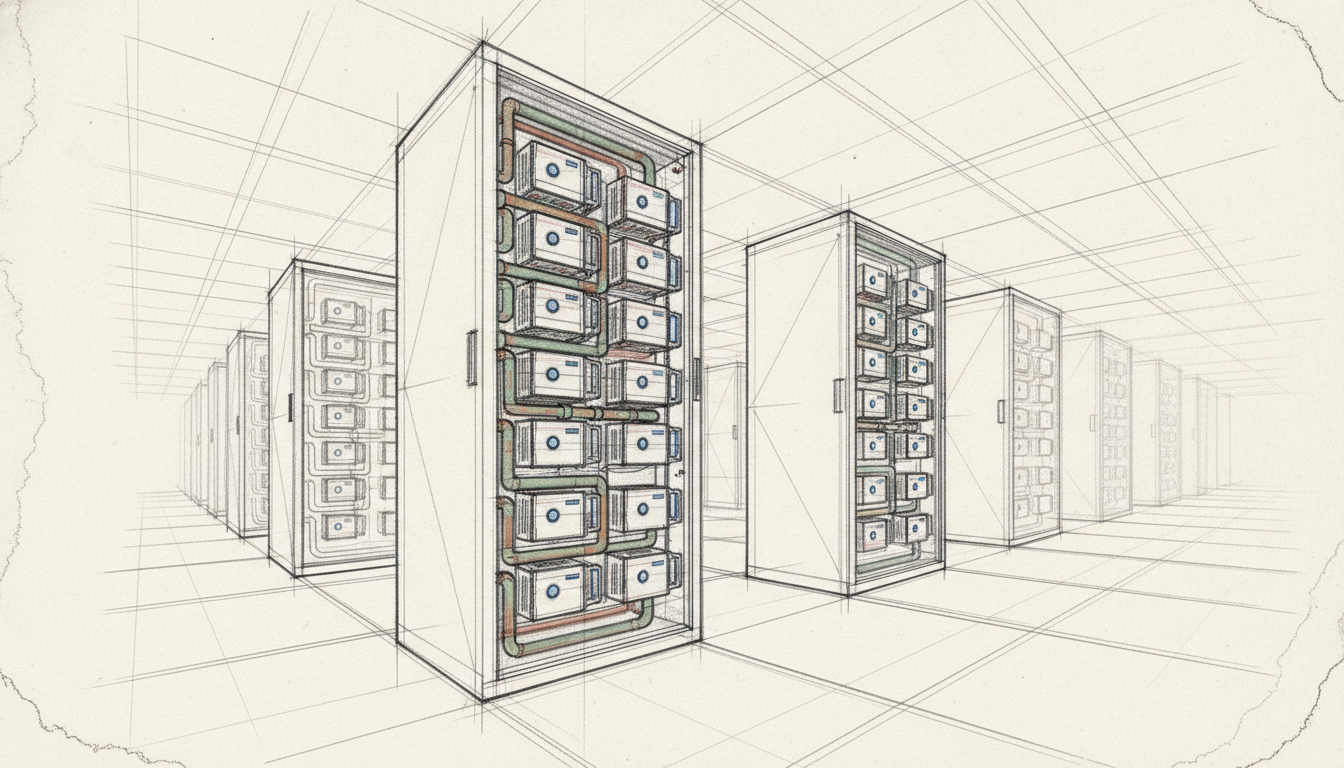
The Guardian reported that the partners are Goldman Sachs, Apollo, BlackRock, Blackstone, Brookfield and KKR, and that the financing target exceeds $500 bn (≈£370 bn) 1. The announcement came alongside a post on X from Nvidia CEO Jensen Huang, who called the arrangement “a major milestone for Nvidia and the AI industry.”
All six firms are major players in Wall Street capital markets. Goldman Sachs and KKR are investment banks and private‑equity firms respectively, while BlackRock, Blackstone, Brookfield and Apollo are leading asset managers or alternative‑investment groups. The Guardian article does not specify their public‑trading status, so the description is limited to their role as “major Wall Street firms.”
The MoUs are intended to raise capital for three categories of AI‑compute assets: data‑centre expansion, semiconductor‑fab construction and power‑generation facilities. The Guardian piece does not break down how the funds will be allocated across these categories, and no tranche‑by‑tranche schedule was disclosed.
Nvidia’s market value was cited at $5.3 tn at the time of the announcement. The pledged financing therefore represents roughly 9.4 % of Nvidia’s market cap, a scale that could influence both equity and debt markets for technology infrastructure.
While the exact deployment plan remains undisclosed, the sheer size of the commitment underscores the accelerating demand for AI‑compute capacity and the willingness of Wall Street to back it. Analysts will watch for any follow‑up details that could affect Nvidia’s balance sheet, its supply‑chain partners and the broader AI‑infrastructure market.
What’s next? The specific projects and timing for the capital deployment have not been revealed, leaving investors to await further guidance from Nvidia and its financing partners.
Reporting for CityAM Canada on business and the wider Canadian economy.
Labour’s ‘chaotic’ crackdown on zero-hour contracts could cost businesses nearly £3bn every year, though firms have warned the real cost could spiral even higher. The cost of the new rules, which include offering guaranteed-hour contracts to flexible employees and paying workers for cancelled shifts, has been revealed in a government impact assessment. The reforms could […]