
NYC Pride March: Polls Show How American Views on LGBTQ Rights Have Changed
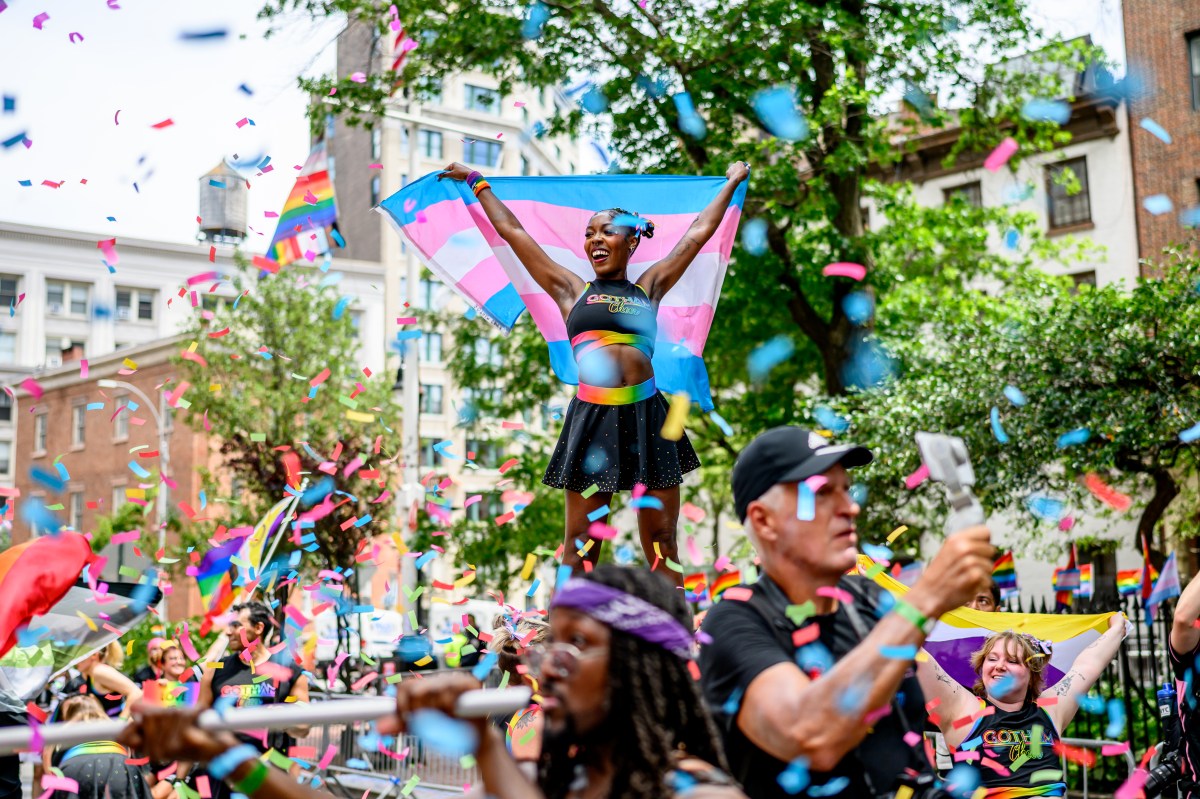
Support for LGBTQ+ rights has declined across several major national polls, even as millions of Americans celebrate at the New York City Pride March on Sunday. Recent data from Gallup, Public Religion Research Institute (PRRI) and Pew Research Center shows slipping support for same-sex marriage and transgender rights amid a growing conservative backlash.
For years, polls showed growing acceptance toward the LGBTQ+ community with rising support for same-sex marriage and anti-discrimination policies, but data show a shift over the past five years away from that support.
Pride Month coincides with the 1969 Stonewall Inn riots in New York City, a pivotal moment in the fight for LGBTQ+ rights. Many advocates have sounded the alarm about new anti-LGBTQ+ legislation introduced across the country and a federal rollback of rights amid President Donald Trump’s second term in office.
The latest polling data from Gallup’s annual Values and Beliefs survey that was conducted May 1-17 showed slipping support for same-sex marriage among Americans over recent years, though a majority were still in support. The Supreme Court in 2015 made same-sex marriage legal across the country, when support was around 60 percent, notably higher than a decade earlier in 2005 when it was around 37 percent.
Support peaked in 2021 and 2022, when 71 percent of all Americans said they supported same-sex marriage. But it has fallen since, with only 65 percent saying they support it in the latest poll. That’s its lowest percent since 2022, according to Gallup.
Meanwhile, 62 percent of Americans said they believe same-sex relations are morally acceptable, while 33 percent viewed those relations as morally wrong. That’s also a decrease from 2022, when 71 percent said they viewed gay or lesbian relationships as acceptable.
Falling support for same-sex marriage and LGBTQ+ rights more broadly comes as advocates say more legislation has been introduced and passed that would curb these rights. The American Civil Liberties Union (ACLU) has reported that at least 529 anti-LGBTQ+ bills have been introduced across the country in the 2026 legislative session. States like Florida and Texas have led the way in passing bills aimed at limiting transgender rights, as well as so-called "Don't Say Gay" bills that limit discussion of LGBTQ+ people, identities, and issues in public schools.
Most Americans believe in nondiscrimination protections for LGBTQ+ people, according to a PRRI poll released in March that placed support for those policies at 72 percent.
PRRI CEO Melissa Deckman wrote in the report that support for those protections remains high, but that there have been “slight declines in support for LGBTQ rights over the past few years, largely reflecting growing party polarization.”
However, it found that support for LGBTQ+ nondiscrimination protections fell among those between the ages of 18-29 from 80 percent in 2015 to 70 percent in 2025, largely driven by a 24-point drop among young Republicans during this time (74 percent vs. 50 percent). Although young people are generally viewed as more progressive than older generations, there have been signs that Gen Z has a conservative strain.
The survey polled 22,111 adults from February 28 to December 8, 2025 and had a margin of error of plus or minus 0.87 percentage points.
Rights for the transgender community have come under specific scrutiny over recent years, with the topic of transgender athletes emerging as a major culture war divider.
Critics have pushed for rules barring transgender women from participating alongside other women. Proponents of these bans argue that even after somebody transitions, they may still retain physical advantages over cisgender women and girls, which would raise questions of fairness and safety.
Polling finds that most Americans support those bans.
In February 2025, the Pew Research Center found that 66 percent of Americans support requiring trans athletes to compete on teams that match the sex they were assigned at birth. Forty-nine percent support requiring trans people to use public bathrooms corresponding with the sex they were assigned at birth, while 56 percent support making it illegal for healthcare professionals to provide minors with gender affirming care.
At the same time, 56 percent believe there should be laws protecting transgender people from discrimination, according to the poll, which was conducted from February 10-17, 2025.
Most Americans believe it is morally wrong for a person to change their gender, according to Gallup, which found that 38 percent of Americans view it as morally acceptable compared to 57 percent who don't. That marks a shift from 2021, when 46 percent viewed it as morally acceptable and 51 percent said it was wrong for a person to change their gender.
The PRRI poll found that 56 percent of Americans support laws requiring transgender individuals to use bathrooms corresponding to their birth sex, compared to 40 percent who oppose those laws.
PRRI's survey also found that a large majority of Americans (71 percent) agree that “transgender people deserve the same rights and protections as other Americans,” compared with 24 percent of those who disagree. This is split across party lines with 88 percent of Democrats and 77 percent of independents in agreement, compared with 57 percent of Republicans.
Trump’s return to the White House has upended Pride celebrations, as LGBTQ+ advocates have raised concerns about his more conservative approach to social issues. In addition to supporting bans on transgender athletes from competing on women’s and girls’ teams, his administration has also taken other actions on LGBTQ+ rights including removing references to transgender people from the Stonewall National Monument website.
The administration also barred LGBTQ+ flags from flying over federal buildings and national monuments, including the site of the Stonewall Inn. In April, the administration agreed to allow the flag to fly over the monument after facing legal challenges.
The Department of Education declared June "Title IX Month" and has opened investigations into schools that allow transgender students to use bathrooms matching their gender identities. Last year, Defense Secretary Pete Hegseth stripped the name of gay rights activist Harvey Milk from a U.S. Navy replenishment oiler.
The conservative policy is also reflected in cultural changes.
The past few years have seen a backlash to LGBTQ+ Pride Month from conservatives, who launched large boycotts of brands like Target and Bud Light over their Pride festivities.
Bud Light infamously faced a boycott after it provided a commemorative beer can to influencer Dylan Mulvaney to celebrate the one-year anniversary of her gender transition in 2023. These boycotts and backlash left corporations in a tricky situation, having to avoid such a reaction from conservative consumers without appearing to abandon Pride celebrations that satisfies more progressive Americans. In light of the backlash, corporate Pride sponsorships had dried up in recent years.
Major corporations have withdrawn sponsorships from Pride events around the country, leaving some organizers facing significant funding shortfalls amid the administration’s opposition to Diversity, Equity and Inclusion (DEI) programs.
However, members of the LGBTQ+ community continue celebrating Pride Month this year.
Kelley Robinson, president of the Human Rights Campaign (HRC), wrote in a statement that Pride is "a protest and it’s our power."
"LGBTQ+ people have always been a part of this country’s history, and we are undeniably a part of its future. Our belief in a nation where everyone can live as their true selves, without exception, has always pushed this country toward becoming a better home for all. That’s why even with all the attacks coming our way, Pride celebrations across the country will show that our joy can’t be stolen and our strength can’t be diminished," she wrote.
Contact Newsweek editors on this story: Jason Lemon and Anthony Murray.