
Obama vows to 'make BP pay' for oil spill damage
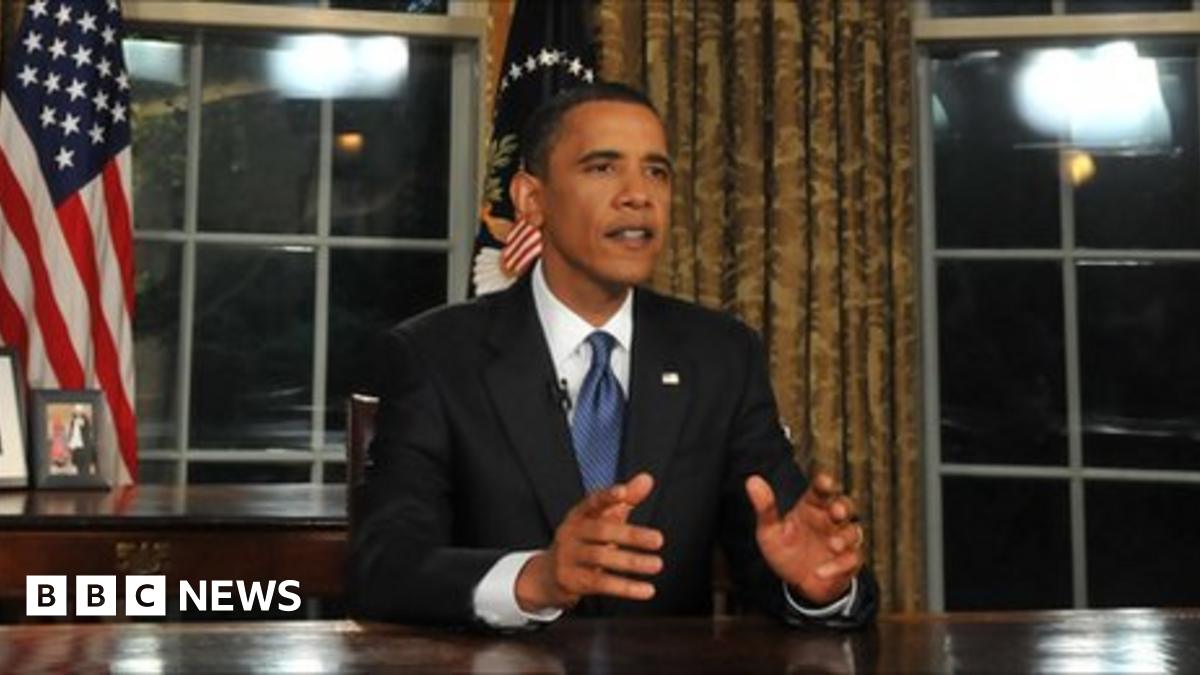
President Barack Obama has vowed to "make BP pay" for damage caused by the Gulf of Mexico oil spill, in his first national address from the Oval Office.
Mr Obama said he would meet company executives later and tell them that they must set up a fund to compensate those affected by the spill.
He described the spill as an assault on the shores and citizens of the US that tested the limits of human technology.
And he said it demonstrated the need to end the US "addiction" to fossil fuels.
Hours after the government sharply increased its estimate of how much oil was flowing into the Gulf from the broken well, Mr Obama warned that the risks of another such incident would continue to rise because "we're running out of places to drill on land and in shallow water".
He called on the Senate to pass an energy bill that has already cleared the House of Representatives.
Presidents use the Oval Office for what they regard as vital national issues.
The speech comes as opinion polls suggest a majority of Americans disapprove of how Mr Obama has handled the crisis - the worst environmental disaster in US history.
In his speech, Mr Obama likened the spill to an "epidemic" and reiterated that BP would be made to pay for the damage.
"We will make BP pay for the damage their company has caused," Mr Obama promised.
He said he would meet BP Chairman Carl-Henric Svanberg later on Wednesday and "inform him that he is to set aside whatever resources are required to compensate the workers and business owners who have been harmed as a result of his company's recklessness".
He added: "We will fight this spill with everything we've got for as long it takes."
In response to the speech, BP said in a statement that it shared Mr Obama's goal of cleaning up the oil and helping the people affected by the spill.
The firm said it was looking forward to Wednesday's meeting "for a constructive discussion about how best to achieve these mutual goals".
Mr Obama also used the speech to renew calls for the US to embark on a future of clean energy.
"I say we can't afford not to change how we produce and use energy - because the long-term costs to our economy, our national security, and our environment are far greater," he said.
But he gave few details and made no pledges about specific legislation, instead promising to look at ideas from Republicans and Democrats on the issue.
He also announced that the national commission he set up to investigate the causes of the oil spill would be headed by Ray Mabus, a former governor of Mississippi.
With this speech, the president has made a lofty appeal to American idealism, analysts say, but that appeal will not be universally welcomed at a time when Americans are mostly worried about the more pressing need simply to stop the leak.
The Republicans were quick to criticise the address, with party chairman Michael Steele accusing Mr Obama of exploiting the crisis for his own political gain.
Oil has been spewing into the Gulf of Mexico since a drilling rig leased by BP exploded on 20 April.
The explosion killed 11 workers, and the rig sank two days later.
BP managed to place a cap over the leaking oil pipe earlier this month, and is now collecting much of the oil.
But estimates of how much oil is gushing out of the well have again risen dramatically.
A government panel of scientists now believes 35,000-60,000 barrels are leaking from the well each day, up from its estimate last week of 20,000-40,000. BP's initial estimates were 1,000-5,000.
US Congressmen have been fiercely critical of BP, accusing its executives of failing to follow proper procedures.
Politicians have spoken of legal action - and even the possibility of criminal charges - against BP.
As the rhetoric has become increasingly bitter, the firm's share price has continued to tumble, with billions of dollars being wiped off its value.