
Picasso's Mediterranean inspiration
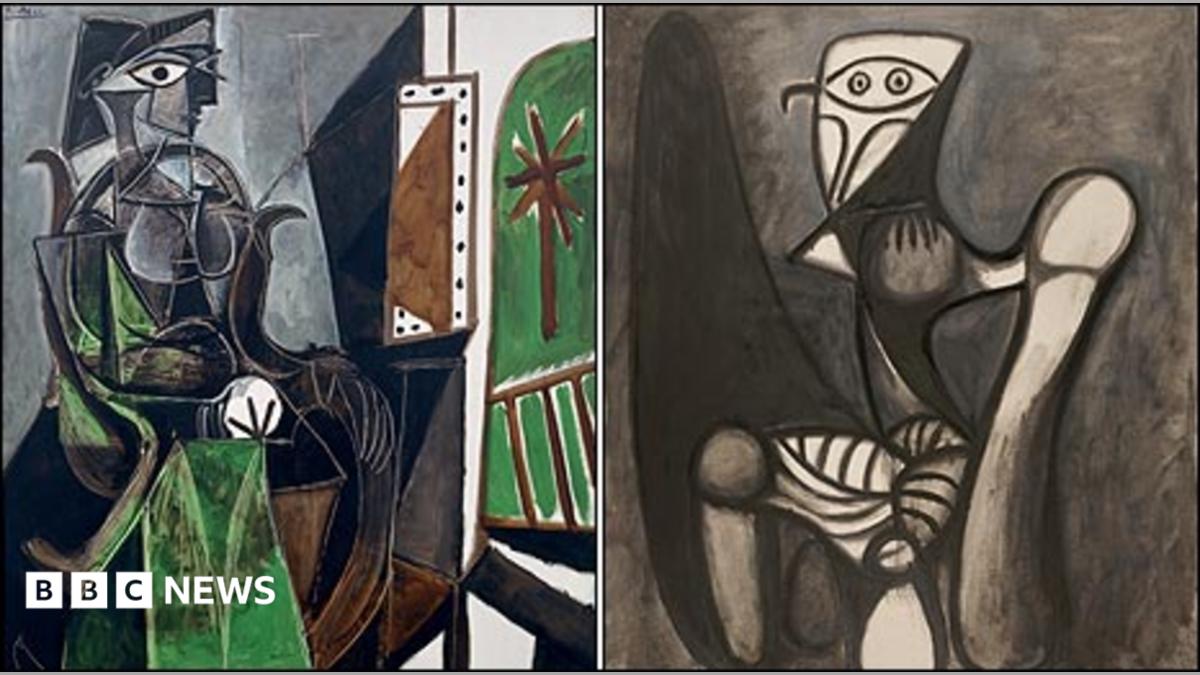
An exhibition in London brings together some of the works Pablo Picasso produced when, after World War II, he left Paris and went to live in the south of France.
Picasso - The Mediterranean Years contains 150 pieces, most still in his family's possession. They give an insight into his complex private life.
During the World War II Pablo Picasso, the most famous artist alive, had lived quietly in occupied Paris. When the war ended he was 63 and decided it was time to reinvent himself.
The new French government had banned the ownership of second homes so Picasso decided to quit Paris for good and head south where previously he'd spent his summers. He moved his studio to the plain little town of Vallauris, near Cannes, known for its ceramic industry.
Picasso - The Mediterranean Years gives an insight into what the the artist did there from 1945 to 1962. His British-born biographer, John Richardson has helped stage the show and says he hopes to shed light on a less well-known part of Picasso's career.
"In a way most of Picasso's life was a Mediterranean period. He was born in Malaga in Spain and from 1918 took a house in Antibes or nearby every summer.
"His big stylistic discoveries were almost all made in the south. After three of four months he'd go back to Paris and work on what he'd discovered," says Mr Richardson.
It's always tempting to trace Picasso's career through a timeline of women he was involved with. Picasso's main relationship at this time was with Francoise Gilot (though he was still married to his first wife Olga).
When the Gilot relationship ended he became involved primarily with Jacqueline Roque, more than 40 years his junior. There are portraits of each woman in the exhibition.
Mr Richardson first met Picasso in the late 1940s and knew both Gilot and Roque. After Gilot left he witnessed a series of women being "interviewed for the role".
"But I knew Jacqueline Roque would be the winner because she had absolutely what it took. She was totally devoted to him and prepared to sacrifice herself on the altar of his art. Which she did: after he died eventually she committed suicide".
The new show features paintings, linocuts, sculpture and ceramics which show Picasso focusing on his emotional and family life.
It's a contrast to the current show at Tate Liverpool (Picasso - Peace and Freedom) which looks at his political side, though Mr Richardson thinks his Communist belief wasn't profound.
Also at the exhibition's opening was the artist's grandson, Bernard Ruiz-Picasso. He says toward the end of this period some people Picasso knew urged him to return to Franco's Spain but his family were against it.
"My grandfather was a Spaniard in exile. The colours of nature in the south of France reminded him of Spain - and the light, the sea. He was able to reinterpret his past work," says Mr Ruiz-Picasso.
"He was pleased to have his family and friends around him and to make art. But I don't know if artists or great people are really happy. It's more complicated."
Picasso - The Mediterranean Years is at the Gagosian in London until 28 August.