
Pivot! Pivot! Trump's Asia policy is giving America's friends whiplash
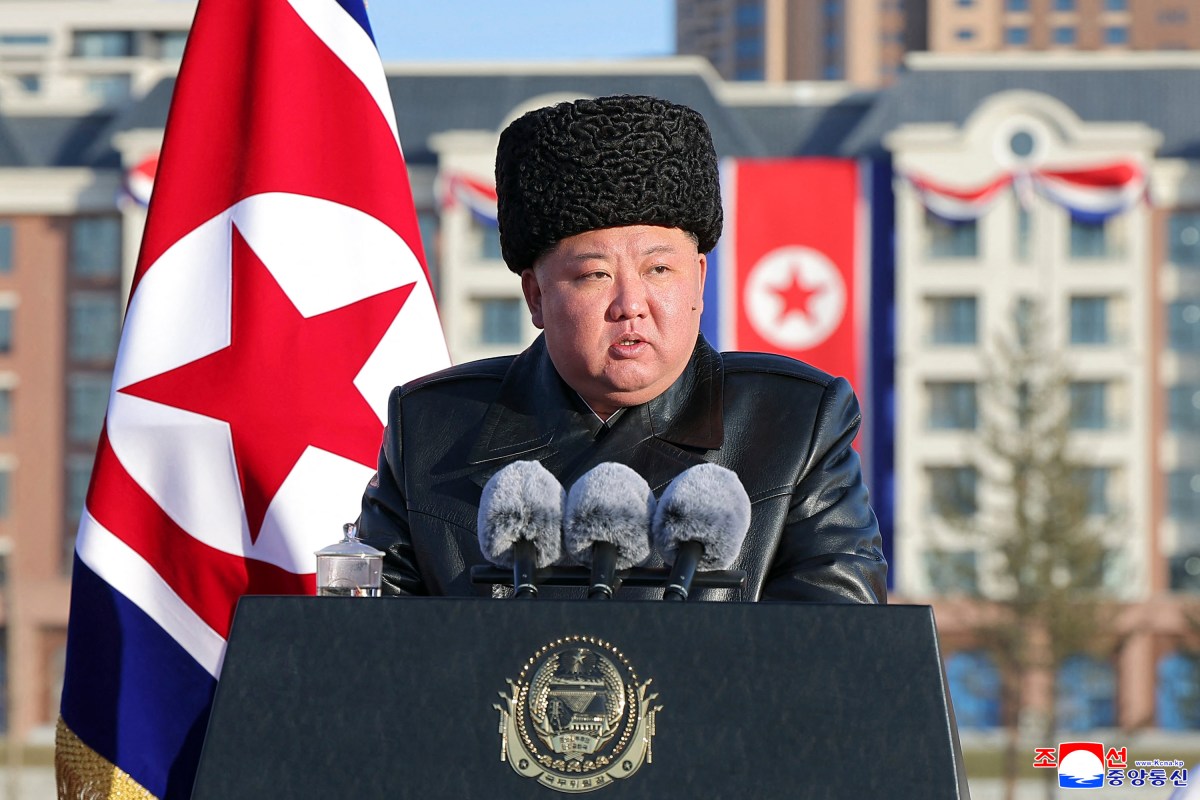
President Donald Trump has given skeptics of his Indo-Pacific policy more ammunition to pronounce dead the U.S. pivot to Asia, this time by calling war games with ally South Korea "inappropriate and hostile" to the North and its strongman leader Kim Jong Un.
Kim has been "unthreatening and respectful" during his presidency, Trump said on Truth Social, in an announcement to scale down annual preparedness drills just hours before they were scheduled to begin. He also took a swipe at his South Korean counterpart for declining to join his war in Iran.
North Korea, which flouted multiple U.N. Security Council resolutions only last week by testing more ballistic missiles, is learning the utility of its rhetorical threats against the United States. And if it wasn’t clear already, America’s enemies are understanding the true value of even a modest nuclear arsenal like the one held by Pyongyang.
Observers expecting consistent U.S. policy are feeling another round of Trump-induced policy whiplash this week, but the failure in Washington to rebalance to the world’s most consequential region has been the surest bet in town for over a decade.
Trump’s intervention at the 11th hour will be welcome news for North Korea, not least because it had only just finished railing against the planned military exercise, warning in a recent state media release that the drills and others like them were "a rehearsal for an aggressive war" that threatened its existence.
Foreign policy circles are dismayed at what appears to be yet another concession to an adversary at the expense of an ally, and so soon after Trump had publicly declared his "great respect" for Chinese leader Xi Jinping in Beijing.
Longtime Trump watchers will recognize in his social media platitudes the beginnings of his carrot vs. stick approach to diplomacy and may remember that he similarly canceled war games with South Korea to facilitate three rounds of ultimately fruitless summitry in 2018 and 2019.
Is another meeting between Trump and Kim on the horizon? Maybe. But the U.S. now has worse cards than it did eight years ago, according to "BBC Dad" Robert Kelly, a political scientist at South Korea’s Pusan National University.
In addition to Beijing, Pyongyang now has a second patron in Moscow, which is paying well—and in U.S. dollars—for the soldiers and weapons North Korea is sending to Russia for its invasion of Ukraine, Kelly said on X.
"Trump himself is even more erratic and checked-out than last time…. He’ll be even more inclined this time around to just give stuff away to get the Nobel Prize he so desperately wants," Kelly wrote.
Kim’s allies in Tehran know all too well that Trump’s mood can flip overnight if negotiations go south. Thankfully (for Kim, that is), North Korea is far more resilient now than it was during Trump 1.0.
In a speech in January, Pentagon policy chief Elbridge Colby called South Korea a "model ally," but in a short Trump post on Sunday, it was relegated to a free rider benefiting from costly exercises paid for by the U.S. taxpayer.
There’s a pattern here, analysts say. In May, about a year after Defense Secretary Pete Hegseth had also described Poland as a "model ally," the Pentagon pulled plans to deploy 4,000 U.S. troops to the country on NATO’s eastern flank.
In Manila last week, Colby said the Philippines was a "model ally" too. What that means for America’s oldest alliance in Asia is unclear, but a setback would first benefit China, which has been clashing with the Philippines over contested flashpoints across the South China Sea for years.
Incidentally, Colby has now given a speech in Seoul that didn’t mention North Korea, a second in Brussels that didn’t reference Russia, and a third in Manila that didn’t name China.
When the Trump administration restored the name of the U.S. Pacific Command in June, having also been the one to order its title changed to the Indo-Pacific Command in 2018, the Defense Department said it was a callback to America’s war-winning days of old.
The symbolic move intended for U.S. audiences back home may have neglected the subtle signs this sent to phrase-sensitive security partners like India, which appeared to be cut from the strategic concept overnight.
Colby told reporters last week that the "vital" U.S.-India partnership remained unchanged, but ongoing uncertainty surrounding America’s commitment to the region is having a knock-on effect in international polls.
China was more popular than the U.S. in most nations surveyed in a Pew research report released in July. Confidence in Trump to do the right thing in world affairs this year was lower than in Xi—and in former Democratic President Joe Biden during his time in office.
International relations scholars often debate whether credibility really matters to those on the receiving end of a great power’s policies, Adrian Ang, a researcher at Singapore’s S. Rajaratnam School of International Studies, said on X.
"The administration adds new data points almost on a daily basis," he said.
Trump’s latest overtures to Kim align in part with the desires of South Korean President Lee Jae Myung, who over the weekend proposed peace talks to end his country’s official at-war status with the North.
Lee said a treaty to formally end the Korean War might help suppress Kim’s appetite for more nuclear weapons, although Pyongyang says its buildup is irreversible.
Many see sense in Trump’s tough love approach to U.S. allies and his willingness to give dictators the benefit of the doubt.
Jennifer Kavanagh, a military analyst at Defense Priorities, said exercises with South Korea failed to achieve their stated aims on the Korean Peninsula and were a particularly poor use of the Pentagon’s shrinking pool of resources at this time.
"The U.S. military should not be preparing to fight alongside South Korea, especially in a war on the peninsula with its northern neighbor. Instead, Washington should be handing the responsibility for South Korea’s security over to Seoul in its entirety," Kavanagh said.
Trump’s decision to actively reduce potential points of tension with North Korea could restart talks at a time when U.S. policy on the issue remains "at a dead end," Cato Institute analyst Evan Sankey said in a press release.
"There is little prospect of convincing Kim to give up his nuclear weapons, but talks could lead to caps on his missile arsenal and stockpile of fissile material," he said.
And what if, said Isaac Stone Fish of the Strategy Risks consultancy, Trump really is able to pry North Korea from the grips of China and Russia?
He added: “[T]he question is at what cost to U.S. global prestige, and will weakening U.S. support for troops in South Korea embolden China…."
Washington, D.C.’s Asia hands fear that the Trump administration is too focused on the Western Hemisphere, given its involvement in Venezuela and possible intervention in Cuba and Greenland.
Others say the pivot to Asia—first envisioned by the State Department’s former top Pacific policymaker Kurt Campbell—is alive and well, only now existing in the form of smaller, targeted initiatives and "minilateral" groups like the Quad or the AUKUS pact with Australia and Britain.
But even in the first island chain, where Colby says a favorable balance of power will serve the interests of America and its partners in the 21st century, Trump is proving that nothing is nonnegotiable.
The U.S. president seems to be reconsidering a $14 billion arms sale that would bolster the defenses of Beijing-claimed Taiwan to avoid upsetting Xi before his first state visit to the U.S. since 2015.
When the USS George Washington, the U.S. Navy’s only aircraft carrier based in the Western Pacific, departed the region last week to relieve the USS Abraham Lincoln in the Middle East, it signaled to many that the administration’s priorities were not in the Pacific.
Trump is hardly the first president accused of neglecting the chance to demonstrate American resolve and sustained presence in the Pacific, so whether the pivot to Asia is dead or alive may be the wrong question to ask.