
Platner’s edge with women narrows in new Maine poll
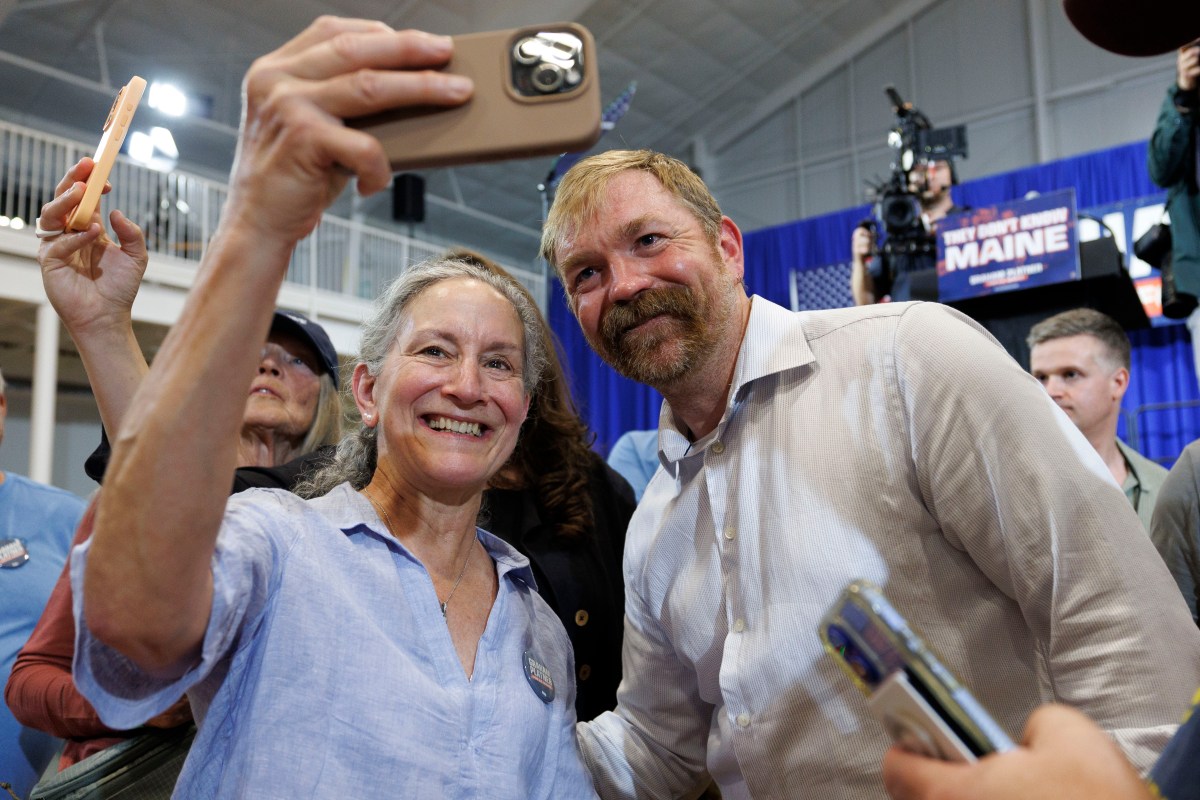
Graham Platner continues to hold an advantage among women voters in Maine’s closely watched Senate race, even as a series of personal controversies loom over his candidacy, according to a new New York Times/Portland Press Herald/Siena College poll.
The survey of likely voters shows Platner, the Democratic nominee, leading incumbent Republican Senator Susan Collins 52 percent to 44 percent among women, helping to power his narrow overall edge in the race. That gender gap has emerged as a central dynamic in a contest that remains tight statewide, with Platner ahead by just two points.
The finding suggests a degree of resilience in Platner’s coalition, particularly with a voting bloc that has been critical to Democratic success in recent cycles. Earlier polling had shown Platner with a significantly larger advantage among women, raising questions about whether that support would hold amid mounting scrutiny over his past behavior. While the margin has narrowed, the new data indicates that his edge remains intact.
That durability comes even as the controversies themselves are widely known. Roughly three-quarters of likely voters said they had heard “a lot” about issues including old social media posts, text messages, and other personal matters from Platner’s past.
Yet voters appear divided on how much those revelations matter. Among those aware of the controversies, 28 percent said they could not support him as a result, while another 24 percent said the issues made them question their support. Still, a sizable group—39 percent—said the controversies had not affected their view of his candidacy one way or the other.
The split underscores the complexity of the race. While the controversies are clearly a liability with some voters, they have not been enough, at least so far, to erase Platner’s advantages with key constituencies, particularly women and college-educated voters.
Platner’s candidacy has been dogged by a series of personal controversies that have drawn sustained scrutiny throughout the race. Chief among them is a tattoo he got in his 20s that resembled the Nazi-era “Totenkopf,” or death’s head symbol associated with the SS; Platner has said he was unaware of its meaning at the time and has since covered it, though some former partners have disputed his account.
He has also faced allegations that he sent sexually explicit messages to multiple women while married—claims his campaign has acknowledged, with Platner and his wife saying they worked through the issue privately. In addition, reports based on interviews with former partners have described behavior they characterized as volatile or at times physically aggressive, allegations Platner has denied while acknowledging he was “far from perfect” in past relationships.
The campaign has further been complicated by resurfaced online posts in which he used offensive language and made inflammatory comments, which he has since apologized for.
This latest poll hints at why Platner has been able to weather the storm. Supporters of the Democrat overwhelmingly view their vote through a policy lens: 93 percent of Platner backers say their support is driven primarily by where he stands on the issues, rather than his personal qualities. That issue-first alignment may be insulating him from the full political impact of the negative headlines.
For Collins, the path forward may depend on turning those lingering concerns into firmer opposition. The poll shows that voters who have heard about the controversies are far more skeptical of Platner, suggesting there is still room for movement.
For now, though, the race remains finely balanced—and Platner’s continued strength with women could prove decisive.
The Maine Senate race is emerging as one of the most critical battlegrounds of the 2026 midterms, with implications far beyond the state’s borders.
Democrats view the seat as one of their clearest pickup opportunities in a cycle that will determine control of the Senate. With the chamber narrowly divided, even a single seat could prove decisive in shaping the legislative agenda, judicial confirmations and the balance of power in the final two years of Donald Trump’s presidency.
Maine’s unique political profile only heightens its importance. The state has a history of ticket-splitting and independent-minded voters, allowing Collins to win reelection even as Democrats carry the state at the presidential level. That makes the race both highly competitive and highly unpredictable—qualities that have put it at the center of national spending and attention. Outside groups and party committees on both sides are expected to pour millions into the contest as November approaches.
In that sense, the race is not just a test of two candidates, but a proxy battle over the direction of the country—and one that could help decide which party governs in Washington after 2026.
Contact Newsweek editors on this story: John Fitzpatrick and Sam Wilson.