
Plummeting gas prices could bring new economic headaches
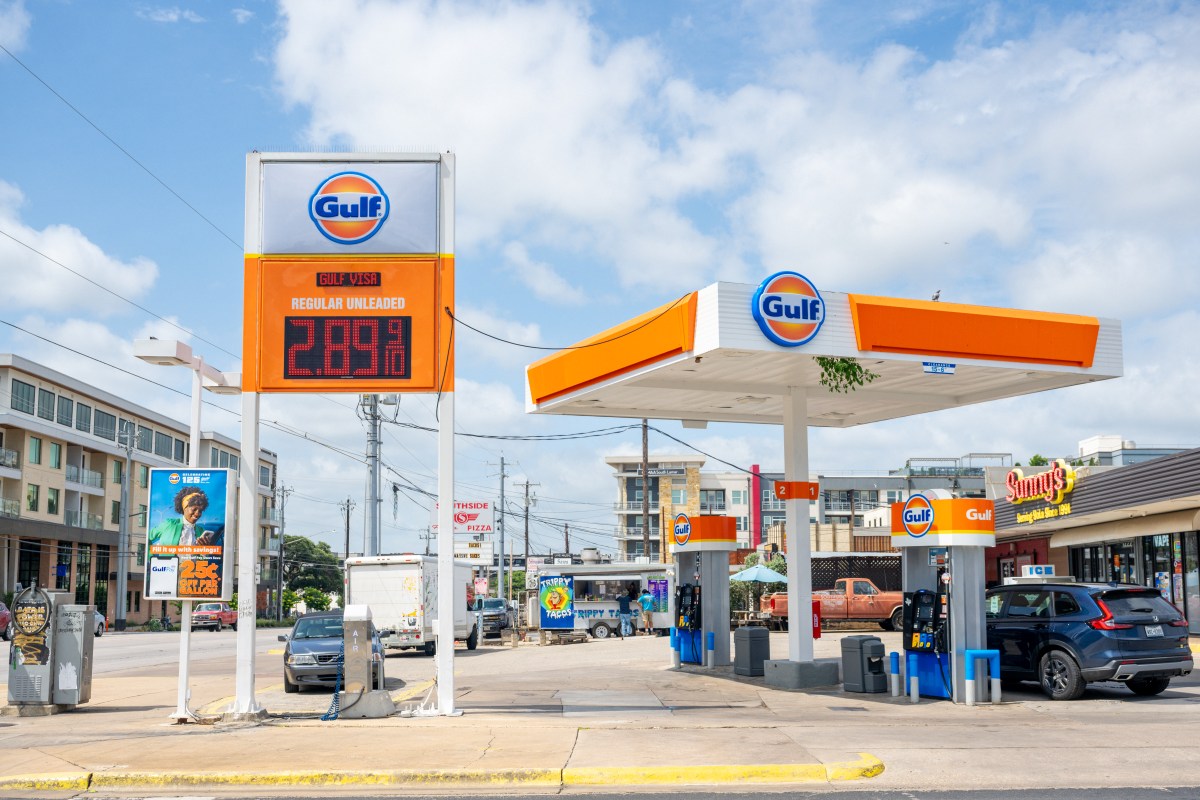
While falling gas prices are set to deliver immediate relief to American drivers after months of disruption, experts believe the sharp decline could carry a host of new issues for the economy.
Nationwide gas prices have dropped to $3.86 per gallon on average as of Monday, according to the latest estimates from AAA. While still up considerably compared with before the launch of the Iran war on February 28, this marks a sharp decline from the four-year high of $4.56 hit in May amid Tehran’s ongoing blockade of the Hormuz Strait.
Donald Trump’s administration is seeking further progress in this area, where surveys have revealed significant discontent among Americans over the additional squeeze on their budgets, as well as his handling of inflation and the broader economy.
Hostilities resurfaced over the weekend, with the U.S. and Iran trading strikes and accusing the other of ceasefire violations, only two weeks after they announced an agreement to bring the three-month conflict to a close.
And while the strikes have delayed hopes of an immediate and permanent truce, oil flows through the Strait of Hormuz are ongoing and continue to put downward pressure on global prices.
Brent crude has fallen to around $73—in line with immediate prewar levels—having briefly peaked at over $120 in late April.
Gas prices have similarly declined, though not at the rate officials had hoped, prompting Trump’s Department of Justice to launch a probe into alleged price gouging by oil majors.
"The price of fuel is not only national security issue, it impacts the wallet of every American," a spokesperson for the Justice Department said in a statement shared with Newsweek. "We will always commit to ensuring affordability in this nation."
The American Petroleum Institute (API), the national trade association representing the U.S. oil and natural gas industry, has rejected the price-gouging accusations.
"Our industry shares the goal of delivering relief at the pump and restoring stability to global energy markets," API spokesperson Bethany Williams told Newsweek. "Gasoline prices don't move in lockstep with crude oil, especially during a major global disruption that is still affecting supply, refining and inventories."
And certain experts warn it could take months for oil and gas markets to normalize, as risk premiums fade and the Hormuz Strait is cleared of mines.
Despite the immediate relief offered to drivers, economists have warned that falling gas prices could present new problems for the U.S. economy.
In a note published last week, Apollo Global Management's chief economist said cheaper gas could unleash pent-up demand and halt any progress in slowing inflation, even potentially worsening the issue. "The narrative in markets is changing from ‘lower oil prices mean lower inflation’ to ‘lower oil prices mean more demand in an already overheating economy, which means higher inflation,’" wrote Torsten Sløk.
He cited recent inflation reports as evidence that inflation continues to accelerate even amid declining oil costs, and said the "market narrative now suggests that the reopening of the Strait of Hormuz will further overheat the economy, forcing the Fed to raise interest rates soon."
Abhi Gupta, associate director of Macroeconomic Analysis at Yale University’s Budget Lab, said Sløk was correct in forecasting a surge in demand, but told Newsweek that this "indirect effect" on inflation will be "outweighed by the direct effect of lower oil prices passing through to lower energy prices and softer inflation in energy-intensive-goods."
This is in part thanks to the U.S. economy becoming less "oil-sensitive" than during past shocks, such as the 1970s energy crisis.
However, he said that another economic drag could emerge from the country’s dual status as one of the world’s largest consumers and producers of oil and gas.
"Falling oil prices help consumers but deter investment by fracking firms, which partially offsets the boost to consumer spending from falling gas prices," he said, noting that this impact will be greatest in oil patch states like Texas, New Mexico and Oklahoma.
As fuel prices soared following the effective closure of the Hormuz Strait, the effective increase in the cost of owning and driving a combustion engine car sparked renewed interest in electric vehicles.
A recent report from Goldman Sachs found that global EV sales have risen 3.4 percentage points since the beginning of the conflict, reaching 26.1 percent of car sales—the second-highest level on record—in May. And analysts said disruption to energy flows could be cushioned in the coming years by even more widespread adoption, which appeared to be reversing a recent slump in demand.
But rapidly declining fuel prices could derail this momentum, according to James Stock, a professor of political economy at Harvard University.
In addition to a "drag on production and employment in the oil and gas sector," Stock told Newsweek that falling prices could encourage consumers to stick with gasoline-powered vehicles, reducing pressure on manufacturers to transition toward electric models.
Stock said U.S. carmakers were already "increasingly at risk of being left behind in the competition for the global EV market"— the "vehicle market of the future"—and described this as a "significant longer-term challenge facing the U.S. economy and U.S. manufacturing."
Contact Newsweek editors on this story: Daniel Orton and James Debens.