
Prince of Wales boat tragedy that killed 15 remembered 60 years on
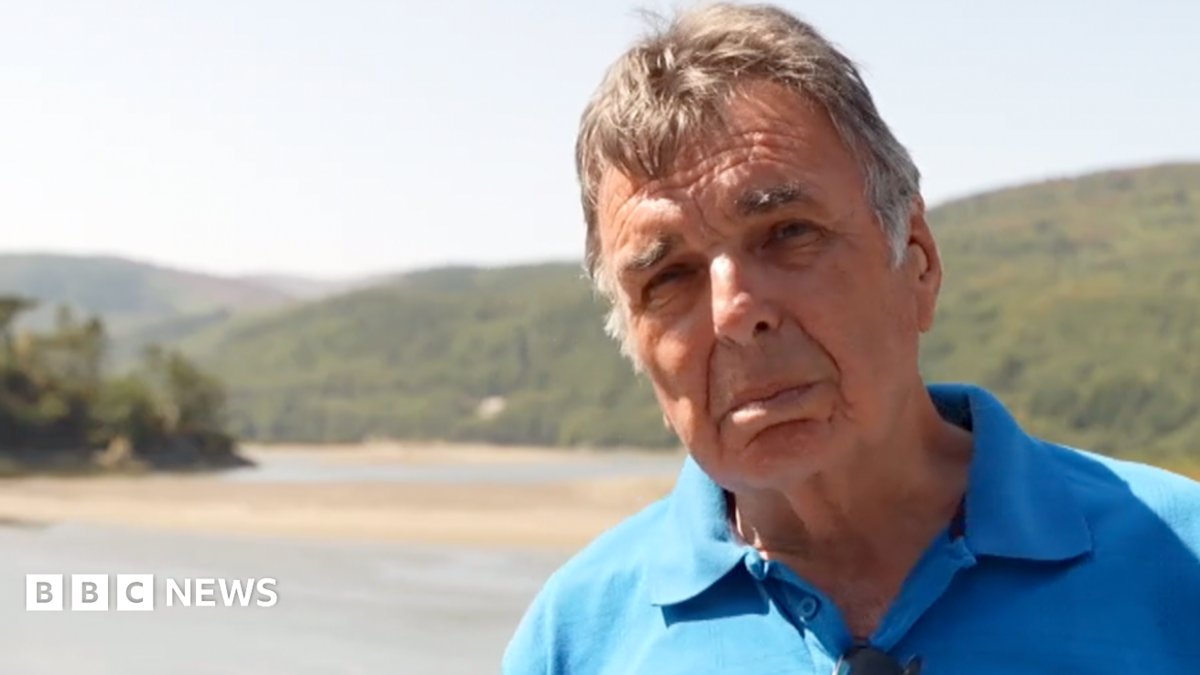
"It's something you don't get over - you learn to live with it."
Sixty years ago, Peter Watts' entire family was killed in a boating tragedy that shocked the nation.
His nine-year-old sister Angela, 10-year-old brother David, mother Doreen and father Frederick George, along with 11 others, died when the Prince of Wales pleasure boat sank on the Mawddach Estuary in Gwynedd on 22 July, 1966.
Now, a memorial recalling the names of the 15 people who lost their lives has been unveiled.
It was another chance for Peter to travel from the village he grew up in, near Milton Keynes, to the picturesque estuary where the catastrophe unfolded.
Divers search for remaining survivors on the Mawddach Estuary back in July 1966 after the Prince of Wales pleasure boat sank
"We'd been on holidays in previous years and I'd been on this boat trip [before] and I didn't want to go again," Peter recalled.
Peter was 14 at the time, old enough to be allowed to spend the day on his own in the seaside town of Barmouth, where his family were staying in a boarding house.
The rest of his family joined the queue to board the Prince of Wales for the eight mile (13km) trip down the estuary to the George III Hotel at Penmaenpool.
But the tide pushed the ferry boat into the Penmaenpool toll bridge across the estuary, flinging the 42 passengers into the water as the vessel was wrecked on the bridge.
Local people, including the hotel owner and staff and the toll bridge keeper, ran to the aid of those in the water, managing to pull 27 to safety.
But along with Peter's brother and sister, two other children were among the 15 who could not be saved.
The tragedy led to changes in the law on the number of passengers boats such as the Prince of Wales could carry
"This happened in the morning, at about 11 in the morning, and I was just waiting hours and hours for them to come back - and they didn't come back," said Peter.
"I went down to the harbour and I heard two people talking about a boat that had sunk. I asked them what was going on, and they said what it was, and I said 'My family is on it' - and they said 'Go to the police station'.
"I sat in there for what seemed ever and a day, and they took the details."
The guest house owners came to take him back, while his aunt and uncle drove up to be with him.
"The next morning we went to Dolgellau to the hospital, where they had found three of them - my mother was still missing," he said.
"My father could swim, but my uncle who identified him said he had had a nasty blow on his head."
It would be another three days before his mother's body was found.
This picture of Peter's brother and sister, David, 10, and Angela, nine, was taken only a few weeks before the disaster
An official inquiry found the boat was carrying six more passengers than the maximum 36 permitted under its certification.
There should also have been two crew members - one on the engine and one on the rudder.
But there was only skipper Edward Llewelyn, 73 at the time, who was found to have acted negligently by a Board of Trade inquiry.
The boat was also short of lifebelts and buoyancy apparatus was stowed away.
Llewelyn was ordered to pay £100 towards the inquiry costs, but no prosecutions were ever brought.
However, the inquiry did lead to changes in the law governing insurance and the number of passengers boats could carry.
The events have left a deep mark on Peter, and the urge to return to Barmouth and the estuary as often as he could.
"If I've ever been anywhere near Wales, even when I've been going to Holyhead, when we went to Ireland, I'd come round this way," he said.
Returning this time on the 60th anniversary of the tragedy, it was marked with a special memorial and the plaque to remember those who died, unveiled by Dolgellau Town Council.
"Those 15 people - I didn't want them to be forgotten. Having their names there - that's what I wanted," said Peter.