
R. Jisung Park warns climate change threatens Italy's cheese banks and wider food economy
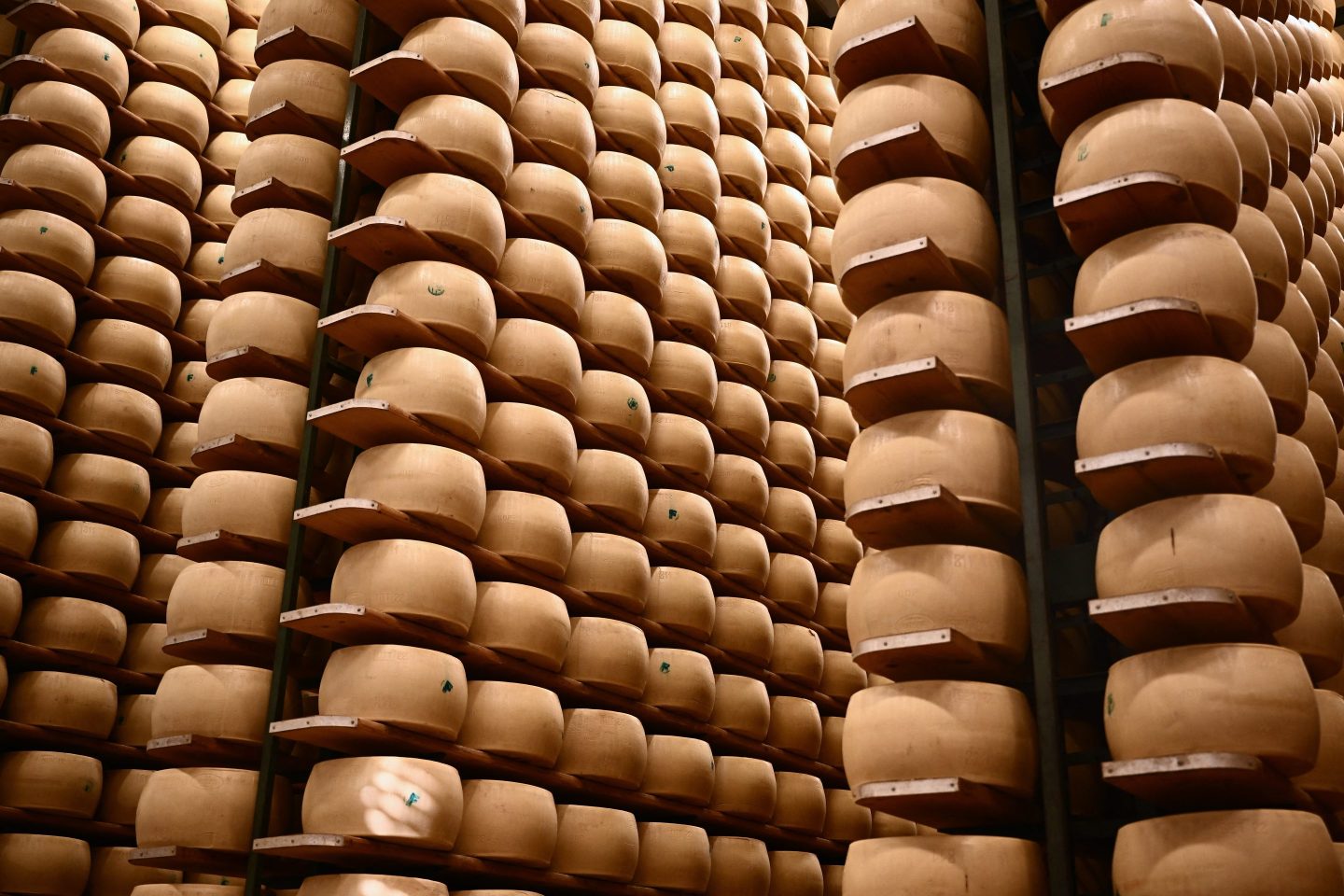
Extreme heat is pushing up costs for the private vaults that underpin Italy's Parmigiano Reggiano sector, while cutting milk yields and forcing earlier harvests in vineyards and olive groves. The pressure spans a 4 billion euro industry built on 300 certified dairies and a collateral system that has operated since 1953.
In the hills of Emilia-Romagna, the bank Credito Emiliano, known as Credem, holds more than half a million wheels of Parmigiano Reggiano worth well over 300 million euros. A subsidiary, Magazzini Generali delle Tagliate, ages the wheels in warehouses at Reggio Emilia and Modena. Producers typically receive 60 to 80 per cent of a wheel's value upfront, solving a cash-flow problem created by the cheese's long maturation, which can last 12 to 36 months.
The system has grown far beyond the original vault. Italy produces about four million wheels a year and the cheese banks hold roughly 500,000 of them, according to Giancarlo Ravanetti, who runs the bank's cheese warehouse business. His facilities handle about 2.3 million wheels annually. Blockchain technology now lets farmers pledge wheels while the cheese remains in their own dairies, doubling the bank's lending capacity.
Record heat waves across Europe this year have lifted daily energy consumption at the warehouses by about 30 per cent, forcing upgrades to cooling systems, boilers and insulation and an expansion of renewable power generation. At the same time, dairy farmers face a direct hit to output. Because cows lie down more and eat less in extreme heat, milk production has fallen by up to 10 per cent a year, reducing both the quantity and quality of milk and driving up costs.
The same climate pressure is appearing on a similar timeline in Italy's vineyards. In Lombardy's Franciacorta sparkling-wine region, the 2026 harvest began on 30 July, the earliest start on record, after budbreak arrived more than a week ahead of the historical average. In Sicily, picking has stretched into a hundred-day season across the island's microclimates as producers race to stay ahead of the heat.
Coldiretti, Italy's largest farmers' association, has called 2026 one of the earliest harvests on record nationally. It cites record temperatures and drought that push sugar into grapes faster than flavour can develop, a mismatch that is especially hard on late-ripening reds such as the Nebbiolo grape behind Barolo. Some growers are testing shade netting, originally used against hail, to cut sun exposure that would otherwise strip grapes of acidity.
Coldiretti also pointed to a cost layered on top of the weather: the conflict in Iran has added an estimated 250 euros per hectare in energy, fertiliser and materials costs for wine producers this year, with export values already down 7 per cent in the first four months of 2026.
Olive groves have taken the sharpest hit. Puglia and Calabria, Italy's two largest olive-oil-producing regions, have seen national production fall well below the historical average of more than 350,000 tons, coming in around 270,000 to 300,000 tons for the 2025/26 season. In past drought years, Puglia's output has fallen by more than half in a single season.
R. Jisung Park, a labour economist at the University of Pennsylvania's Wharton School and author of Slow Burn: The Hidden Costs of a Warming World, says the pattern showing up across Italy's cheese, wine and olive oil industries fits a wider body of research that links heat directly to lost economic output.
A European Central Bank working paper found that the GDP hit from extreme heat is smaller in Spain and Italy than in Germany, since both countries are more used to high temperatures. But Park said a small top-line number can still hide real damage elsewhere.
That dynamic is playing out in Emilia-Romagna, where a heat shock to dairy cows turns into a cost problem for a bank months later, and in Puglia, where a hot, dry spring turns into a production collapse hundreds of miles from where the olives grow. Park said heat's economic toll tends to hide in these kinds of indirect, delayed effects instead of showing up all at once, which is part of why companies and governments still underprice the effects of climate change.
The idea of a government stepping in to protect dairy farmers from forces beyond their control is not new to the United States. During the Great Depression, milk prices collapsed and dairy farmers dumped their own product in the street to protest. President Franklin D. Roosevelt's New Deal responded with subsidies for farmers who cut production, and in 1933 created the Commodity Credit Corporation to buy up surplus butter, cheese and dried milk to keep prices stable.
That policy long outlived the Depression. Decades later, the government was still buying surplus cheese and storing it in vast underground caves in Missouri, Wisconsin and Kansas, warehouses cool enough to hold the cheese for years without spoiling. By the early 1980s, the federal stockpile topped 500 million pounds. Italy's cheese banks solve a similar problem with a different tool: instead of a government buying surplus to prop up prices, a private bank lends against the cheese itself, betting that the wheels sitting in its vault will still be worth something by the time they are ready to sell.