
Record numbers of climate crisis insects: what to do if you spot a praying mantis
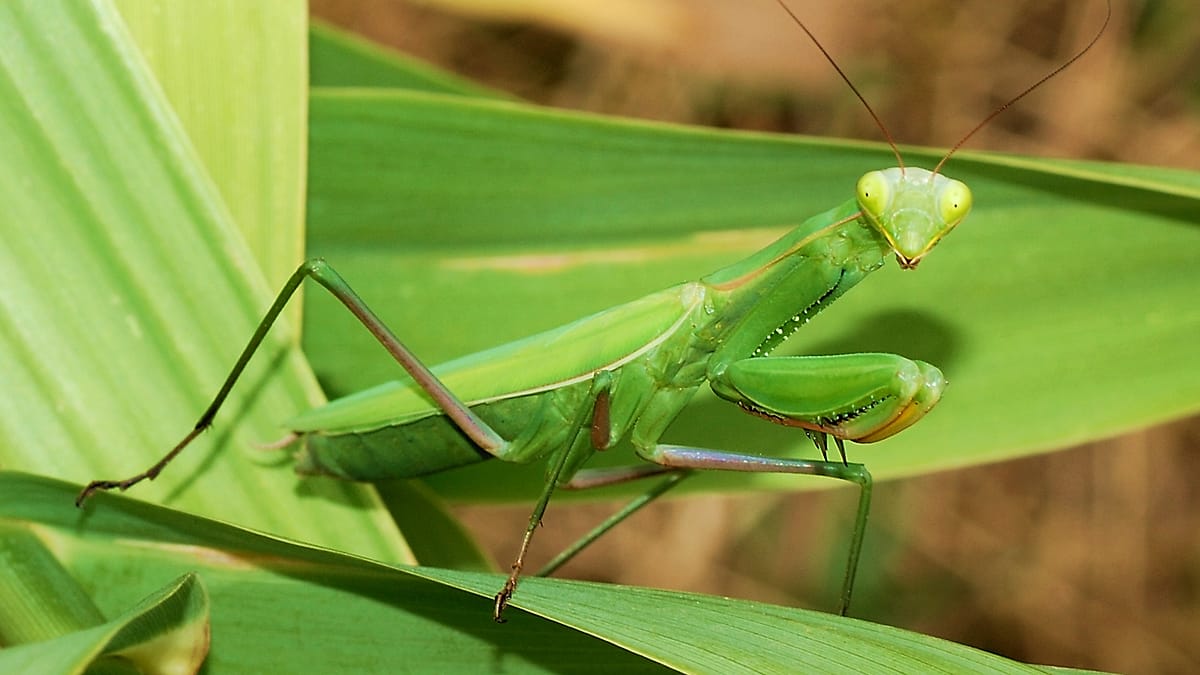
This exceptionally hot summer of 2026, with one heatwave following another, is ideal for the praying mantis. The mantis is a warmth-loving species and prefers sunny, dry habitats.
The praying mantis is among the largest native insects: males grow up to 6 centimetres long and females even up to 8 centimetres.
In Germany, this big-eyed insect, which fascinates many people because of its sexual cannibalism, can still be spotted in gardens and parks right into October. And apparently there have never been as many in Germany as there are in 2026.
The praying mantis originally comes from Africa, but it has long been native to the Mediterranean region. "Its migration to Europe goes back around 10,000 years," explains the German Nature and Biodiversity Conservation Union (NABU). It was introduced to the USA at the end of the 19th century and has since spread widely there as well.
It owes its German name "Gottesanbeterin" to its two raptorial forelegs, which it holds in front of its body when at rest and which resemble arms raised in prayer.
If you spot a praying mantis, you are asked to report it to the German Nature and Biodiversity Conservation Union on the Naturgucker page online (source in German) – ideally with a photo.
The species Mantis religiosa can be green or brown and is roughly twice the size of a bush-cricket or a grasshopper. The praying mantis has a rather triangular, mobile head on a neck, whereas in grasshoppers the head sits directly on the thorax.
NABU and other researchers want to find out where in Germany – also against the backdrop of climate change – Mantis religiosa is now occurring more frequently. After the warm spring, particularly large numbers were recorded in Baden-Württemberg.
They also want to know whether the metapopulations observed in south-western and eastern Germany are merging. Up to now it has been too cold for the praying mantis in the north.
From the beginning of July to mid-August 2026, NABU-naturgucker.de recorded more than 15,000 reports. That is more than in the whole of 2026. Even though the photos "occasionally included a bush-cricket or a sickle-bearing bush-cricket uploaded as a praying mantis", 99.9 percent of the pictures are correct, according to NABU. The organisation says that with an error rate of just one per thousand, the results are "sensationally good".
There is no need to be afraid of the mantis: the praying mantis poses no danger to humans. It has no venom and cannot sting.
Both larvae and adult praying mantises feed exclusively on insects and spiders. They lie in wait motionless for prey, usually approach in slow motion and then strike with lightning speed. As NABU describes, the prey is held fast and eaten alive.
Most male praying mantises die after mating and are eaten by the females, which use this to build up strength for the demanding production of eggs. Only the eggs survive the winter.