
Retinol alternatives: Options for sensitive skin and pregnancy
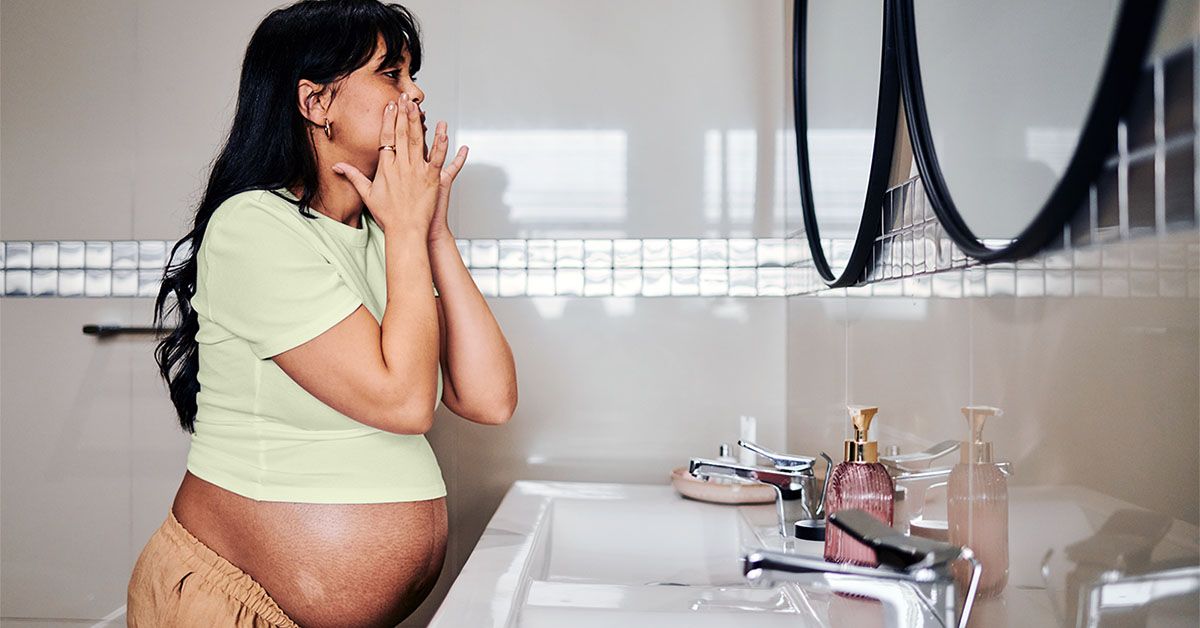
Retinol is a type of retinoid, a group of skin care ingredients derived from vitamin A. While many people use them without complications, they are not suitable for everyone.
In this article, we cover retinol alternatives for those with sensitive skin or who are pregnant.
Doctors advise against getting too much vitamin A during pregnancy, including retinoids.
This is because oral retinoids, such as isotretinoin, are harmful in pregnancy and can negatively affect fetal development.
Excessive vitamin A during pregnancy can affect the growth of the heart, brain, facial structures, and limbs.
It is less clear how harmful topical retinoids might be, as they do not enter the body directly the way pills do. However, some amount of retinoid can still enter the bloodstream through the skin.
To avoid all risk, most doctors recommend that people stop using topical retinoids entirely until after giving birth.
Retinol alternatives are active ingredients that may produce results similar to retinoids, such as reducing fine lines and wrinkles.
Some have comparable results to retinoids and may work in the same way. Others work differently, but may still have similar effects.
Many retinol alternatives are safe outside of pregnancy, but there is less data on their safety during pregnancy.
Conducting studies on pregnant people is often difficult due to the risks involved. This means there is insufficient data to prove that many retinol alternatives are 100% safe.
It is important to remember this when looking at any skin care product or cosmetic procedure. If a person has concerns, they should speak with a doctor first.
Below are some examples of retinol alternatives.
Scientists are also investigating whether this ingredient reduces the visible signs of aging.
For example, a small
This was a small study, though, so more research is necessary to confirm the effects.
According to a 2022 review of previous research, the skin absorbs around 4% to 8% of topical azelaic acid. So far, there are no reports of a correlation with pregnancy complications.
The Food and Drug Administration (FDA) gave azelaic acid a pregnancy safety rating of B. This means animal studies show
During pregnancy, experts generally recommend using azelaic acid no more than twice daily at a maximum strength of 20%.
While some sources say azelaic acid is safe in all trimesters, a 2022 review recommends using it on the smallest possible area of the skin, preferably not in the first trimester.
Glycolic acid is an exfoliant that may also stimulate collagen production in the skin. Collagen is a protein that gives skin elasticity and structure.
A
Glycolic acid does not have an FDA pregnancy safety rating, but only a negligible amount absorbs through the skin. As a result, experts consider it safe for any stage of pregnancy.
People can use glycolic acid in low concentrations fairly regularly, depending on their tolerance. Some use it once a day, after cleansing but before moisturizing.
Others use higher concentrations less frequently in the form of masks or peels. However, this may be more likely to cause adverse effects, especially in those with sensitive skin.
When using any exfoliating acid, it is essential to wear sunscreen daily and also for
Bakuchiol is a compound derived from the Babchi herb (Psoralea corylifolia). A
Bakuchiol is structurally different to retinoids, even though it works in a similar way. This has led some to speculate that it may be safe to use during pregnancy.
However, there are no studies to prove that bakuchiol is safe. The FDA has not assigned this ingredient a pregnancy safety rating.
There are several ways to add bakuchiol to a skin care routine, as many products contain it. Some people use bakuchiol moisturizers, while others use a separate product, such as a serum.
Light therapy has gained popularity as a way of reducing the signs of aging. A 2021 review says that there is evidence that red or near-infrared light therapy can:
However, the authors point out that, despite the popularity of red light therapy, research to date has mostly involved small groups of participants, and some studies have had methodological flaws. More independent, high quality studies are necessary.
Red light therapy appears to be safe during pregnancy as long as it does not heat the skin, according to the European Academy of Dermatology and Venereology.
Light therapy usage instructions vary depending on the type of light therapy and the device a person is using.
The AAD recommends speaking with a dermatologist about the best options. Red light therapy can sometimes cause hyperpigmentation, which may be more likely to occur in those with darker skin or in people taking certain medications.
It is important to follow the device or practitioner instructions.
People who are not pregnant, but who also cannot use retinol because of how their skin reacts to it, have one more option: gentler retinoids.
These retinoid forms may be less likely to cause irritation. Examples include retinal or retinaldehyde, which some people anecdotally report are less sensitizing.
However, research into newer retinoids and innovative formulations is ongoing.
Do not try these ingredients while pregnant or while trying to conceive.
Retinoid alternatives can produce effects similar to retinol but with fewer adverse effects.
They may also be safer during pregnancy, although more research is necessary to confirm this. To date, there is little safety information about some popular retinol alternatives.
People who want to continue using active ingredients during pregnancy can speak with a doctor, such as a dermatologist, to discuss which options will combine safety and effectiveness.
A doctor can advise on which active ingredients are the safest and how best to use them.