
Russia gives drones their own military branch as modern warfare enters a new era - The Times of India
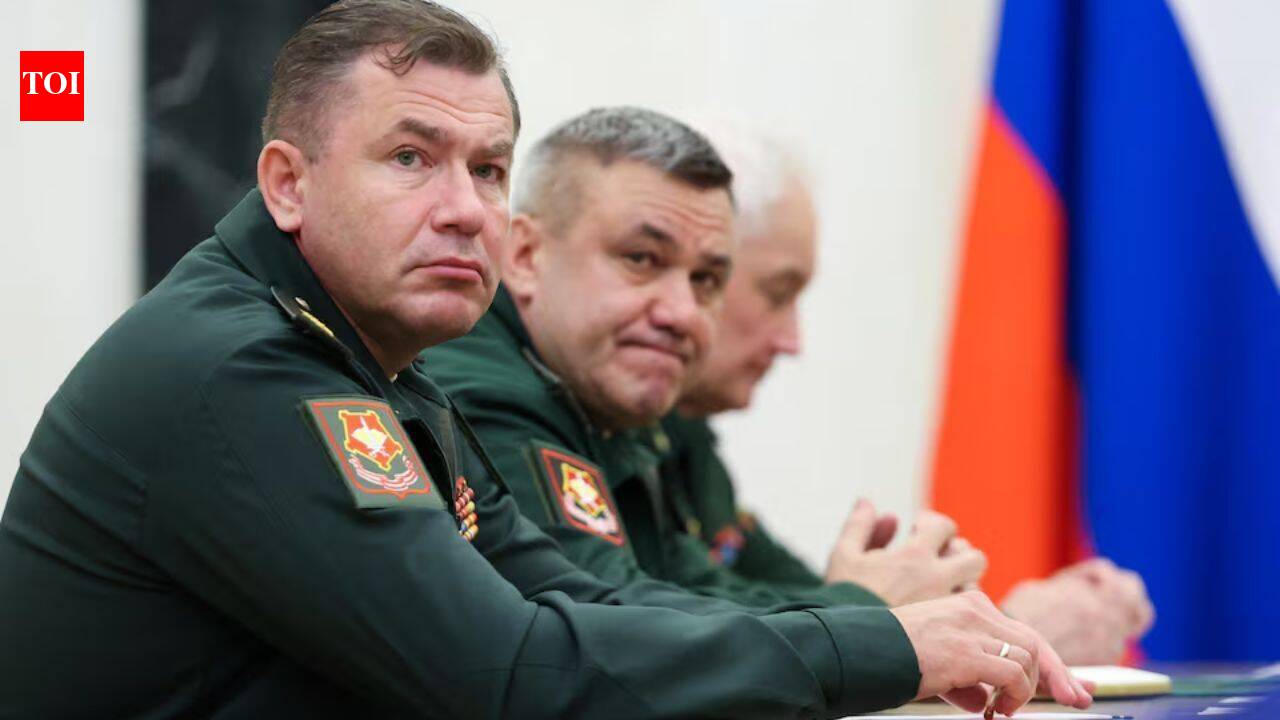
Russia has formally placed its new unmanned systems forces under a dedicated commander, marking a major shift in how Moscow is organising for modern warfare as drones become an increasingly central part of the battlefield.General Denis Lyamin assumed charge of the newly established branch on Friday after defence minister Andrei Belousov signed the order formally installing him in the post, the Russian defence ministry said.Earlier this month, Putin announced Lyamin’s appointment and described the general as “one of the most qualified specialists” to lead the new drone forces and tasked him with completing their formation.
Lyamin had previously served as chief of staff of Russia’s Centre Group of Forces fighting in Ukraine. A graduate of a tank command school with a background in the ground forces, he brings extensive conventional battlefield experience to the new unmanned warfare branch.Putin has described the Centre Group as a key element of Russia’s campaign to capture the entirety of Donetsk region, one of Moscow’s main objectives in the war.Ukraine announced the creation of its own “long-range impact” command in July, highlighting the growing importance of dedicated unmanned warfare structures in the Russia-Ukraine conflict.
The move came as both sides increasingly rely on drones for long-range strikes, battlefield reconnaissance and attacks on critical targets far behind the front lines.Why a separate drone command is becoming necessaryThe scale of drone warfare has changed the battlefield to such an extent that unmanned systems are no longer confined to specialised units within traditional military branches.
The battlefield role of drones has also expanded far beyond short-range FPV attacks. Ukrainian drones are now being used for reconnaissance, targeting, deep strikes and attacks on Russian military and industrial infrastructure.In July, Ukrainian President Volodymyr Zelenskiy said Ukrainian drones had already developed the ability to operate at ranges of more than 3,000 km, showing how unmanned systems are extending the battlefield far beyond the immediate frontline.Reuters report citing a senior Pentagon official said Ukraine was expected to produce 6 million to 7 million small FPV attack drones in 2026, or roughly 500,000 a month.This scale creates a command problem that conventional military structures were not originally designed around.
A modern drone operation can involve reconnaissance UAVs finding a target, another drone providing real-time observation, an FPV system conducting the strike and electronic-warfare units attempting to protect the link or disrupt the enemy's drones.A dedicated command can bring these functions under a common doctrine, training system and operational structure instead of leaving them distributed across infantry, artillery, intelligence and electronic-warfare formations.