
Ryanair profits drop as Iran war puts off passengers and lifts fuel costs
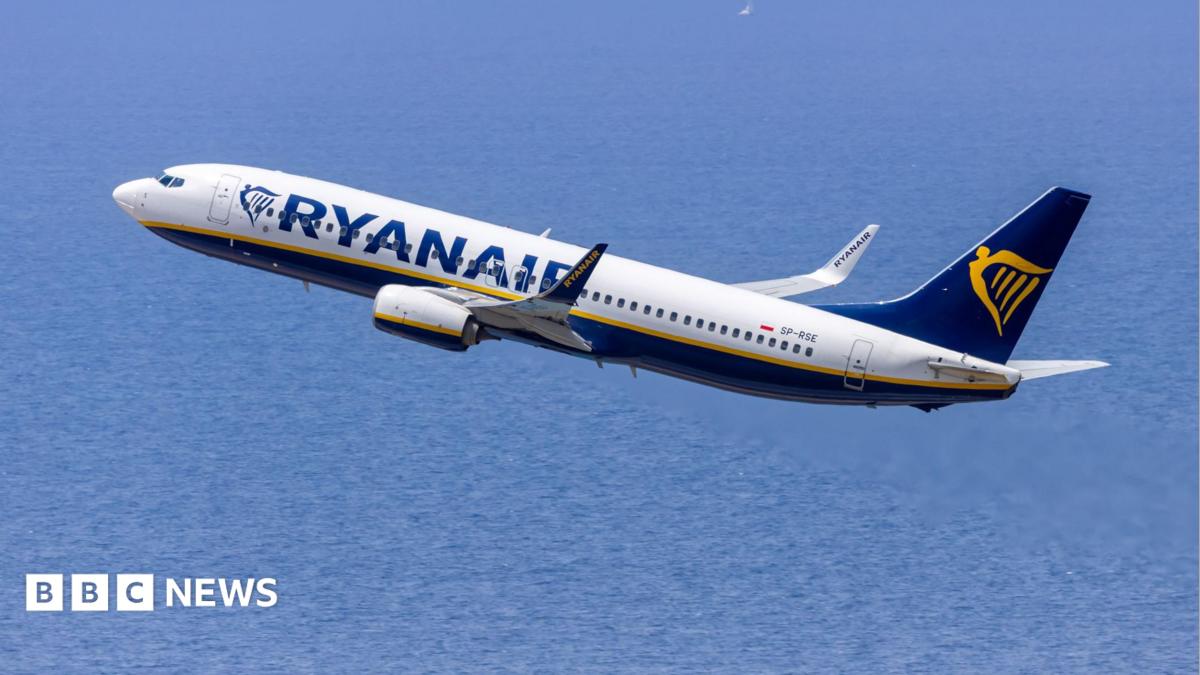
Ryanair's profits have fallen sharply as war in the Middle East sent jet fuel prices soaring and customers reluctant to book flights.
The Irish airline's pre-tax profits dropped 34% to €593m (£503m) between April and June while sales were flat as the company was forced to cut fares to stimulate demand.
Ryanair also said it expects summer fares to be slightly lower than last year due to "consumer hesitancy" around air travel.
The price of fuelling a plane has jumped since the US and Israel launched strikes against Iran in February and while Ryanair said it had "hedged" or struck deals for the most future fuel costs, those not included in these arrangements had more than doubled.
Overnight, crude oil prices continued to rise, surpassing $90 (£67) a barrel for the first time in a month, after a weekend of intense exchanges of fire between the US and Iran.
Traffic through the Strait of Hormuz - an essential route for global oil and gas supplies - has ground to a halt.
Brent crude, the global benchmark for oil prices, rose by 2.5% on Monday.
The airline warned that its results for the year will be "highly sensitive" to external factors such as conflict escalation in the Middle East and Ukraine as well as the price of unhedged jet fuel.
Shane Oliver, head of investment strategy at AMP, a fund manager, said: "The longer the strait remains closed and the war escalates, the greater the risk that oil prices will have to rise to around $150 a barrel to bring demand down to match the hit to supply."
He said: "This is not our base case but it's a high risk again."