
Safe space scheme in Birmingham helps revellers during World Cup
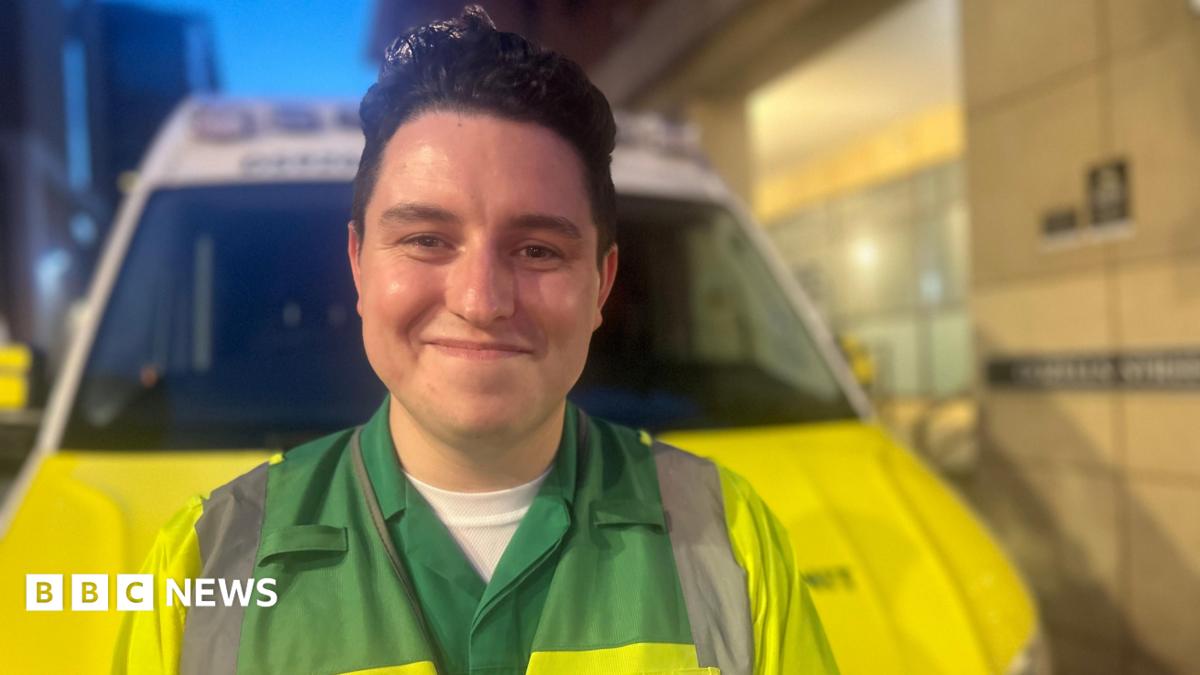
A bitten ear, a broken jaw and drunken antics - all in a night's work for emergency crews as revellers took to Birmingham city centre to watch England face Panama in the World Cup on Saturday.
The BBC joined the West Midlands Police and Crime Commissioner and St John Ambulance as they rolled out their safe space initiative at the Arcadian Centre and on Broad Street.
Originally launched in 2019, it supports people who are vulnerable, have had too much to drink, or who are experiencing abuse or harassment, by placing medical professionals and safeguarding experts close to bars and clubs.
"On our busiest nights we can see anywhere up to 30 or 40 patients." said Phil McCahill, operational manager at St John Ambulance.
"We see a whole variety of people, from people who need a safe space to have a drink of water or to charge their phone, right through to people with serious illness or injury", he said.
"One of the best things about the project is we've been able to see thousands of patients over the last few years, preventing them from going to hospital unnecessarily, or from having a 999 frontline ambulance response to them."
Describing what he had seen on Saturday, McCahill added: "We've seen some fairly typical patients that we would expect on a night out in Birmingham, a few people who've been intoxicated, a couple of people who've sustained injuries through accidents or assaults, and we've been able to treat them."
He added that he was "really proud" of the effect the project has on services.
"We're able to see treat and discharge the vast majority of people, make sure they get home safely, and reduce that strain on the ambulance service, the police, and the wider NHS."
Jason Tate, 52, from Kidderminster, said he was punched and had his ear bitten on Saturday. He was treated by St Johns Ambulance staff who were there for the safe space initiative.
He said he had been involved with Birmingham nightlife since the 1990s.
"We've always felt really safe, but I do think over the last years there's been a bit of a downturn," he said.
"If you approach all of my mates who we used to go clubbing with the 90s, we're all moving out of Birmingham."
Owen Lewis, 20, from Halesowen, was out to watch the England match.
"You do feel very safe here but you do see a lot of reports… a lot of crime. But when you see tents like this," he said, gesturing at the safe space tents, "A lot of support around, it does make you feel safer."
Demi, 19, was also out to watch the game with her friend JK, 20.
"I feel safe because everyone's just happy, England are playing, everyone's on the same wavelength," Demi said.
"When you're here when it's not football, that's when the fear kicks in a bit, especially when you're a young woman."
"There's a lot of pestering going on and a lot of people don't leave you alone. But I also feel like the fear also comes with men as well, men never know what to expect when they're walking down the street."
JK added: "It's not unique to Birmingham, it happens everywhere."
West Midlands Police and crime commissioner, Simon Foster, said the scheme has reduced pressure on frontline services
West Midlands Police said a study of its statistics over the last decade showed that alcohol-related abuse and violence surges by 47% on a day when England wins a tournament match.
West Midlands Police and Crime Commissioner, Simon Foster, said £20,000 of funding has been provided for the initiative, which runs every Saturday from 2100 to 0500 BST.
It is also part-funded by the Birmingham and Black Country and Solihull Integrated Care Board.
Foster, who was working with teams in Birmingham on Saturday, said the scheme has been a success.
"They've treated, in a six month period, about 250 people, they've reduced 999 ambulance calls by over 120, and they've also potentially prevented about 65 people having to take trips to A&E departments," he said.
"That's reduced significantly the pressure on our ambulance and hospital teams.
"Its important that we keep the night time economy safe for people who are out here to enjoy themselves, [that] we protect vulnerable people, we reduce that impact in terms of demand on our ambulance and hospital teams… we are also ensuring that we prevent and detect crime."
Looking ahead, Foster said the initiative would be closing at the Arcadian, but would move it to have a more permanent location for the scheme on Broad Street, and potentially another in Digbeth.
Follow BBC Birmingham on BBC Sounds, Facebook, external, X, external and Instagram, external.