
Scientists warn against "propping up" Lake Powell as levels hit record low
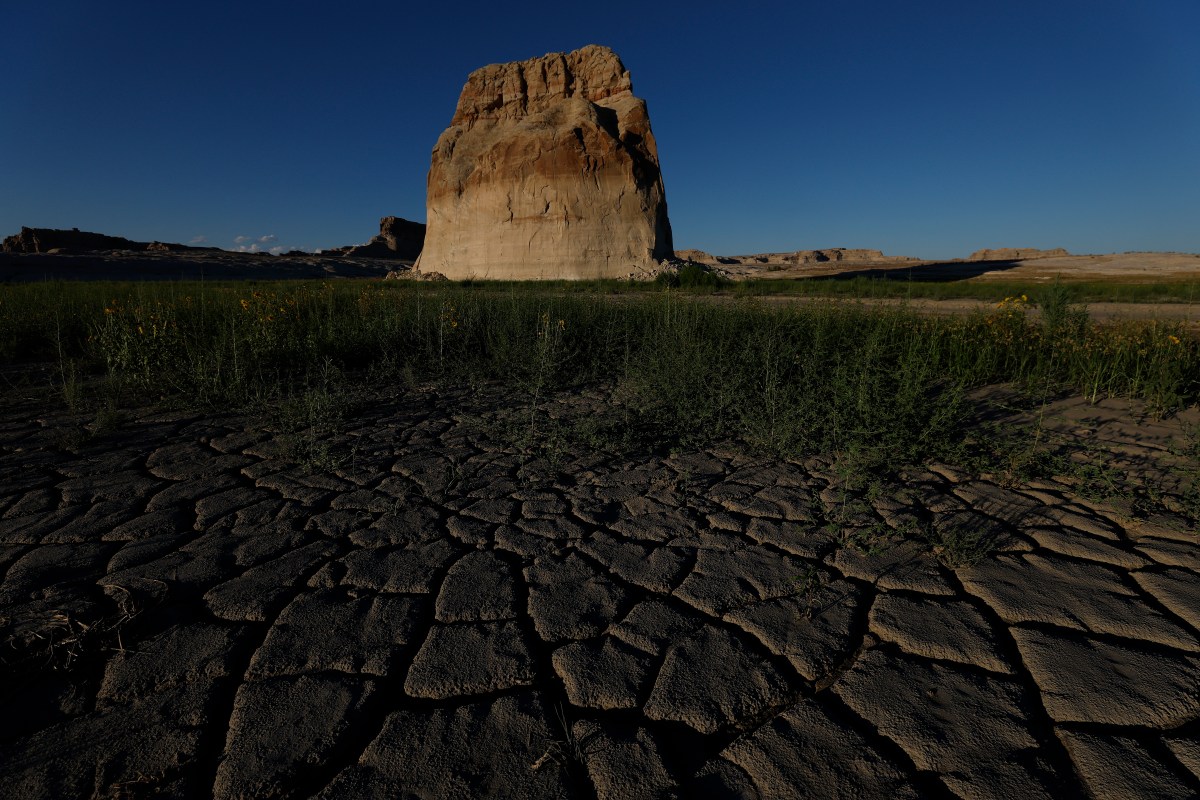
Lake Powell has fallen to its lowest level since the reservoir began filling more than six decades ago, prompting fresh debate over how it and Lake Mead should be managed.
Powell dropped to about 3,520 feet above sea level in mid-August, roughly 30 feet above the elevation at which Glen Canyon Dam can no longer generate hydropower normally. The milestone followed Lake Mead reaching its own record low earlier in the month.
The reservoirs are the two largest in the U.S. and form the main storage system for the Colorado River, which supplies water to approximately 40 million people, nearly 5.5 million acres of agricultural land, seven states, tribal nations and Mexico.
Eric Balken, executive director of the Glen Canyon Institute, said the latest decline was not unexpected.
“These low water levels are unprecedented, but not unpredicted,” Balken told Newsweek. “For nearly two decades, climate scientists projected that a warming climate would reduce water storage on the Colorado River’s large reservoirs.”
Balken said research indicated that warmer temperatures had contributed to a 20 percent decline in Colorado River flows during the 21st century, with further reductions of 20 percent to 40 percent possible in the coming decades.
“In other words, critically low reservoir levels should be seen as the new normal, not an anomaly,” he said.
Lake Powell is approaching a critical operational threshold. Below approximately 3,490 feet, known as minimum power pool, water could no longer be released through Glen Canyon Dam’s turbines to generate hydropower. Downstream deliveries would instead depend solely on the dam’s river outlet works, which the Bureau of Reclamation says present potential operational risks.
Balken said the Bureau of Reclamation has warned that relying on those outlets could “compromise the safety and stability of Glen Canyon Dam” and affect its ability to meet downstream water-supply needs.
Federal officials have already taken measures to protect Powell, including releasing water from upstream reservoirs and reducing the amount sent downstream to Lake Mead. Reclamation said those measures helped keep Powell above the critical 3,490-foot elevation.
Balken argued that continuing the approach would shift the crisis downstream rather than resolve it.
“In an effort to prop up Powell above 3,500 feet above sea level, the Bureau of Reclamation will likely continue drawing water from Flaming Gorge, and further reduce releases to Mead,” he said. “While Powell is ‘stabilized’ at 3,500, Mead will continue to crash, losing 70 percent of its hydropower capacity by next spring.”
“Propping up Lake Powell is not a long-term strategy,” he added.
The warning comes after Reclamation released its Final Environmental Impact Statement (FEIS) for post-2026 operations at Lakes Powell and Mead. The document, published July 31, evaluates new guidelines intended to replace operating agreements that expire at the end of 2026.
The Glen Canyon Institute has advocated a “Fill Mead First” strategy that would make Lake Mead the Colorado River’s principal storage reservoir and use Lake Powell as a backup. The proposal could involve progressively lowering Powell and, at its most extensive stage, constructing diversion tunnels around Glen Canyon Dam.
“It’s long overdue that dam modifications be a part of the conversation about the future of the Colorado River,” Balken said, “and that proposals like consolidating water storage in Lake Mead are analyzed.”
"Congress has specifically required the coordination of Lake Powell and Lake Mead operations since the 1968 Colorado River Basin Project Act," a Reclamation spokesperson told Newsweek previously regarding such proposals. "As drought conditions persist across the Southwest, Lake Powell’s storage plays an essential role in protecting reliable water delivery, hydropower generation, and key infrastructure throughout the system.”