
Scotland's net zero rebellion
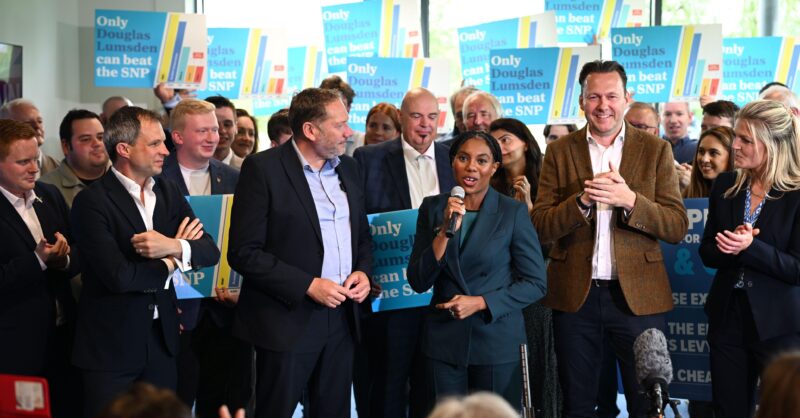
It was clear something extraordinary might happen in Aberdeen South from the regular visits paid to the constituency by Kemi Badenoch. British Tory leaders aren’t often spotted north of the border, for reasons that will be obvious.
Badenoch was, however, a repeat and highly visible presence as the by-election approached. The Conservatives scented victory among an electorate that was focused on the decline of the region’s oil and gas industry. Aberdeen, like many other communities across the UK, is an angry, disillusioned place which feels its concerns are not being listened to. The future of domestic oil and gas is an issue on which the SNP doesn’t seem able to make up its mind, while Labour continues to pursue Ed Miliband’s net zero agenda. The Tories by contrast spoke passionately about their desire to free the sector from the crushing taxes and tough regulations that have seen heavy reductions in investment and significant job losses, and which the industry claims could reach 1,000 a month by 2030 unless there is a change of tack.
The strategy worked, and spectacularly so. A seat that was won by the SNP’s Stephen Flynn in 2024 with a majority just shy of 4,000 and 32.8 per cent of the vote went blue. The Tory candidate Douglas Lumsden secured a majority of 6,000 and almost 50 per cent of the vote. Labour won just 5.4 per cent, coming behind Reform on 8.5 per cent.
If the voters of Makerfield delivered a message and possibly a new prime minister to Labour on Thursday, the voters of Aberdeen South were sending a message of their own to the Westminster and Holyrood governments. As Lumsden put it, “we said at the start of this campaign that it is a referendum on the oil and gas industry and the people of Aberdeen have given a resounding answer that we back the oil and gas industry”.
The by-election followed the election of Flynn to the Scottish Parliament in the recent devolved elections. He is now Economy Secretary in John Swinney’s government and has spoken out in favour of easing conditions for north-east Scotland’s most important sector. Flynn issued a statement that could be seen as a not-so-coded criticism of his boss, saying that it was “a tough night in Aberdeen that some will need to reflect on, quite heavily”. Having previously lost the constituency to the Tories in 2017, before Flynn won it back in 2019, the MSP added that he believed the Nats could “do so again, if we get things right”.
The defeat, and the scale of it, is an embarrassment to Swinney, who comfortably won the devolved election just over a month ago. The first weeks of his SNP administration have been overshadowed by the scandal surrounding Peter Murrell, the estranged husband of Nicola Sturgeon, who has pled guilty to stealing £400,000 from the party and is awaiting sentence. Swinney’s refusal to allow an independent inquiry into the affair has been heavily criticised by the opposition parties and by political observers, and has led to questions about state secrecy versus accountability and transparency.
According to pollsters, though, it is the oil and gas issue that overwhelmingly drove votes, and this was successfully exploited by the Conservatives. The result marks the first Tory victory in a Scottish by-election since 1973 and is a major boost to Badenoch, whose assured performances have seen her reputation grow in recent months. It is also a welcome piece of good news for Russell Findlay, the party’s Scottish leader, after a disappointing Holyrood election result that saw a drop from second place to fifth. Reform’s relatively poor result in Aberdeen South, so soon after it came joint second with Labour in the Scottish Parliament election, will also give the Tories cause for optimism. As Badenoch put it following the victory, “what makes this result particularly significant is that many people who voted Conservative today have never voted Conservative before”. The Tory brand may not be beyond repair, just yet.
This was, however, a very localised campaign. It was business as usual in Scotland’s other by-election, which took place in the Arbroath and Broughty Ferry constituency following the election of sitting SNP MP Stephen Gethins to Holyrood. The Nats’ Lara Bird won with a majority of more than 5,000, significantly up on that secured by her predecessor. Labour slumped from second to fourth, behind the Tories in second and Reform in third.
If it was a mixed evening for the SNP and a good one for the Tories, Scottish Labour continues to be in deep trouble. The Scottish Parliament election saw them win just 17 seats, its lowest in the history of devolution. The drag factor of the unpopular Keir Starmer government has seen calls for the Scottish party to formally separate from its UK sister, though at this stage that seems an unlikely prospect. Otherwise, the party’s prospect are dismal. Anas Sarwar will be desperately hoping that the arrival of Andy Burnham at Westminster, and possibly in No 10 Downing Street, will turn things around in Scotland as well as elsewhere in the UK.