
Seagate reveals more on its 50TB HDD plans — but looks like we
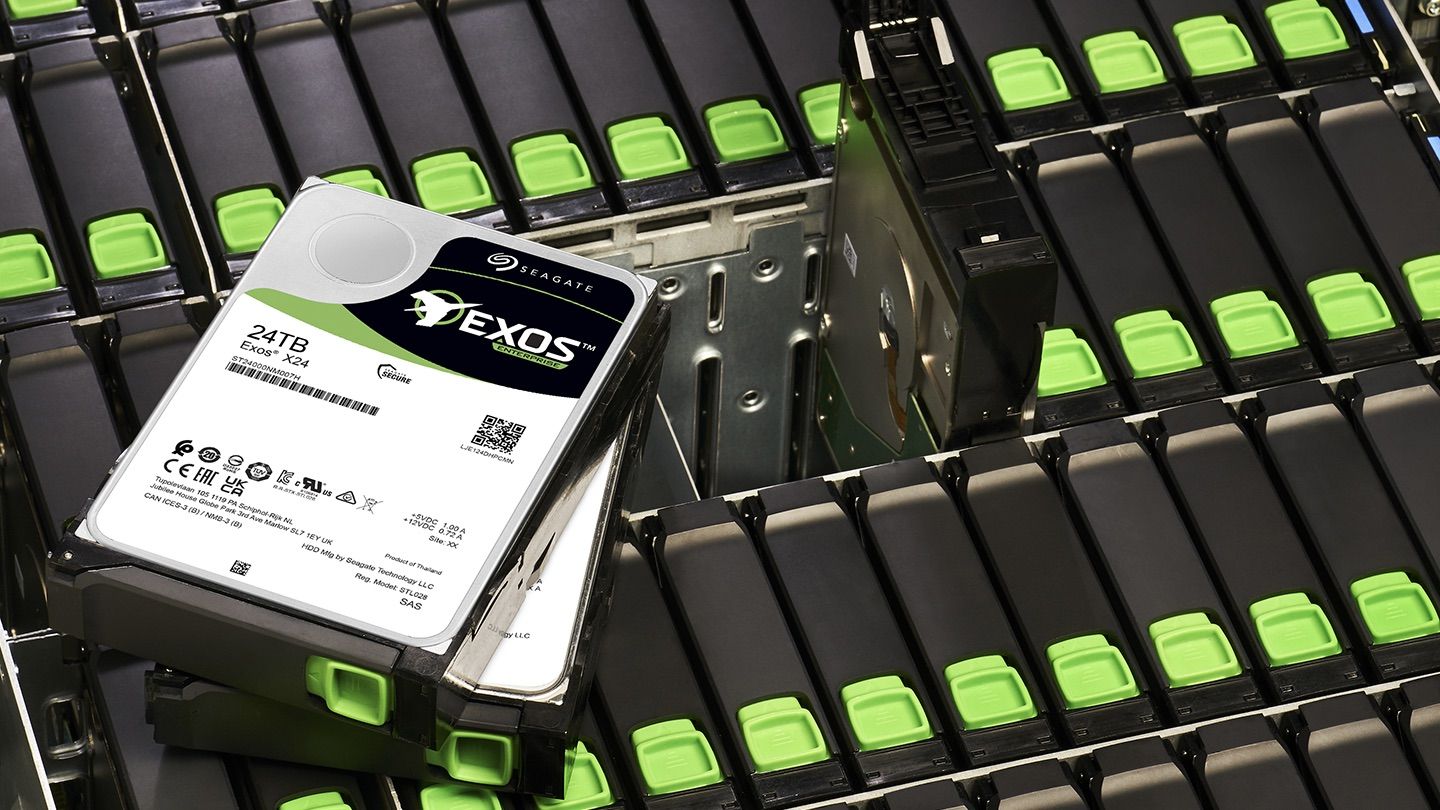
Seagate used its recent fiscal fourth quarter earnings 2026 call to put a fresh date on the next rung of its hard drive roadmap - but it is not close.
Company chair and chief executive Dave Mosley told analysts the Mozaic 5+, the company's 5TB-per-disk platform, remains on track for qualification shipments in late calendar 2027.
This is what matters for those looking to score a single highest-capacity consumer-grade HDD that Seagate makes: Ten of those platters in a single 3.5-inch chassis is what gets Seagate to the 50TB-class drives it has been promising for the better part of a decade.
Most consumer PCs now ship with SSDs, but flash remains considerably more expensive than disk at equivalent capacity. Buyers who need bulk storage and can tolerate slower access times still choose HDDs for the simple reason that they cost far less per terabyte.
The problem for end users and professionals who need that capacity right now is that, as with RAM and SSDs, hyperscalers have entered the equation, and constrained supply is pushing prices and availability down across the board.
It does not help that qualification of Seagate's 50TB drives in late 2027 is not the same as availability. Qualification shipments are engineering samples sent to OEM and hyperscale customers to run their own validation; production is scheduled for 2028, and the original target was 2026.
Seagate's public roadmap slides in late 2019 put 50TB HAMR drives in 2026. That target survived, at least rhetorically, into 2023, when the company was still pairing a delayed 30TB launch with a stated 50TB-by-2026 ambition. By mid-2025, when the first 40TB HAMR samples went out to data center customers, the roadmap had been restated as 44TB in 2027 and 50TB in 2028.
Seagate also flagged its own execution risk on the same call. Management noted that moving from 3TB to 4TB, then to 5TB per disk, requires more tool time and can slow manufacturing throughput. That is an unusually candid caveat to volunteer to analysts, and it is the most likely source of another date change.
None of these points to a further slip, but it does make for a sobering timeline. Retail buyers get nothing when the drives ship in 2028, because that output is already spoken for by Seagate's largest customers: data center operators and hyperscalers.
The channel is served last, and a 50TB drive is unlikely to appear on a shelf, physical or virtual, until well after volume production begins around 2029.
Follow TechRadar on Google News and add us as a preferred source to get our expert news, reviews, and opinion in your feeds.
Rahim Amir is a UAE-based tech writer who enjoys building PCs as much as he enjoys writing about them. He has been professionally writing about PC hardware since 2023, focusing on buyer’s guides, hardware reviews, and sponsored content and features related to tech.
Having built hundreds of gaming PCs and being an avid gamer in his spare time, Rahim tends to have stronger opinions about hardware than most. This is particularly on display when he gets his way with powerful, but minimalistic RGB builds even as Small Form Factor (SFF) PCs come a close second.
Please logout and then login again, you will then be prompted to enter your display name.