
Shipping transits slow to a trickle as Strait of Hormuz faces “worst-case scenario”
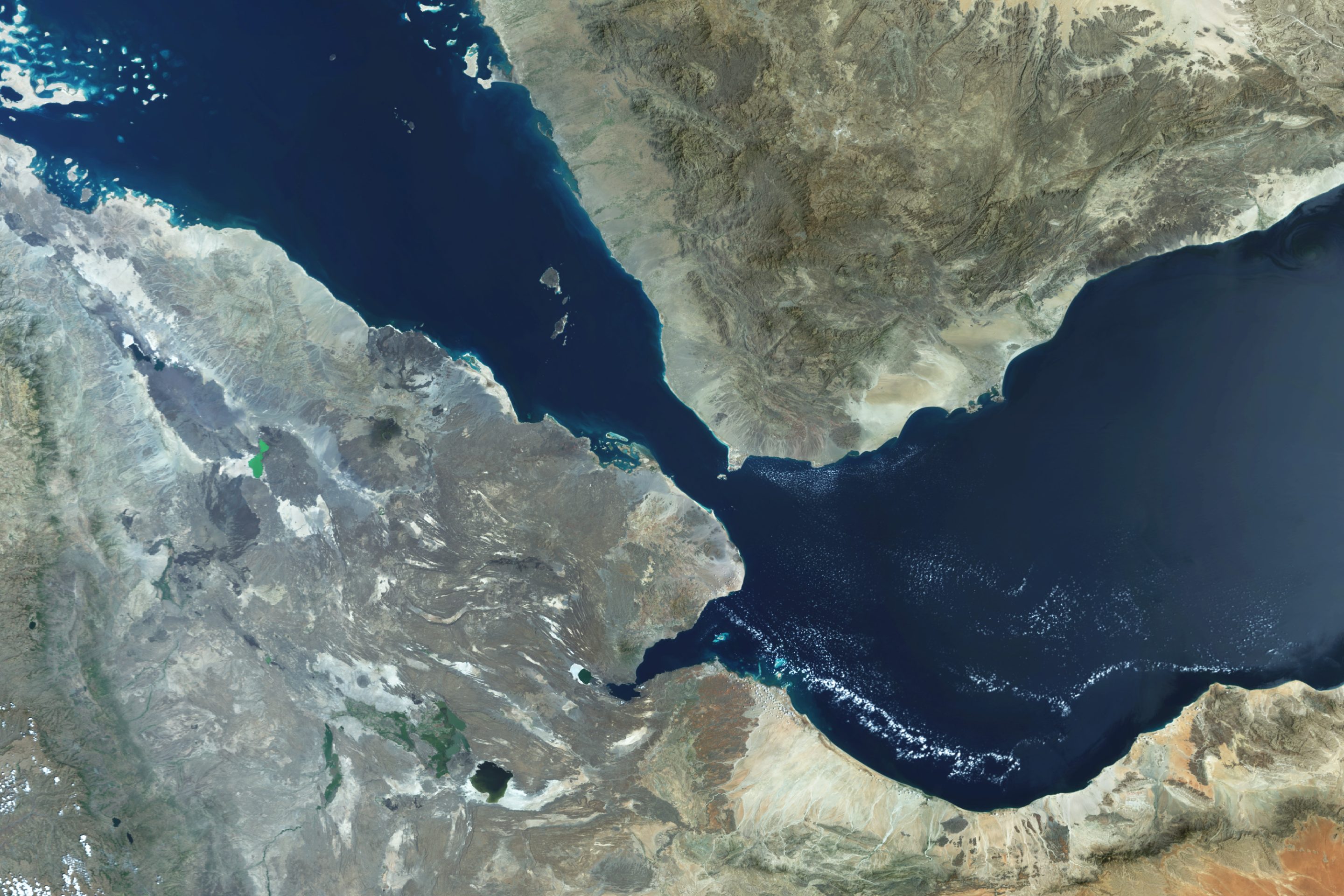
With the U.S.-Iran interim peace agreement effectively in tatters, shipping through the Strait of Hormuz has, again, ground to a virtual halt.
Shipping traffic fell to a three-week low on July 16, with transits down to eight vessels from 15 the previous day, data from maritime intelligence firm Kpler showed.
Total transits were down 66.2% for the week July 14-20 compared with the previous seven-day period, according to data from Lloyd’s List Intelligence.
Recent Iranian attacks on ships and the reinstatement of a U.S. blockade on Iran-linked shipping prompted most vessels to stop or reverse course.
An average of 138 ships passed through the Strait each day before the conflict started on 28 February, according to the Joint Maritime Information Center.
“With the recent events, everything has changed,” said Dimitris Maniatis, CEO of Athens-headquartered maritime risk management company Marisks, during a Lloyd’s List Intelligence briefing last week. “We’ve gone back to the worst-case scenario. Nobody is willing to move.”
The traffic separation scheme—the traditional shipping lane through the middle of the Strait of Hormuz—remains too hazardous for vessels because of the ongoing threat of mines, commented Jakob Larsen, chief security officer at BIMCO, one of the world’s largest shipping associations.
The escalation in fighting comes as the U.S. and Iran remain at odds over how shipping through the Strait of Hormuz should resume under the memorandum of understanding, signed on June 17. You can read about the latest developments in my piece here.
While Tehran pledged to guarantee normal transit, the agreement did not specify which shipping lanes vessels should use.
On July 20, the Houthis, an Iran-backed Yemeni group, announced it was imposing a maritime blockade on Saudi Arabia in response to what the group says is the kingdom’s siege on Yemen’s capital, Sana’a.
The announcement compounds mounting risks to oil supplies from the Middle East.
A full closure of the Bab el-Mandeb Strait, the southern gateway to the Red Sea, would halt Saudi oil exports to Asia and could reduce global oil supply by 7%.
The kingdom diverted its oil supplies to the key Red Sea port of Yanbu following the outbreak of the war, with those exports rising to a record 4.19 million barrels a day last month.
Last week, Oxford Economics published a research note stating that a toll system for the Strait of Hormuz would be a less costly alternative to the persistent disruption and would ensure that regular trade could resume through the strategic waterway.
It estimates that both Iran and Oman could raise $6.8 billion a year by imposing transit fees on oil tankers passing through the Strait of Hormuz.
An article in The Economist cites polling by The Washington Post and Ipsos that shows the conflict in Iran is now less popular than the Vietnam War among the American public.
Melissa Hancock
As ever, thanks for reading, and do keep in touch with your thoughts and ideas. See you next week.
Lucid Motors, the Saudi-backed maker of electric vehicles, has hired U.S. restructuring advisor AlixPartners to improve execution and strengthen operations.
In a statement posted on LinkedIn last week, Lucid’s CEO, Silvio Napoli, dismissed an earlier report that its board was considering filing for bankruptcy or pursuing a transaction to take the company private.
“Lucid has sufficient liquidity to fund its operations well into next year,” said Napoli, who was appointed CEO on June 1. “My priority is clear: Turn this company around.”
Lucid, which is majority-owned by Saudi Arabia’s $1 trillion sovereign wealth fund, the Public Investment Fund, ended 2025 with about $4.6 billion in total liquidity, according to its most recent filings.
On July 6, Lucid drew $800 million from an existing credit line with PIF, tapping its Saudi backer for the second time this year after an initial $500 million draw on 1 April.
This leaves roughly $1.2 billion of the approximately $2.5 billion line undrawn.
The Nasdaq-listed embattled EV maker has been struggling to boost profitability amid softening demand for higher-priced electric vehicles and is looking to Saudi Arabia to drive its economic growth.
In May, the company suspended its 2026 production outlook with its net loss widening to $1.13 billion in the first quarter as a supplier-related issue disrupted deliveries of its Gravity SUV in February.
It has cut its U.S. workforce twice this year, reducing headcount by 12% in February before eliminating a further 18% on June 22 at its Arizona factory.
Just 48 hours later, it hired veteran Ford executive, Kel Kearns, as senior operations director for AMP-2, its plant in Saudi Arabia's King Abdullah Economic City, where production of the Cosmos—its lowest-priced model, starting at about $50,000—is due to begin by the end of 2026.
Needham & Company analyst Chris Pierce told Bloomberg that Lucid’s bankruptcy would be “plausible” if Saudi support gets pulled, “But that support has been consistent,” he said.
PIF has invested over $9 billion in Lucid since 2018. However, the Fund has increasingly been reining in spending amid softer oil revenues and a growing focus on fiscal discipline.
Uber is set to acquire Middle East delivery giant, Talabat, through its $14.8 billion all-cash takeover of its German parent company, Delivery Hero.
The transaction highlights the growing importance of scale in the food delivery industry, where companies are seeking larger customer bases and more efficient operations as growth moderates following the pandemic-era boom.
The move will enable Uber to expand aggressively across the Middle East, where Talabat has built a dominant position in markets including the UAE, Kuwait, Qatar, Bahrain, Oman, Jordan, and Iraq. Founded in Kuwait in 2004, Talabat, which means “orders” or “requests” in Arabic, listed on the Dubai Financial Market in 2024, raising $2 billion.
As part of the deal, Uber will also acquire Saudi Arabia's HungerStation and FoodPanda.
For Talabat, the acquisition marks the start of a new chapter under Uber's ownership, positioning the Middle Eastern delivery platform at the center of what will become the largest food-delivery group outside China.
The acquisition coincides with Saudi Arabia's development as one of Delivery Hero's strongest-performing markets, boasting the highest subscription rate in its global portfolio.
61% of total order value in Saudi Arabia in the first quarter of 2026 came from customers subscribed to its loyalty and subscription programs— the highest rate across the group. The wider MENA business also recorded strong momentum, with total order value increasing 16.1% year on year, fuelled by growth from Talabat and HungerStation.
Delivery Hero’s annual statements for 2025 showed that it has become structurally dependent on its MENA operations.
Recent analysis by FWDStart noted: “The MENA segment delivered roughly 60% of group profitability from around 30% of group gross merchandise value. No other region comes close. Asia ran at 1.6%. Americas at 2.5%. Europe was loss-making at minus 0.8%.”
The UAE and Saudi Arabia continued to dominate the Middle East's investment banking landscape in the first half of 2026, generating 55% and 25% of the region's total fee pool, respectively. Qatar accounted for a further 7% of regional fees, according to London Stock Exchange Group data.
But even the Gulf's biggest dealmaking hubs couldn't escape a broader slowdown, with investment banking fees across MENA falling 19% year-on-year to $757.1 million—the weakest first-half performance in three years as the U.S.-Iran conflict rattled investor confidence.
Equity markets bore the brunt of the downturn. Underwriting fees from IPOs and follow-on offerings collapsed 57% year-on-year to $69.5 million, hitting a five-year low as companies delayed listings and investors grew more cautious.
Just four IPOs made it to market in Q1, down from 12 in the same period last year, the region’s weakest first quarter since 2018.
M&A advisory fees also fell 19% to $203.5 million, while syndicated lending fees dropped 16% to $187.4 million, their weakest first-half performance since 2023.
Debt markets provided a rare bright spot, with underwriting fees holding steady at $297 million as borrowers continued to tap financing markets. Global banks emerged as the biggest winners in a shrinking market.
JPMorgan claimed the top spot with $71 million in fees and a 9.4% market share, overtaking Citi, which ranked second with a 7.4% share and $56.1 million in fees, despite a 2% decline. HSBC, last year’s leader, slipped to third after fees dropped nearly half to $36.7 million.
Barclays was the standout performer, with fees surging 240% to $33.1 million, driven by the expansion of its investment banking capabilities in Saudi Arabia.
Last October, the bank gained a provisional Capital Market Authority license in Saudi and is now seeking a banking license in the kingdom, as well as preparing to open a regional headquarters there later this year.
Regional lenders, including Emirates NBD and First Abu Dhabi Bank, remained competitive but fell short of the top three spots.
The industry's next test is the IPO pipeline. But with US-Iran tensions flaring again, bankers’ hopes for a post-summer rebound are already being tempered.